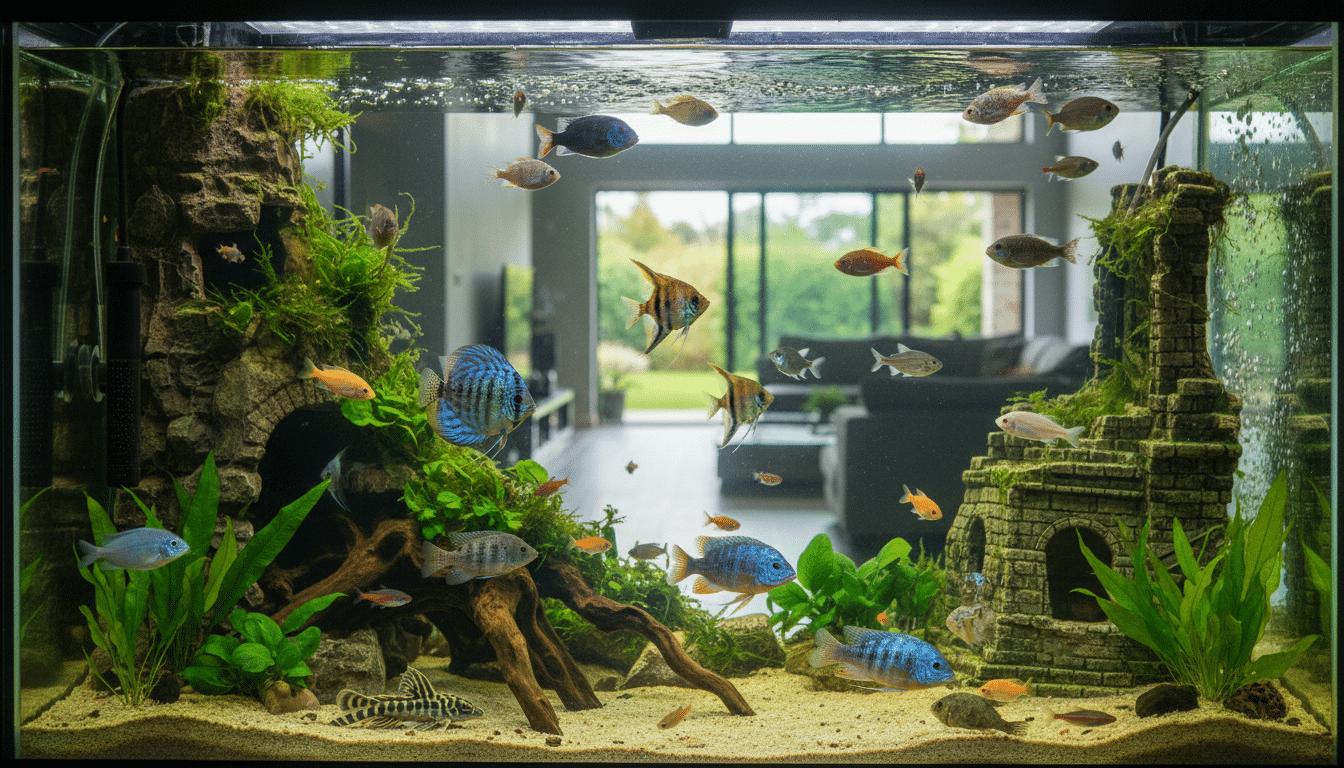
Can You Mix Different Fish Together?
Setting up a community aquarium is one of the most exciting parts of keeping fish, but it can also be challenging. The question “can you mix different fish together?” doesn’t have a simple yes or no answer. While many fish species can coexist peacefully, creating a harmonious tank requires understanding compatibility, water parameters, and fish behaviour. Let’s dive into everything you need to know about mixing fish successfully.
Understanding Fish Compatibility Basics
Before adding multiple species to your aquarium, you need to grasp the fundamentals of fish compatibility. Not all fish are social creatures, and mixing the wrong species can lead to stress, injury, or even death.
The key factors to consider when mixing fish include temperament, size, water parameter requirements, and swimming levels. Peaceful community fish like tetras, guppies, and corydoras catfish generally get along well, while aggressive species like cichlids or bettas require more careful consideration.
Here’s an interesting fact many beginners don’t know: fish can recognize and remember individual tankmates for months, which means introducing new fish to an established community can sometimes trigger territorial responses even in typically peaceful species.
Water Parameter Compatibility: The Foundation
One of the most overlooked aspects of mixing different fish species is matching their water chemistry needs. You can’t simply combine fish that look pretty together; they need to thrive in similar conditions.
Temperature Requirements
Tropical fish typically prefer temperatures between 24-27°C (75-80°F), while coldwater fish like goldfish thrive at 18-22°C (64-72°F). Mixing tropical and coldwater species is a recipe for disaster, as you can’t maintain optimal temperatures for both simultaneously.
pH and Hardness Levels
Different fish species evolved in different water conditions. African cichlids prefer hard, alkaline water with a pH of 7.8-8.6, while South American tetras thrive in soft, acidic water with a pH of 6.0-7.0. Matching pH requirements is essential for long-term fish health when creating a community tank.
A lesser-known fact is that mismatched water hardness causes more health problems than pH differences. Fish in incorrect hardness levels struggle with osmoregulation, leading to kidney stress and shortened lifespans, even if they appear healthy initially.
Size Matters: Avoiding Predator-Prey Situations
A fundamental rule in keeping fish is that fish will eat anything that fits in their mouth. Even peaceful species like angelfish will consume tiny neon tetras if given the chance.
When selecting tankmates, consider both current and adult sizes. That adorable 5cm (2-inch) Oscar will grow to 30cm (12 inches) and develop predatory instincts. Always research the maximum adult size of any fish before introducing them to your community aquarium.
Here’s something most fish keepers learn the hard way: some bottom-dwelling fish like loaches have surprisingly large mouths relative to their body size and can consume smaller fish during nighttime feeding, even though they’re considered peaceful during the day.
Territorial Behaviour and Swimming Levels
Creating a successful mixed species aquarium means understanding how fish use space. Dividing your tank into swimming zones reduces aggression and competition.
Top dwellers like hatchetfish and surface-feeding guppies rarely conflict with bottom feeders like corydoras or plecos. Middle swimmers such as tetras and rasboras occupy the central water column. Stocking fish across all three levels creates a balanced, visually appealing community while minimizing territorial disputes.
The One-Inch-Per-Gallon Rule is Outdated
Many beginners follow the old one-inch-per-gallon guideline, but this oversimplifies stocking calculations. A 95-litre (25-gallon) tank can’t house a 25cm (10-inch) Oscar, even though the math works out. Tank footprint, filtration capacity, and fish behaviour matter more than simple length calculations when determining how many fish you can mix together.
Species-Specific Considerations
Schooling Fish Requirements
Many popular aquarium fish are schooling species that require groups of six or more to feel secure. Keeping just two or three tetras, rasboras, or barbs causes chronic stress, which leads to aggression and health problems. This is a critical but often overlooked fact: a stressed schooling fish kept in insufficient numbers may become surprisingly aggressive toward other species.
Semi-Aggressive Fish
Some fish fall into a grey area between peaceful and aggressive. Dwarf cichlids, larger barbs, and some gouramis can coexist with other species but need adequate space and hiding spots. In smaller tanks, their semi-aggressive tendencies intensify.
Creating the Perfect Community Tank
Successfully mixing different fish together requires planning before you purchase a single fish. Start by choosing one “feature fish” or species you absolutely want, then select compatible tankmates based on that species’ requirements.
Research whether your chosen fish prefer planted tanks with hiding spots or open swimming areas. Some species, like rainbowfish, need swimming space, while others like dwarf cichlids require caves and territories. Your aquascaping should accommodate all species’ natural behaviours.
The Nitrogen Cycle and Stocking Schedule
Before adding any fish combination, your tank must complete the nitrogen cycle. This process takes 4-6 weeks and establishes beneficial bacteria that convert toxic ammonia into less harmful compounds.
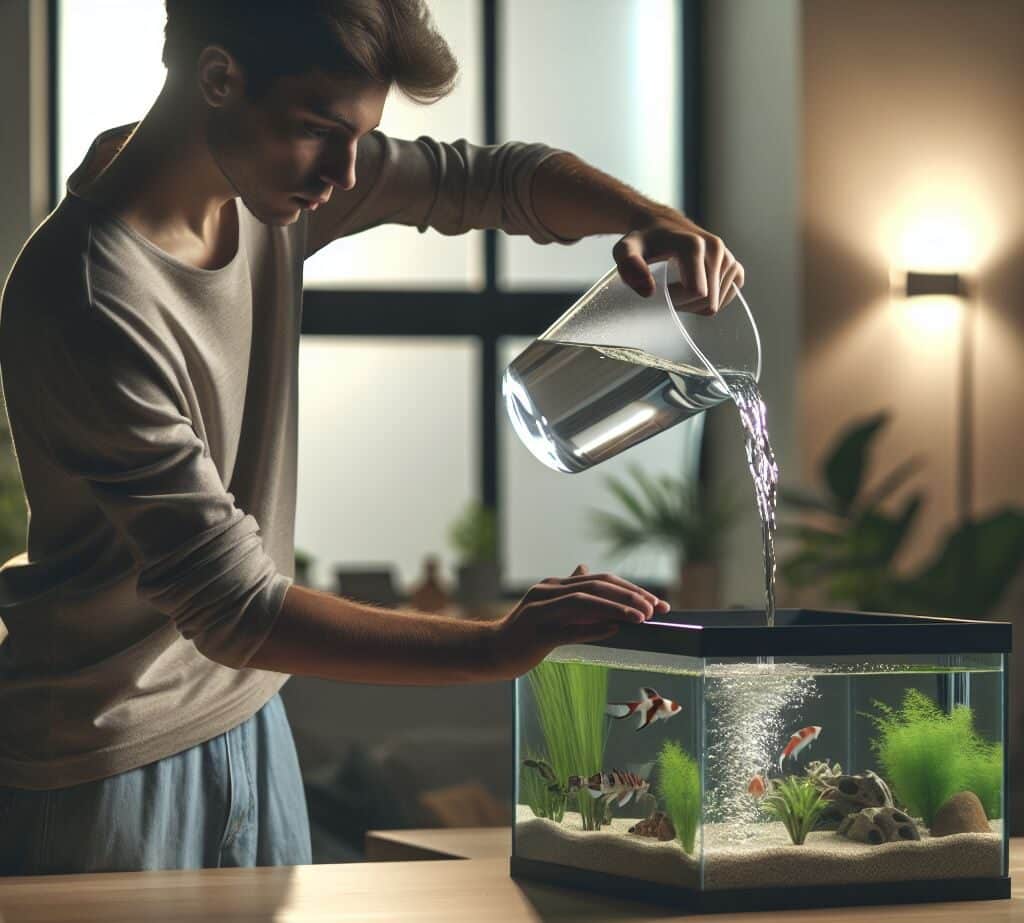
Add fish gradually over several weeks, starting with hardy species. This allows your biological filtration to adjust and helps you identify compatibility issues before your tank is fully stocked. Introducing all fish simultaneously overwhelms your filtration and increases aggression as everyone establishes territories at once.
Common Compatible Fish Combinations
For beginners wondering which fish can be mixed together, here are proven community combinations:
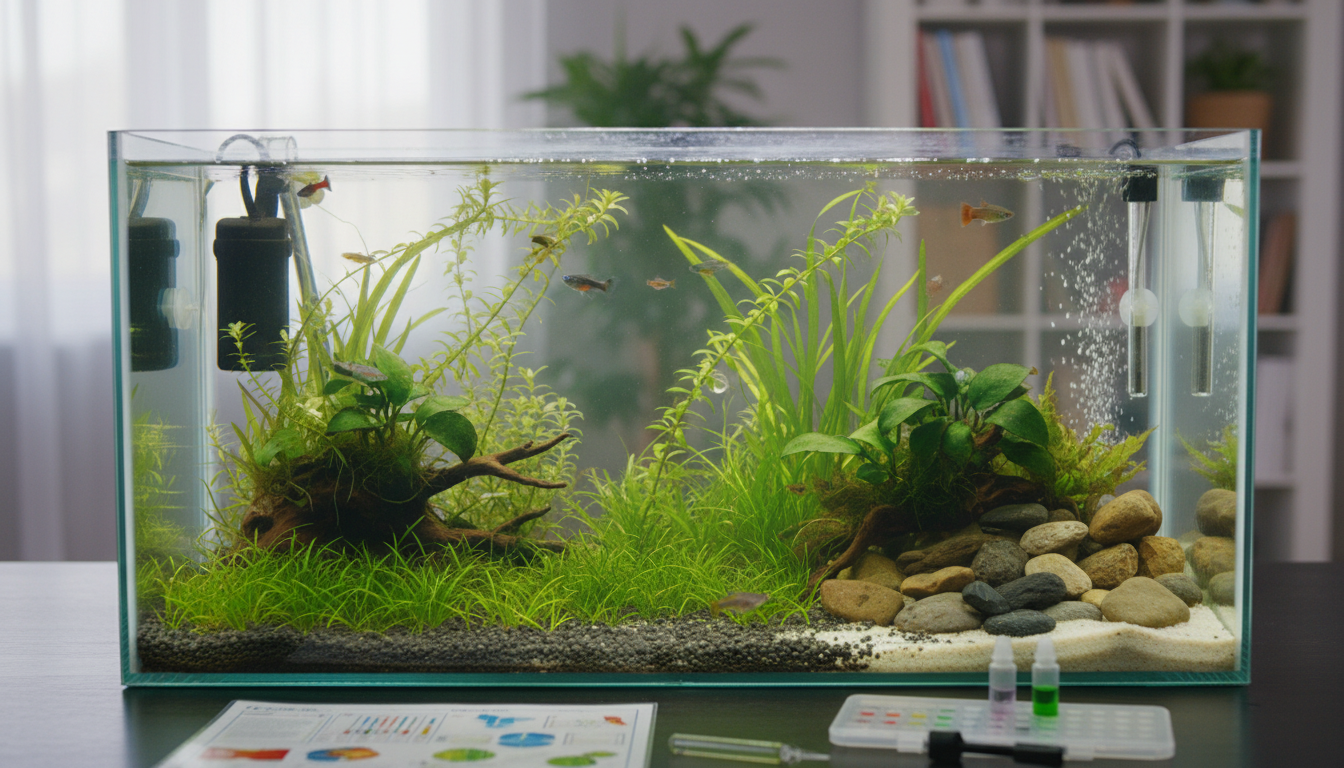
Classic community tank: Neon tetras, corydoras catfish, guppies or platies, and a single dwarf gourami create a peaceful, colourful display suitable for a 95-litre (25-gallon) tank.
Asian biotope tank: Harlequin rasboras, cherry barbs, kuhli loaches, and a bristlenose pleco thrive together in soft, slightly acidic water at 25°C (77°F).
African cichlid tank: When keeping African cichlids, stick to species from the same lake system. Mixing Lake Malawi and Lake Tanganyika cichlids creates compatibility issues despite their similar appearance.
Warning Signs Your Fish Mix Isn’t Working
Even with careful planning, fish compatibility problems can emerge. Watch for torn fins, fish hiding constantly, refusal to eat, or one species dominating feeding time. These indicate stress or bullying.
Colour fading in previously vibrant fish signals chronic stress from incompatible tankmates or water conditions. Don’t ignore these warnings; separate problematic fish before serious injury occurs.
An important but rarely discussed fact: female fish can be just as territorial as males in many species. The common advice to “add more females” doesn’t always reduce aggression and can actually intensify competition for resources in smaller tanks.
Conclusion: Yes, But Do Your Research
So, can you mix different fish together? Absolutely, but success requires understanding each species’ needs and behaviours. Focus on matching water parameters first, then consider size, temperament, and space requirements.
The most beautiful and healthy community aquariums result from patient research and gradual stocking. Take time to observe your fish, make adjustments as needed, and don’t be afraid to rehome fish that simply don’t work in your setup. With proper planning and attention to compatibility factors, you’ll create a thriving underwater community that brings joy for years to come.
Remember that every aquarium is unique, and even expert recommendations sometimes need adjustment based on individual fish personalities. Stay observant, remain flexible, and enjoy the rewarding experience of maintaining a successful mixed species aquarium.