When your aquarium filter suddenly stops working, it can feel like a crisis. Your fish depend on that filter to keep their water clean and oxygenated, so understanding why a fish tank filter is not working is crucial for any aquarium owner. Let’s dive into the common causes and solutions to get your filter back up and running.
Understanding How Aquarium Filters Work
Before troubleshooting, it’s helpful to know what your filter actually does. Aquarium filters perform three types of filtration: mechanical (removing physical debris), biological (housing beneficial bacteria that break down ammonia and nitrites), and chemical (using activated carbon or other media to remove dissolved substances). When any of these processes fail, your fish tank’s ecosystem suffers.
Here’s an interesting fact many aquarium owners don’t realise: the beneficial bacteria in your filter are more important than the filter itself. These microscopic organisms can take 4-6 weeks to fully establish, and they can die within hours if the filter stops running. This is why a malfunctioning filter needs immediate attention.
Common Reasons Your Fish Tank Filter Stopped Working
Power Supply Issues
The most obvious culprit is often the simplest. Check if your filter is actually plugged in properly. Look for tripped circuit breakers, faulty power outlets, or damaged power cords. Try plugging another device into the same outlet to confirm it’s working. Sometimes the issue isn’t the filter at all but rather a GFCI outlet that’s tripped due to moisture.
Clogged Filter Media
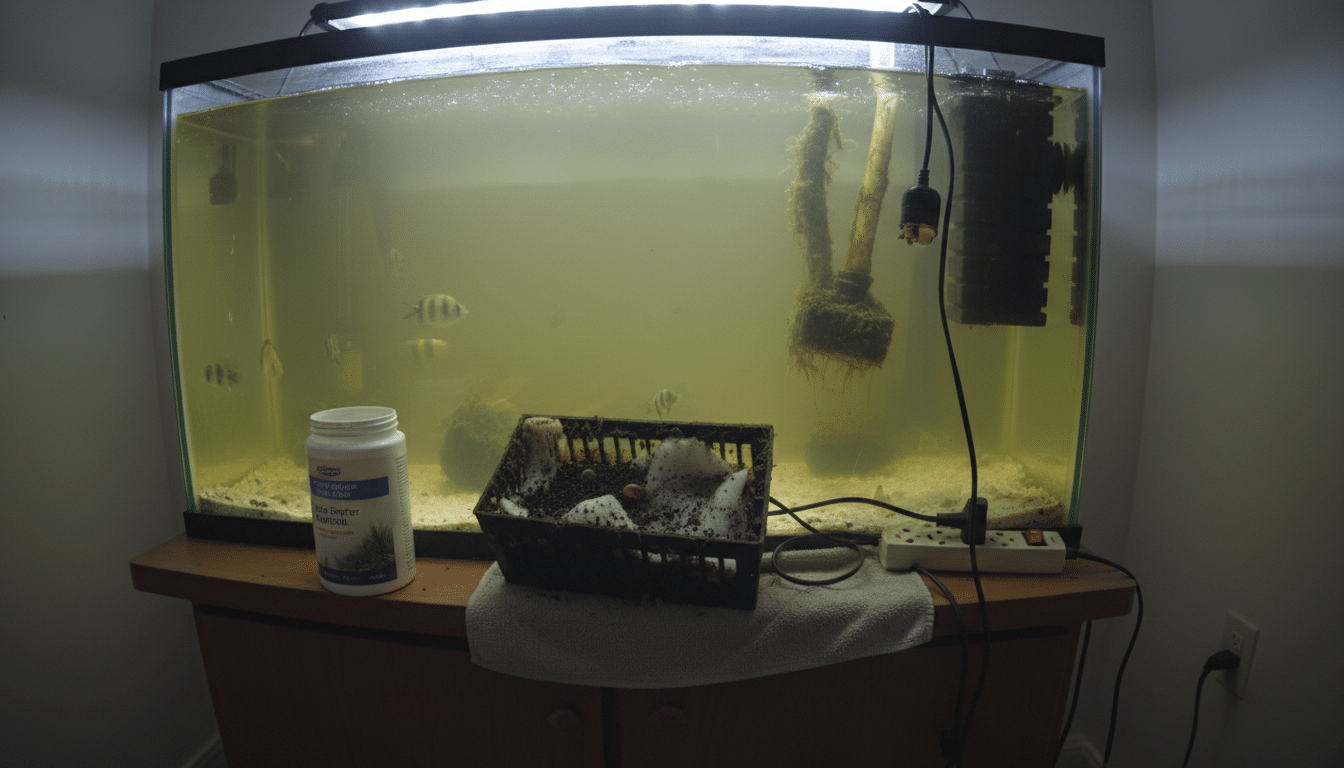
A heavily clogged filter is one of the most common reasons fish tank filters fail. When debris, fish waste, and algae build up in the filter media, water flow becomes restricted. Eventually, the impeller can’t push water through at all, causing the motor to strain or stop completely.
What many people don’t know is that over-cleaning your filter can be just as harmful as not cleaning it enough. When you replace all the filter media at once, you remove the beneficial bacteria colony, causing dangerous ammonia spikes in your tank. Always clean filter media in old tank water, never tap water, as chlorine kills those helpful bacteria.
Impeller Problems
The impeller is the small propeller inside your filter that creates water flow. This component can become jammed with debris, coated in calcium deposits, or simply wear out over time. If you hear grinding noises or the filter is humming but not moving water, the impeller is likely the problem.
Here’s a lesser-known fact: impellers have ceramic shafts that can crack or chip, especially in areas with hard water. Even a tiny chip can cause the impeller to wobble, reducing efficiency or stopping water flow entirely.
Air Lock in the System
An air lock occurs when air gets trapped in the filter housing or tubes, preventing water from flowing properly. This commonly happens after cleaning, when water levels drop too low, or when you first set up a filter. You might see the motor running but notice weak or no water output.
Step-by-Step Troubleshooting Guide
1. Check the Basics First
Start with the simple stuff. Confirm the filter is plugged in and the outlet works. Check that the water level in your tank hasn’t dropped below the filter intake. Look for any visible damage to cords or housing.
2. Inspect and Clean the Impeller
Unplug the filter and disassemble it according to the manufacturer’s instructions. Remove the impeller assembly and check for debris, slime buildup, or damage. Clean the impeller, shaft, and housing thoroughly with a soft brush. White vinegar can help dissolve mineral deposits if needed.
3. Clear Any Air Locks
For canister filters, tilt the unit side to side while it’s running to release trapped air. For hang-on-back filters, prime the system by filling the chamber with tank water before turning it on. Internal filters may need to be removed, filled with water, and reinstalled.
4. Replace or Clean Filter Media
Remove the filter media and rinse it gently in old tank water. If the media is falling apart or extremely clogged, replace only half at a time to preserve your bacterial colony. Never replace all filter media at once unless starting a new tank.
5. Test Different Power Outlets
If the motor still won’t run, try plugging the filter into a different outlet in another room. This eliminates the possibility of outlet-specific issues.
Preventing Future Filter Failures
Regular maintenance is key to keeping your aquarium filter working properly. Clean mechanical filter media every two weeks, but leave biological media undisturbed for months. Check the impeller monthly and clean it every 3-4 months, or sooner if you notice reduced flow.
Here’s an insightful tip: water temperature affects filter performance more than most people realise. Filters rated for tropical tanks (24-28°C or 75-82°F) may struggle in colder water, while those designed for cold water tanks can overheat in warmer conditions. Always match your filter to your tank’s temperature range.
Another lesser-known fact is that feeding your fish too much directly impacts filter lifespan. Excess food breaks down into waste, overwhelming your filter’s capacity and leading to frequent clogs. Feed only what your fish can consume in 2-3 minutes.
When to Replace Your Aquarium Filter
Sometimes a filter has simply reached the end of its life. Most quality filters last 5-7 years with proper maintenance, but cheaper models may only last 2-3 years. If you’ve troubleshot everything and the motor still won’t run reliably, replacement is probably your best option.
Signs that your filter needs replacing include frequent motor failures, cracked housing, persistent leaks that can’t be fixed with new seals, and motors that run hot to the touch. Don’t wait until complete failure, as a struggling filter puts your fish at risk.
Keeping Your Filter and Fish Healthy
Understanding why fish tank filters stop working helps you act quickly when problems arise. Most issues are preventable with regular cleaning and maintenance. By checking your filter weekly, cleaning the impeller monthly, and monitoring water flow, you’ll catch problems before they become emergencies.
Remember that your filter isn’t just a piece of equipment but a living biological system. Those beneficial bacteria working inside deserve as much care as your fish. When you maintain your filter properly, you’re not just fixing a mechanical device but protecting an entire ecosystem that keeps your aquarium thriving.
Whether you’re dealing with a clogged impeller, an air lock, or power issues, most aquarium filter problems have simple solutions. Take your time to diagnose the issue methodically, and your filter will be back to keeping your fish happy and healthy in no time.