Why Your Fish Tank Water Is Cloudy
Noticed your aquarium looking a bit hazy? You’re in good company—cloudy water is something almost every fish keeper deals with at some point. The reassuring part is that it’s usually a simple fix once you know what’s causing it. Let’s walk through what’s happening in your tank and how to get that water crystal clear again.
What Your Cloudy Water Is Actually Telling You
Cloudiness is your tank’s way of letting you know something’s out of balance. It doesn’t mean your tank is dirty or that you’ve done anything wrong—sometimes it’s just part of the natural settling process. The color of the cloudiness gives you the biggest clue about what’s going on, so take a close look before you do anything else.
The Different Types of Cloudy Water (And What They Mean)
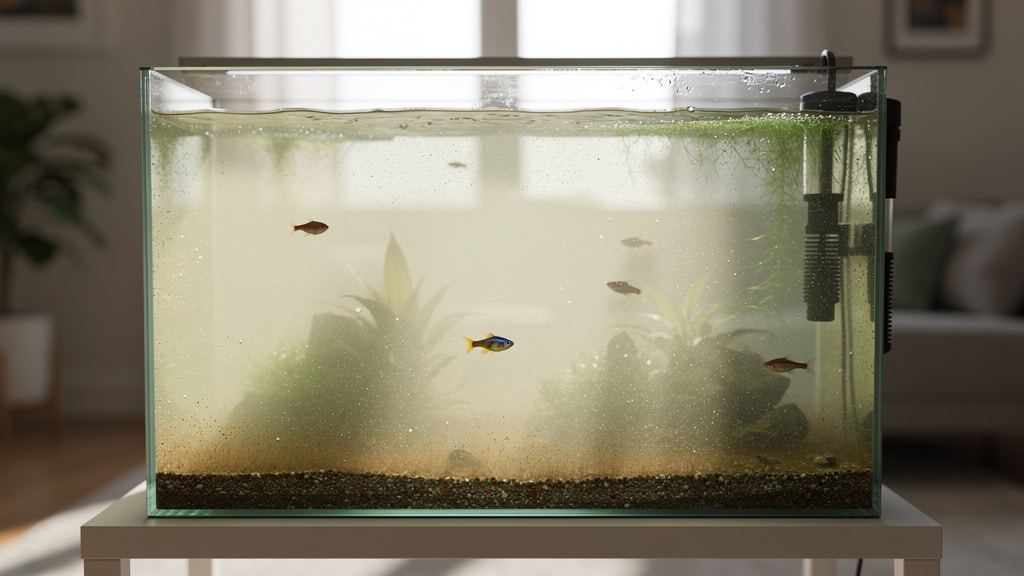
White or Milky Cloudiness
This is the most common type and usually means you’ve got a bacterial bloom. The good bacteria in your tank are multiplying rapidly, often because there’s excess waste or because your tank is brand new. This happens a lot in tanks less than eight weeks old. What many people don’t realize is that these blooms can temporarily lower oxygen levels since the bacteria consume oxygen as they grow. Even small pH shifts—as little as 0.2—can trigger a bloom if your tank’s already a bit unstable.
Green Cloudiness
That greenish haze is free-floating algae, plain and simple. It thrives when your tank gets too much light or when nitrate and phosphate levels creep up. Interestingly, green water isn’t necessarily bad for your fish—they’ll actually nibble on small amounts as a natural food source. It’s only when it takes over that it becomes a problem.
Brown or Tea-Colored Water
This typically comes from tannins leaking out of driftwood or decaying plants. It might look strange, but it’s usually harmless. In fact, some fish like bettas and certain tetras actually prefer these “blackwater” conditions because tannins have mild antimicrobial properties that can benefit them.
Common Reasons Your Tank Gets Cloudy
Overfeeding Your Fish
Extra food breaks down fast, creating waste that fuels bacterial blooms. A good rule of thumb: if your fish can’t finish their meal in about two minutes, you’re giving them too much.
Filter Not Keeping Up
Your filter needs to be properly sized for your tank. Using a filter rated for 60 liters on an 80-liter tank just won’t cut it. Here’s something most people don’t know: older, low-quality filter sponges can actually release tiny fibers into the water as they age, giving your tank a dusty, grayish appearance.
Brand New Tank Settling In
Almost every new tank goes cloudy for a while as beneficial bacteria establish themselves. This phase can last anywhere from a few days to a couple of weeks—it’s completely normal.
Stirred Up Gravel or Sand
Substrate that wasn’t rinsed well before adding releases fine particles. Even in established tanks, aggressive gravel vacuuming can kick up clouds of debris.
Too Many Nutrients
High nitrates or phosphates are like fertilizer for algae. This usually happens from overfeeding, decaying plants, or skipping water changes.
Your Tap Water
Sometimes the culprit is the fresh water you’re adding. Minerals like calcium and magnesium can cause temporary cloudiness right after a water change.
Quick Diagnosis: Figure Out Your Cause
Ask yourself these questions and you’ll usually nail down the problem in minutes. What color is the cloudiness? Did you recently add new fish, decorations, or substrate? Has your feeding routine changed? Is your filter the right size for your tank? When was your last water change? Did you recently clean or replace filter media?
How to Clear Up Your Tank
For Bacterial Blooms
Don’t go overboard with cleaning—your tank needs those bacteria to stabilize. Cut back on feeding until the water clears, do small 10–15% water changes, and make sure you’re not replacing filter media too often. Here’s something crucial: never replace all your filter media at once. Doing so wipes out beneficial bacteria and basically resets your nitrogen cycle.
For Green Algae
Limit light to 6–8 hours daily and keep the tank away from windows. Do several small water changes over the course of a week or two. Adding more live plants helps too, since they compete with algae for nutrients. Test your nitrates and try to keep them under 20 mg/l.
For Brown Tannin Water
Soak new driftwood before putting it in your tank. Add activated carbon to your filter, and do gradual water changes to lighten the tint over time.
For Better Filtration Overall
Consider upgrading to a filter rated for a slightly larger tank than you have. Always rinse filter sponges in old tank water, never tap water, which kills beneficial bacteria. Check that nothing’s clogged and water flows freely.
To Reduce General Waste
Vacuum your substrate weekly with a gravel siphon. Trim dead or dying plant leaves promptly. Give decorations a light cleaning if they’re getting excessively grimy.
How Long Until You See Clear Water?
Bacterial blooms typically clear in 2–7 days. Algae blooms take longer, usually 1–3 weeks. Tannins can disappear almost instantly with carbon, or take several days without it. Dusty substrate usually settles within a few hours to a day. Tanks with well-established bacterial colonies often clear faster.
Keeping Your Water Clear Long-Term
The best approach is prevention. Feed only what your fish will eat in about two minutes. Do weekly water changes of around 25% for most tanks. Use a filter that’s rated one size up from your actual tank size. Rinse all substrate thoroughly before adding it. Test your water weekly for ammonia, nitrite, and nitrate. Avoid overstocking—more fish means more waste and more problems.
These simple habits maintain consistent water quality and keep cloudiness from becoming a recurring issue.
The Bottom Line
Cloudy water is your aquarium’s way of communicating with you. Whether it’s bacteria finding their footing, algae getting too comfortable, or tannins seeping from driftwood, there’s always a reason—and almost always a straightforward solution. Once you identify what’s happening, you can make targeted adjustments without disrupting your fish or throwing your tank’s balance off. Stick with consistent care, and clear water becomes your new normal.