Why Does My Fish Tank Water Smell Bad?
If you’ve ever wrinkled your nose at your aquarium and wondered what’s causing that unpleasant odour, you’re not alone. A smelly fish tank is one of the most common problems aquarium owners face, and it’s usually a sign that something’s not quite right in your underwater ecosystem. The good news? Understanding why fish tank water smells bad is the first step toward fixing it and keeping your aquatic friends healthy and happy.
What Does a Healthy Fish Tank Smell Like?
Before we dive into the problems, let’s establish what’s normal. A healthy aquarium should have a mild, earthy smell, similar to a freshwater lake or stream. You might detect a faint, almost pleasant scent when you get close to the water surface. If your tank smells strongly of rotten eggs, sewage, or anything that makes you want to step back, that’s your aquarium telling you there’s an issue that needs attention.
The Main Culprits Behind Smelly Fish Tank Water
Bacterial Breakdown and Decomposition
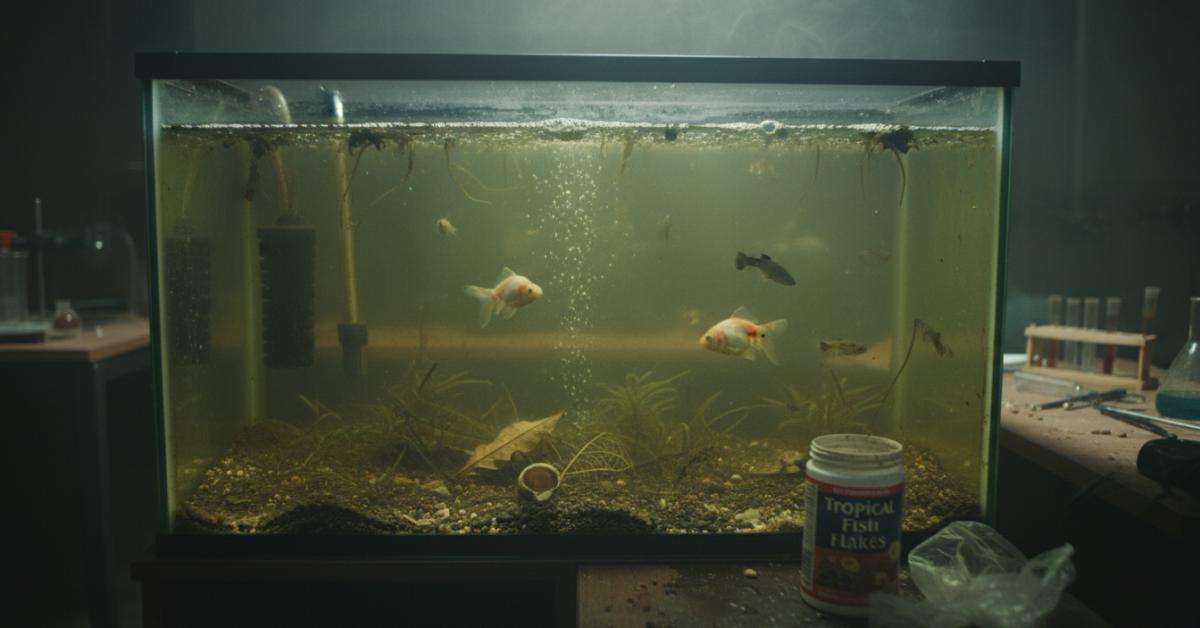
The most common reason for aquarium water that smells bad is the bacterial breakdown of organic waste. When fish produce waste, leftover food accumulates, or plant matter decays, beneficial bacteria work to break down these materials. However, when there’s too much waste for the bacteria to handle efficiently, anaerobic bacteria (which thrive without oxygen) take over and produce hydrogen sulfide gas. This is what creates that distinctive rotten egg smell in fish tanks.
Here’s something many aquarium owners don’t realise: anaerobic pockets can form in your substrate even when the rest of your tank appears well-oxygenated. These oxygen-depleted zones, often found deep within gravel beds thicker than 5-7cm (2-3 inches), become breeding grounds for smell-producing bacteria.
Overfeeding Your Fish
One of the biggest mistakes new fishkeepers make is overfeeding. When you provide more food than your fish can eat within two to three minutes, the excess sinks to the bottom and begins decomposing. This uneaten food is a major contributor to bad smells in aquariums.
Interestingly, different fish foods decompose at different rates. Freeze-dried bloodworms and other protein-rich foods break down much faster than vegetable-based flakes, creating stronger odours if left uneaten. This is why matching food type to your fish species and their eating habits is crucial.
Poor Filtration or Inadequate Water Flow
Your filter is the workhorse of your aquarium, removing debris and providing a home for beneficial bacteria. When filters become clogged, undersized, or fail completely, waste accumulates rapidly, leading to smelly tank water. Even if your filter is running, inadequate water circulation can create dead zones where waste settles and decomposes.
Dead Fish or Decaying Plant Matter
Sometimes a fish dies and goes unnoticed, especially in heavily planted tanks or aquariums with lots of decorations. A single decomposing fish can create an overwhelming smell within 24 to 48 hours. Similarly, rotting plant leaves, decaying driftwood, or decomposing algae contribute to unpleasant odours.
Overcrowding Your Aquarium
Too many fish in a limited space means excessive waste production. Even with good filtration, an overcrowded tank will struggle to maintain water quality. As a general rule, freshwater tropical fish need about 4 litres (1 gallon) of water per 2.5cm (1 inch) of fish length, though this varies significantly by species.
Less Obvious Causes of Fish Tank Odours
Substrate Problems
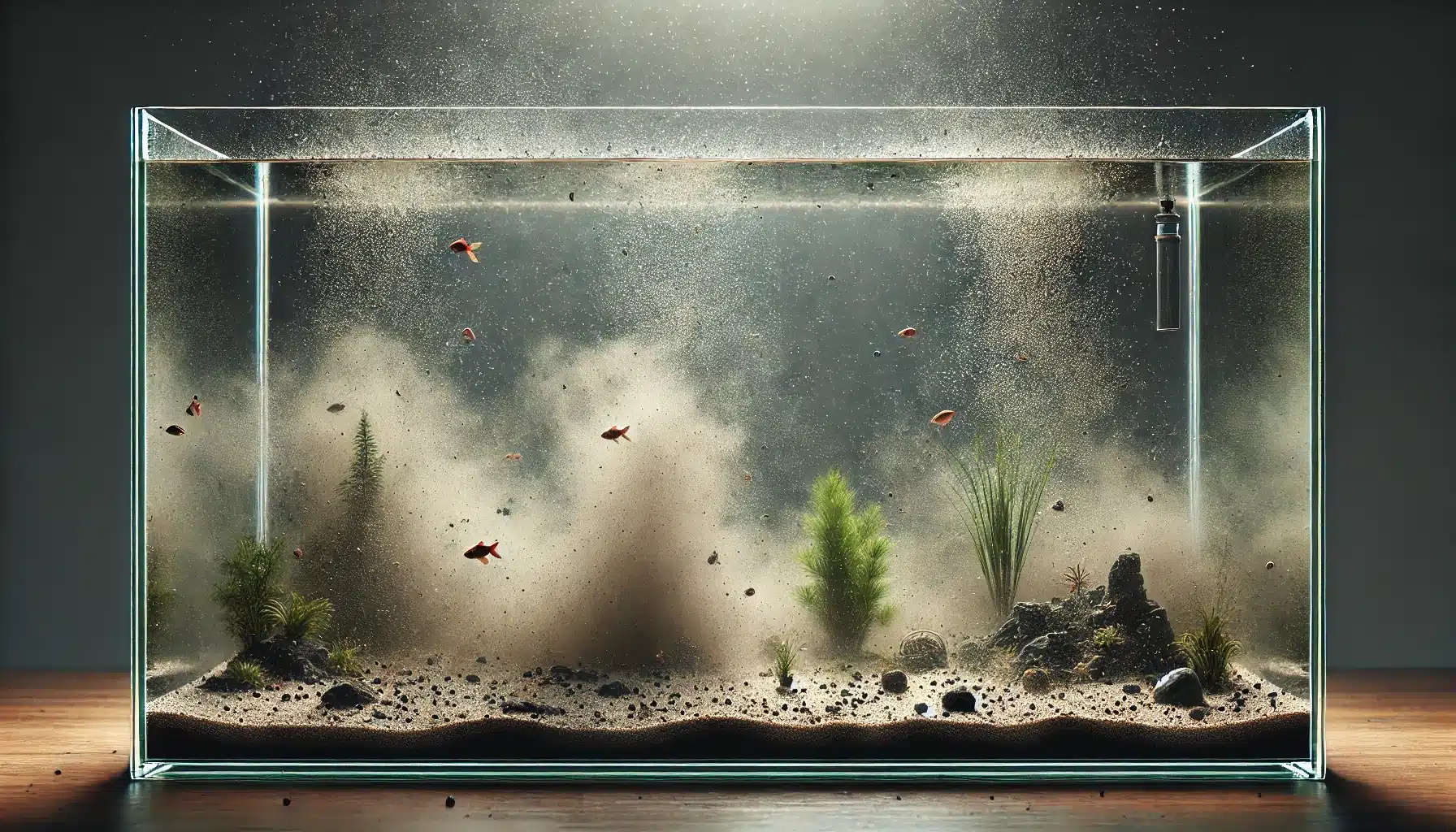
Your tank substrate can harbour pockets of decomposing matter. Gravel that’s never stirred or vacuumed becomes a waste trap, with organic material settling between the stones where it decomposes slowly. Here’s a fact that surprises many fishkeepers: sand substrates, despite appearing finer, actually resist developing anaerobic pockets better than gravel when properly maintained, because waste tends to sit on top rather than filtering down between particles. Read more about how to clean your gravel here.
Biofilm Buildup on Decorations
That slimy coating you sometimes see on decorations isn’t just unsightly; it can smell too. When biofilm (a collection of bacteria, algae, and organic matter) builds up excessively on ornaments, driftwood, or even the tank glass, it can contribute to unpleasant odours as older layers begin to break down.
Temperature-Related Issues
Water temperature affects bacterial activity and oxygen levels. In tropical tanks maintained at 24-27°C (75-80°F), bacterial decomposition happens faster than in cooler water. However, temperatures above 29°C (84°F) can accelerate waste breakdown so rapidly that even well-maintained systems develop odours. Additionally, warmer water holds less dissolved oxygen, potentially creating conditions for smell-producing anaerobic bacteria.
How to Fix a Smelly Fish Tank
Immediate Actions
When you notice your fish tank smells like rotten eggs or sewage, start with these steps:
Perform a 25-30% water change using dechlorinated water matched to your tank’s temperature. This immediately dilutes waste products and removes dissolved organic compounds causing the smell.
Remove any visible dead fish, uneaten food, or severely decaying plant matter. Check behind decorations and in corners where debris accumulates.
Clean or replace your filter media. Rinse mechanical filter media (sponges, filter floss) in old tank water to preserve beneficial bacteria while removing trapped debris. Replace chemical filtration media like activated carbon, which loses effectiveness after four to six weeks.
Long-Term Solutions
To prevent recurring odour problems, implement these maintenance practices:
Vacuum your substrate regularly. During weekly water changes, use a gravel vacuum to remove waste from between substrate particles. This prevents the buildup of decomposing organic matter that creates smells.
Feed appropriately. Only provide what your fish can consume in two to three minutes, once or twice daily. If you’re often seeing food on the bottom after feeding, you’re overfeeding.
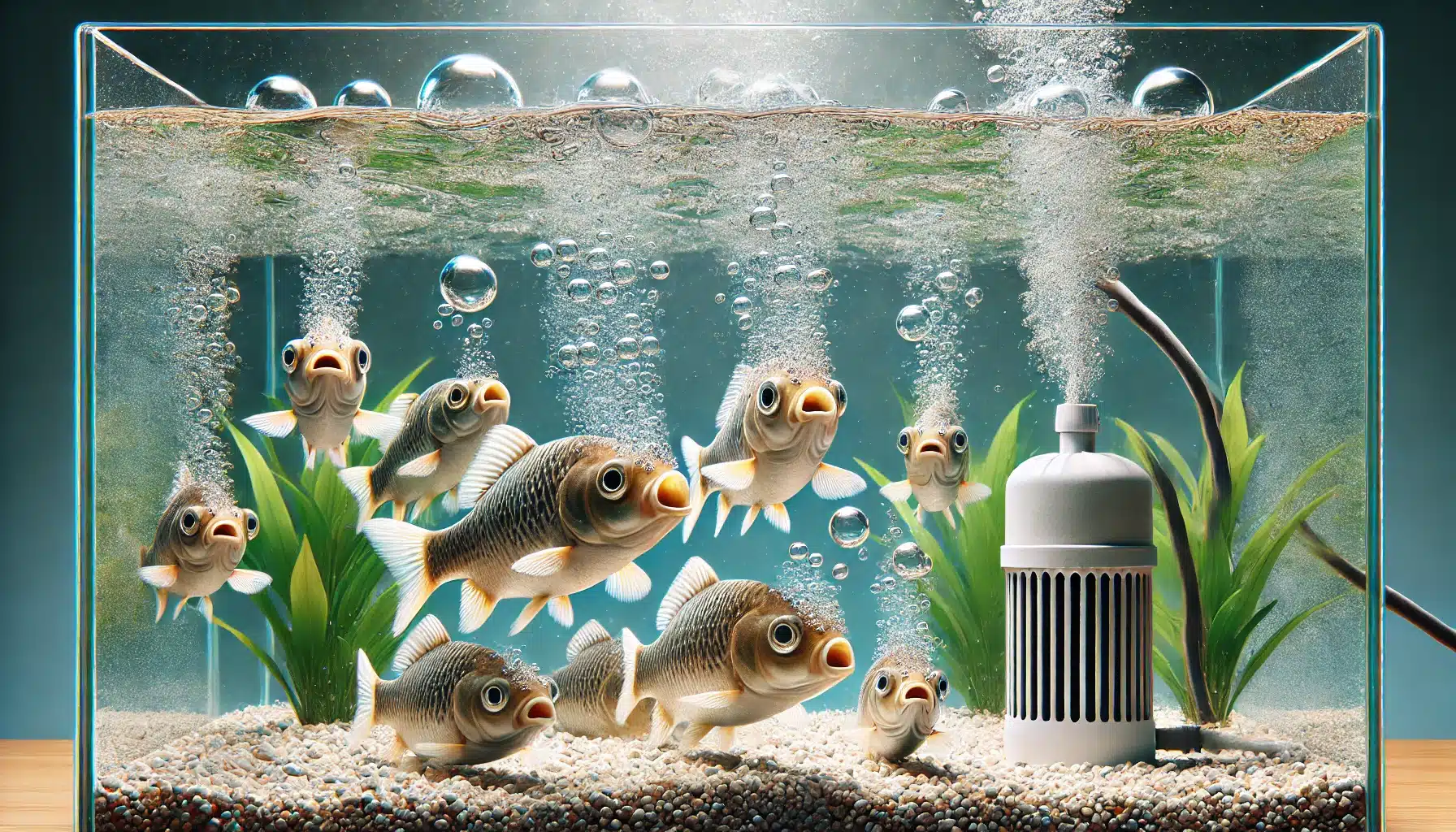
Increase water circulation. Position your filter output to create gentle water movement across the entire tank, eliminating dead zones. For larger tanks over 200 litres (50 gallons), consider adding a secondary circulation pump.
Maintain your filter properly. Clean filter media monthly and replace it according to manufacturer recommendations. Ensure your filter’s flow rate is appropriate for your tank size; it should cycle the entire tank volume at least four times per hour.
Stock responsibly. Research adult fish sizes and bioload before adding new fish. A well-stocked tank is easier to maintain than an overcrowded one.
The Nitrogen Cycle Connection
Understanding the nitrogen cycle helps prevent smelly tank water. In a properly cycled aquarium, beneficial bacteria convert toxic ammonia (from fish waste) into nitrite, then into less harmful nitrate. When this cycle is disrupted or overwhelmed, ammonia and nitrite levels spike, creating conditions for odour-producing bacteria. New tanks need six to eight weeks to establish sufficient beneficial bacteria colonies, which is why new aquariums are more prone to smell problems.
When to Worry About Fish Tank Smell
A strong, persistent odour despite regular maintenance might indicate serious water quality issues. Test your water parameters immediately using a liquid test kit (more accurate than strips). Elevated ammonia or nitrite levels at any detectable amount are toxic to fish and require immediate action, including larger water changes and reduced feeding.
If you’ve addressed all common causes and your aquarium still smells bad, consider these less common issues: bacterial infections affecting your fish, contaminated tap water used for water changes, or off-gassing from new decorations or substrate that wasn’t properly rinsed.
Prevention Is Better Than Cure
Maintaining a sweet-smelling aquarium isn’t difficult once you establish good habits. Weekly 20-25% water changes combined with substrate vacuuming form the foundation of aquarium maintenance. Monthly filter cleaning, careful feeding, and appropriate stocking levels complete the picture.
Remember that live plants actually help prevent aquarium odours by consuming nitrates and producing oxygen. A well-planted tank with proper lighting can significantly reduce maintenance demands while creating a more stable, pleasant-smelling environment.
Conclusion: A Fresh-Smelling Tank Is a Healthy Tank
Understanding why fish tank water smells bad empowers you to maintain a healthier aquarium. Most odour problems stem from excessive organic waste, poor filtration, or inadequate maintenance. By implementing regular cleaning routines, feeding appropriately, and ensuring proper water circulation, you’ll keep your aquarium smelling fresh and your fish thriving.
That unpleasant smell isn’t just a nuisance; it’s your aquarium’s way of communicating that something needs attention. Listen to what your tank is telling you and address issues promptly to keep your aquarium running well for years to come.