Let’s cut straight to it: not all fish need an air pump. That might sound counterintuitive given how common these bubbling devices are in home aquariums, but the real question isn’t whether fish universally need them. It’s whether your fish need one, and that depends on several factors that we’ll dig into right now.
Understanding when and why an air pump becomes essential can save your fish from gasping at the surface or worse. It can also save you from unnecessary equipment purchases if your setup doesn’t actually need one.
What Does an Air Pump Actually Do?
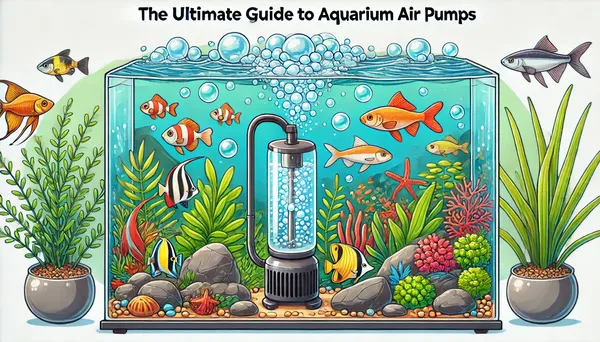
An aquarium air pump pushes air through tubing into your tank, creating those familiar streams of bubbles. But here’s the thing: fish don’t breathe these bubbles directly. They’re not swimming up and taking little gulps of the air you’re pumping in (though some species do gulp surface air, that’s a different story).
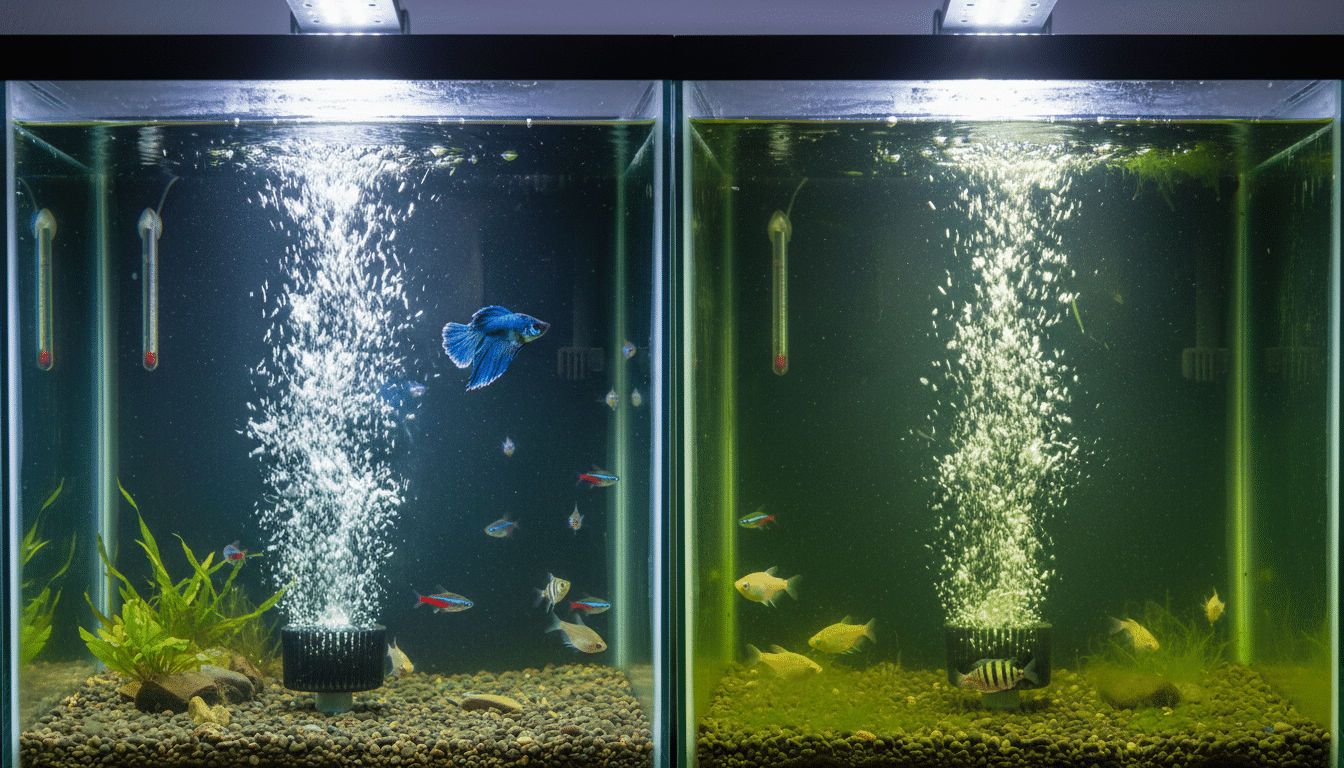
The real magic happens at the water’s surface. Those rising bubbles create water movement and surface agitation, which dramatically increases the water’s contact with air. This contact zone is where gas exchange occurs, allowing oxygen from the air to dissolve into the water while carbon dioxide escapes from it.
Think of it like stirring a hot cup of coffee to cool it faster. The more you disturb the surface, the more interaction happens between the liquid and the air around it.
When Your Fish Actually Need an Air Pump
Here’s where things get practical. Your fish need additional dissolved oxygen in specific situations, and an air pump becomes your problem solver.
When Your Tank is Overstocked
More fish means more breathing, and that means oxygen gets depleted faster than it can naturally replenish. If you’ve got a heavily stocked tank, say 40 litres (10 gallons) with a dozen small fish when it should hold six, you’re pushing the limits of natural gas exchange.
Each fish consumes oxygen and produces carbon dioxide constantly. In an overstocked aquarium, the balance tips quickly. You’ll notice fish hanging near the surface, mouths opening and closing rapidly as they try to access the oxygen-rich layer where air meets water.
When Water Temperature Climbs
Here’s a fact that surprises many people: warm water holds significantly less dissolved oxygen than cold water. At 10°C (50°F), water can hold about 11 mg/L of oxygen. Crank that up to 30°C (86°F), and it drops to roughly 7 mg/L.
That’s a nearly 40% reduction in oxygen capacity just from temperature alone. Summer heatwaves can turn a perfectly adequate tank into an oxygen-depleted nightmare for your fish, even if everything was fine during cooler months.
When You’re Medicating Your Tank
Many medications, particularly those containing formalin or copper, reduce the water’s ability to hold oxygen. If you’re treating sick fish, an air pump isn’t just helpful, it’s often critical to their survival during the treatment period.
The stress of illness combined with reduced oxygen availability creates a dangerous situation. The extra aeration from an air pump can literally mean the difference between recovery and loss.
When Your Filter Isn’t Creating Enough Surface Movement
Some filters, particularly sponge filters or internal filters set too low, don’t create adequate water circulation at the surface. If your tank’s surface looks like a mirror with barely a ripple, you’ve got a problem.
Stagnant surface water develops a thin biofilm that acts like a barrier, preventing efficient gas exchange. You need that surface constantly disturbed and refreshed. An air pump with an air stone positioned properly creates that essential movement.
Types of Fish That Demand Better Oxygenation
Not all fish have the same oxygen requirements. Species from fast-flowing streams and rivers, like goldfish, hillstream loaches, and many danios, evolved in oxygen-rich environments. Their metabolism expects abundant dissolved oxygen.
Goldfish are particularly interesting here. Despite being hardy fish, they’re actually high oxygen demanders because they’re coldwater fish with active metabolisms. Keep them in warm water without adequate aeration, and you’ll see them gasping within hours.
Conversely, fish like bettas and gouramis have a labyrinth organ that lets them breathe atmospheric air directly. They’ll survive in low-oxygen water that would kill other species. This doesn’t mean they prefer it, but they’re far more tolerant of situations where an air pump might be missing.
Signs Your Tank Needs More Oxygen Right Now
Your fish will tell you when oxygen levels drop too low. They’ll gather at the surface, a behaviour called piping, where they angle their mouths upward to access the oxygen-rich top layer. Their gill movement becomes rapid and laboured, like someone breathing hard after sprinting.
Nocturnal oxygen crashes are particularly sneaky. Plants produce oxygen during the day through photosynthesis but consume it at night. In heavily planted tanks without supplemental aeration, oxygen levels can plummet in the dark hours. You might find your fish perfectly fine during the day but gasping each morning before the lights come on.
If you notice fish becoming lethargic, losing colour, or developing more frequent infections, low dissolved oxygen might be an underlying cause weakening their immune systems.
What an Air Pump Can’t Fix
Let’s be clear about something: an air pump treats symptoms, not root causes. If your tank is overstocked, the solution isn’t just adding an air pump, it’s reducing the fish load. If temperature is creeping up, you need cooling solutions, not just more bubbles.
An air pump also won’t fix ammonia or nitrite problems. New tank owners sometimes think extra aeration will somehow clean the water or speed up the nitrogen cycle. It doesn’t work that way. You still need proper filtration and cycled biological media to handle fish waste.
That said, increased oxygen does help beneficial bacteria work more efficiently since they’re aerobic organisms. But don’t mistake this for a shortcut around proper tank cycling.
Choosing the Right Air Pump Setup
If you’ve determined your tank needs supplemental aeration, selecting the appropriate equipment matters. Air pumps are rated by their output, typically measured in litres per hour. A small 40-litre (10-gallon) tank needs far less output than a 200-litre (50-gallon) setup.
The air stone you attach makes a difference too. Fine bubble stones create smaller bubbles with more total surface area, meaning better gas exchange per volume of air pumped. Those tiny bubbles also create a more uniform circulation pattern throughout the tank.
Placement strategy isn’t complicated but it matters. Position air stones away from filter intakes so you’re not just recycling the same water. Aim for opposite corners to create a circulation pattern that moves water throughout the entire tank volume.
Alternatives to Traditional Air Pumps
Sometimes you can solve oxygen issues without adding an air pump at all. A properly positioned filter outflow that breaks the water surface creates substantial aeration. Canister filters with spray bars or HOB (hang-on-back) filters with adjustable flow can often provide everything your fish need.
Adding a small powerhead aimed at the surface creates both water movement and gas exchange. This works particularly well in larger tanks where you want directional flow along with oxygenation.
Even dropping your water level slightly so your filter outflow splashes more creates additional surface disruption. It’s not elegant, but it’s effective and costs nothing.
The Bottom Line on Air Pumps and Fish Health
So do fish need an air pump? It’s entirely situational. A lightly stocked, well-filtered tank with good surface movement in cool temperatures probably doesn’t need one. That same tank in summer, or with twice the fish, or during a medication treatment absolutely does.
The key is understanding that fish don’t need bubbles, they need dissolved oxygen. An air pump is simply one tool among several for maintaining adequate oxygen levels. Watch your fish behaviour, monitor your conditions, and adjust accordingly.
If you’re ever in doubt, adding an air pump rarely hurts (unless you’re keeping species that prefer calmer water). It’s cheap insurance against oxygen problems, and you can always adjust the flow or remove it if it proves unnecessary. But when your fish genuinely need that extra oxygen, having an air pump running might just save their lives.