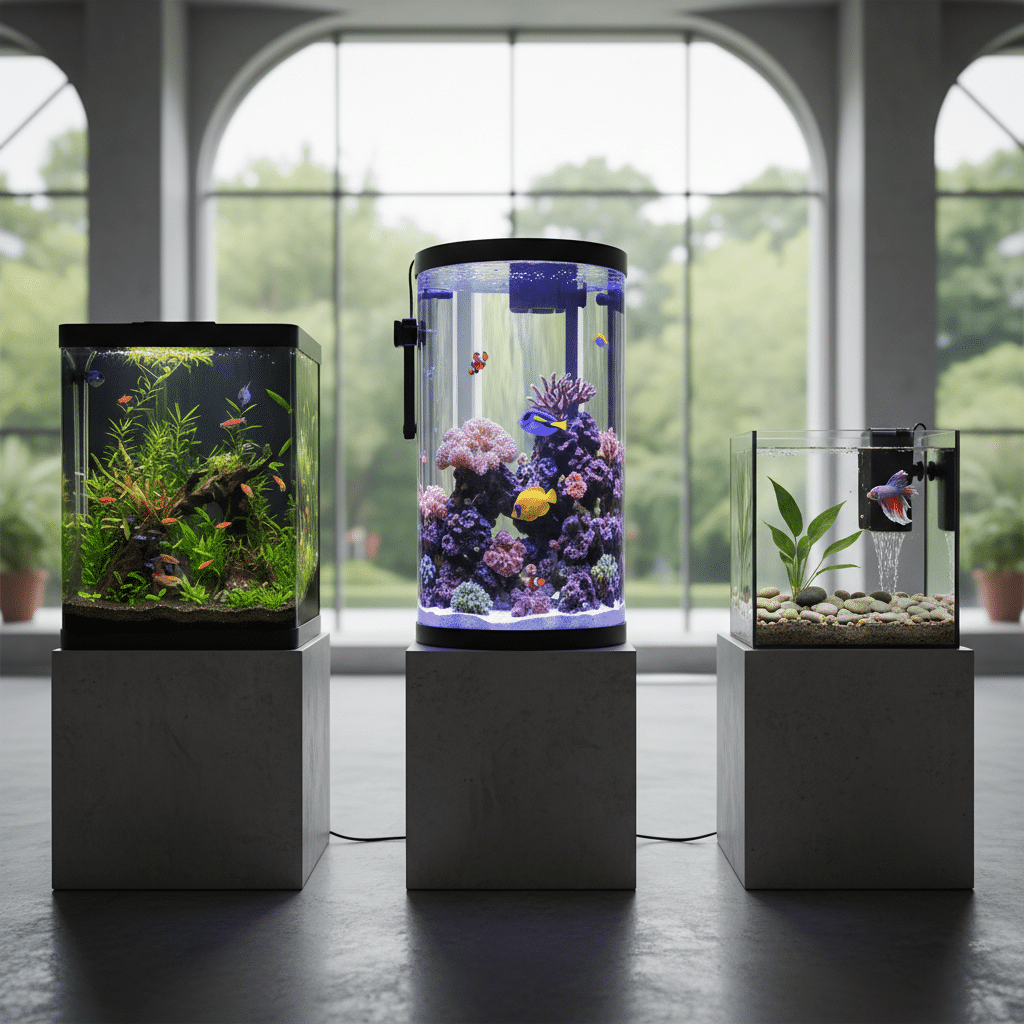
Which Type of Fish Tank is best?
Choosing your first aquarium can feel overwhelming. Walk into any pet store and you’ll find glass tanks, acrylic tanks, bowls, and even high-tech systems that look like they belong in a science lab. So which type of fish tank is best for your needs? The answer depends on your budget, experience level, the fish you want to keep, and where you’ll place your aquarium. Let’s break down everything you need to know to make the right choice.
Understanding the Main Types of Fish Tanks
Before diving into which fish tank is best, it’s important to understand what’s available. The aquarium market offers several distinct types, each with specific advantages and drawbacks.
Glass Aquariums: The Traditional Choice
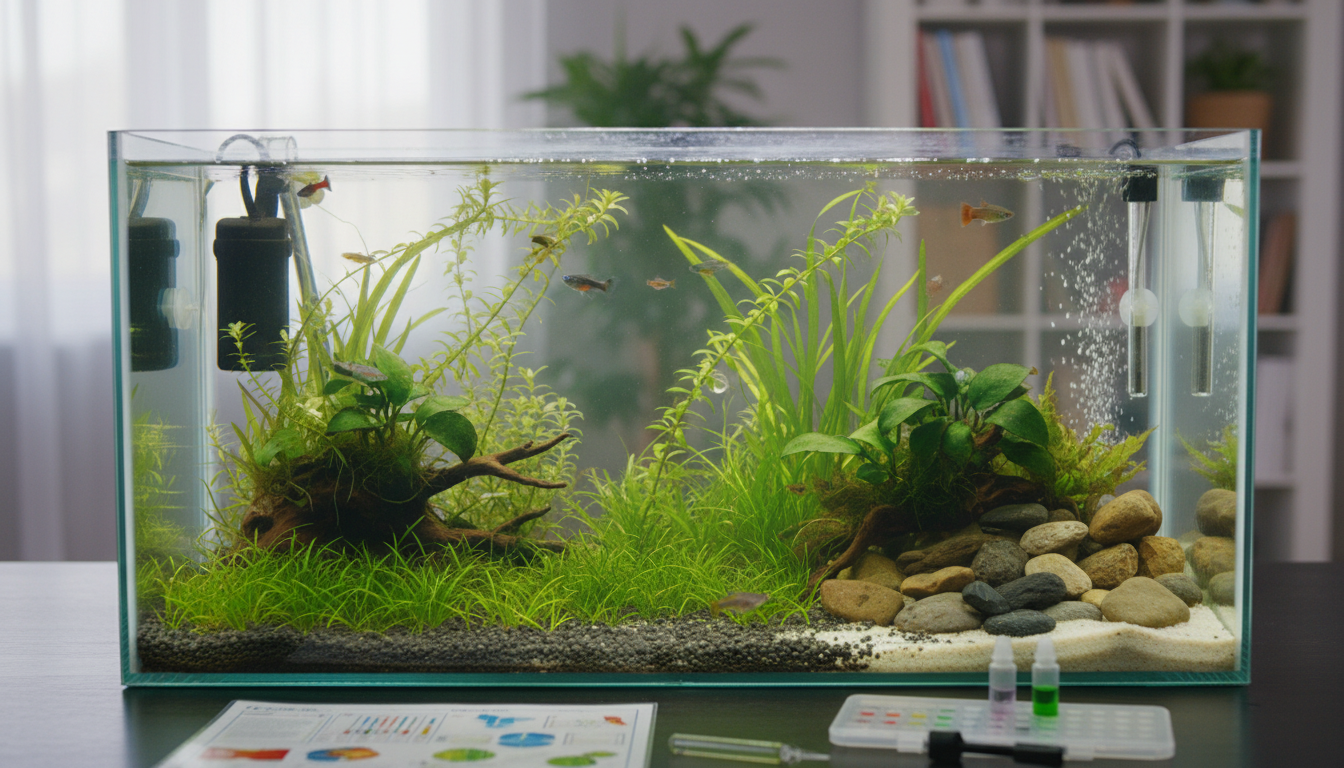
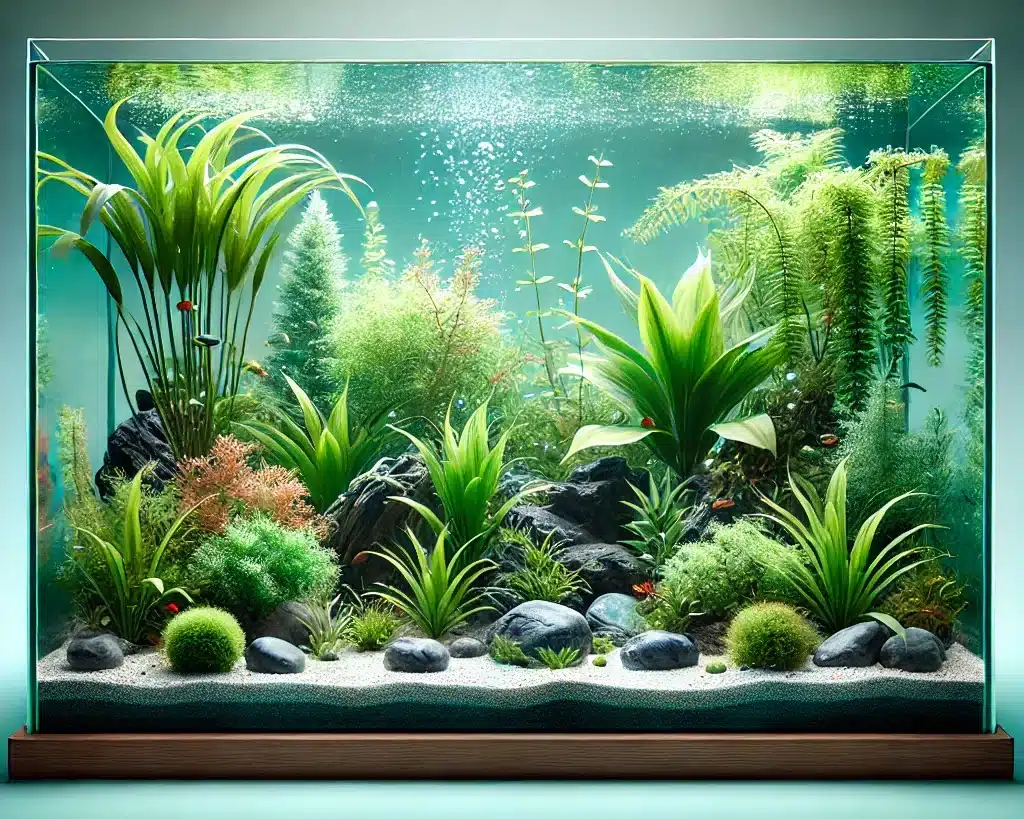
Glass tanks are the most common type you’ll see in homes and pet stores. They’re made from panels of glass joined together with silicone sealant. These tanks are scratch-resistant, maintain their clarity over years of use, and won’t yellow with age. Glass aquariums are generally more affordable than acrylic alternatives and can handle the weight of rocks and decorations without warping.
One lesser-known fact about glass aquariums is that they actually have better optical clarity than acrylic when viewed straight on, with no distortion at the seams. However, glass is significantly heavier than acrylic, approximately 10 times heavier for the same size tank, which can make moving and positioning them more challenging.
Acrylic Aquariums: The Modern Alternative
Acrylic tanks are constructed from moulded plastic polymers. They’re incredibly popular among experienced aquarists because they’re much lighter than glass and can be manufactured in custom shapes that glass cannot achieve. Acrylic also has superior insulation properties, helping maintain stable water temperatures with less energy consumption.
The downside? Acrylic scratches easily, even from routine cleaning with the wrong tools. Many people don’t realise that acrylic aquariums also have slightly rounded corners where panels meet, which can create minor visual distortion. However, for large aquariums over 570 litres (150 gallons), acrylic is often the safer choice because it’s more impact-resistant than glass and less likely to catastrophically fail.
Nano Tanks and All-in-One Systems
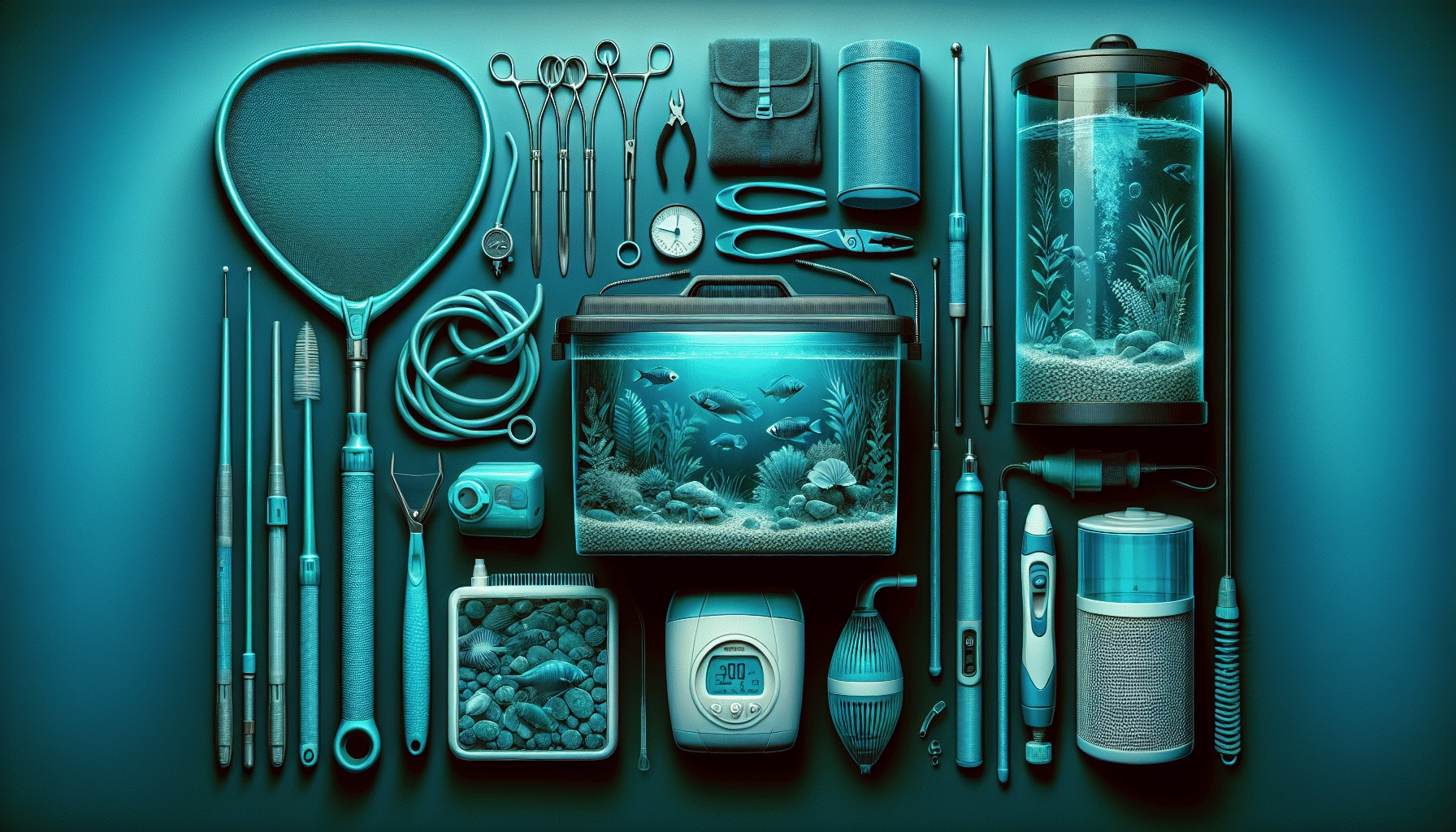
Nano tanks are small aquariums, typically under 76 litres (20 gallons), designed for compact spaces. All-in-one systems come with integrated filtration, lighting, and sometimes even heaters built into the tank design. These are excellent for beginners who want a plug-and-play solution without researching compatible equipment separately.
Here’s something most new fish keepers don’t know: nano tanks are actually more difficult to maintain than larger tanks despite their small size. Water parameters fluctuate much more rapidly in smaller volumes, meaning temperature swings and toxic ammonia spikes happen faster and can be more dangerous to fish.
Choosing the Best Fish Tank Based on Your Needs
Now that you understand the tank types available, which type of fish tank is best for your specific situation? Let’s look at different scenarios.
Best Fish Tank for Beginners
If you’re new to fishkeeping, a glass aquarium between 95-190 litres (25-50 gallons) is your best bet. This size range is large enough to maintain stable water parameters but not so large that maintenance becomes overwhelming or expensive. Glass is more forgiving than acrylic for beginners who might accidentally scratch the interior while cleaning.
Consider an all-in-one system or a starter kit that includes a filter, heater, and lighting. These packages eliminate the guesswork and ensure all components are compatible. Rectangle-shaped tanks offer the most swimming space for fish and are easier to clean than curved or uniquely shaped alternatives.
Best Fish Tank for Small Spaces
Living in an apartment or dorm room? A nano tank between 38-76 litres (10-20 gallons) can work, but commit to frequent water testing and maintenance. Acrylic might be better here due to its lighter weight, especially if you’re concerned about floor loading or need to move it occasionally.
Vertical or column-style tanks might seem like space-savers, but they’re poor choices for most fish. Most fish species swim horizontally rather than vertically, so a tank with more horizontal swimming space is always better, even if it has a smaller volume.
Best Fish Tank for Saltwater
Planning a marine aquarium? Glass is typically preferred for saltwater setups because salt creep (salt residue that builds up on surfaces) is harder to remove from scratched acrylic. You’ll want at least 190 litres (50 gallons) for a beginner saltwater tank, as marine fish are less tolerant of water quality fluctuations than freshwater species.
Interestingly, saltwater aquariums actually require less frequent water changes than freshwater tanks when properly maintained with live rock and adequate filtration. The live rock acts as a biological filter, housing beneficial bacteria that process waste more efficiently.
Best Fish Tank for Specific Fish Species
Different fish have different needs, and the best aquarium type varies accordingly. Goldfish need a minimum of 76 litres (20 gallons) for the first fish and produce significant waste, so larger is always better. Betta fish can survive in smaller tanks but thrive in 38 litres (10 gallons) or more with a heater maintaining 24-27°C (75-80°F).
For tropical community fish like tetras, guppies, and corydoras, a 95-litre (25-gallon) glass tank is ideal. If you’re keeping aggressive cichlids or large species like oscars, you’ll need 190 litres (50 gallons) minimum, potentially going up to 380 litres (100 gallons) or more as they grow.
Key Features to Consider When Selecting Your Tank
Tank Shape and Fish Behaviour
The shape of your aquarium impacts fish health more than most people realise. Long, rectangular tanks provide maximum surface area for oxygen exchange and swimming space. Tall, narrow tanks look dramatic but offer poor oxygenation and limited territory for fish.
Bowls and spherical tanks are visually appealing but are among the worst choices for fish welfare. They distort the fish’s view of the outside world, provide minimal surface area for oxygen, and are extremely difficult to filter properly. Despite their popularity, goldfish bowls are actually unsuitable for goldfish or any other fish species.
Material Durability and Maintenance
Consider how much time you’ll spend maintaining your aquarium. Glass requires less careful cleaning and is more resistant to daily wear, but the silicone seals can deteriorate over time, typically after 10-15 years. Acrylic won’t develop seal failures but will accumulate scratches that cloud your view over the years.
For cleaning, glass can be scrubbed with standard algae scrapers, while acrylic requires special soft pads or magnetic cleaners designed specifically for acrylic surfaces. Factor in these ongoing maintenance requirements when deciding which type of fish tank is best for your lifestyle.
Weight and Structural Considerations
Never underestimate the total weight of a filled aquarium. Water weighs approximately 1 kilogram per litre (8.3 pounds per gallon), and you need to add the weight of the tank itself, substrate, rocks, and decorations. A 190-litre (50-gallon) glass tank can weigh over 225 kilograms (500 pounds) when fully set up.
Ensure your floor can support the weight and that you have a proper aquarium stand rated for your tank size. Standard furniture is rarely adequate. This is where acrylic’s lighter weight can be advantageous, especially for second-floor installations or older buildings.
Budget Considerations for Different Tank Types
Glass aquariums are generally the most budget-friendly option, with basic tanks starting around £30-50 for smaller sizes. Acrylic tanks typically cost 50-100% more than equivalent glass tanks. Custom-built or designer aquariums can run into thousands of pounds regardless of material.
Remember that the tank itself is just the beginning. Budget for filtration, heating, lighting, substrate, decorations, water testing kits, and of course, the fish themselves. A complete setup for a 95-litre (25-gallon) beginner tank typically costs £150-300 when purchasing quality equipment that will last.
Making Your Final Decision
So which type of fish tank is best? For most people, especially beginners, a glass aquarium between 95-190 litres (25-50 gallons) offers the best balance of affordability, ease of maintenance, and fish welfare. It’s large enough for stable water conditions but manageable for weekly maintenance. Glass’s scratch resistance and clarity make it ideal for learning proper aquarium care.
If budget isn’t a concern and you want a custom shape or very large tank, acrylic becomes attractive. For those with space constraints, a well-maintained nano tank can work, but be prepared for more demanding maintenance schedules.
Ultimately, the best fish tank is one you’ll maintain consistently, that fits your space and budget, and that provides a healthy environment for your chosen fish species. Start with these fundamentals, and you’ll create a thriving aquatic ecosystem that brings years of enjoyment.