Owning a fish tank is one of the most rewarding hobbies, but it comes with responsibilities that go beyond feeding your fish and changing the water. One crucial maintenance task that many aquarium owners overlook is resealing their tank. Knowing when to reseal a fish tank can save you from devastating leaks, water damage to your home, and stress for your aquatic pets.
In this guide, we’ll walk you through everything you need to know about fish tank resealing, from spotting the warning signs to understanding how long your tank’s seal should last.
Understanding Aquarium Silicone and Its Lifespan
The silicone sealant in your aquarium is what keeps water safely contained. It’s the unsung hero working 24/7 to prevent leaks, and like any material, it doesn’t last forever. Most aquarium silicone has a lifespan of approximately 10 to 15 years, though this can vary based on several factors including water quality, temperature fluctuations, and how well the tank was sealed originally.
Here’s something many people don’t realize: the silicone in your tank actually degrades faster in warmer temperatures. If you keep tropical fish and maintain water temperatures around 26-28°C (79-82°F), your sealant may deteriorate more quickly than in a coldwater setup. This is because heat accelerates the chemical breakdown of silicone over time.
Clear Warning Signs Your Tank Needs Resealing
Recognizing when to reseal a fish tank starts with knowing what to look for. Your aquarium will usually give you plenty of warning before a catastrophic failure occurs.
Visible Silicone Deterioration
The most obvious indicator is the condition of the silicone itself. Inspect all the seams carefully, both inside and outside your tank. Healthy aquarium silicone should be clear or uniformly colored, flexible, and firmly attached to the glass. Warning signs include silicone that appears cloudy or yellowed, has become brittle or crusty, shows gaps or separations from the glass, or has visible cracks running through it.
Water Seepage and Dampness
Even tiny leaks are serious red flags. Check regularly for water pooling around the base of your tank, dampness on the stand or floor beneath, moisture appearing between the glass panes, or a consistent drop in water level that exceeds normal evaporation.
Interestingly, small leaks don’t always grow gradually. An aquarium seal can go from a minor seep to a complete failure quite suddenly, especially once water begins penetrating between glass panes. This is why even the smallest leak warrants immediate attention.
The Bulging Effect
This lesser-known warning sign is critical: if you notice your tank’s glass panels bowing outward, even slightly, your silicone seals are likely failing. The water pressure is no longer being properly distributed, and the structural integrity is compromised. This is particularly common in larger tanks holding 200 litres (53 gallons) or more.
Age-Related Resealing Guidelines
Beyond visible signs of deterioration, the age of your aquarium should factor into your resealing decisions. If your tank is over 10 years old, it’s worth conducting a thorough inspection annually, even if you haven’t spotted obvious problems. Tanks between 15 and 20 years old should be considered high priority for resealing, regardless of their appearance. Any aquarium over 20 years old really should be resealed as a preventative measure.
A key thing to remember, the brand and quality of the original silicone matter significantly. Tanks sealed with premium aquarium-grade silicone can last well beyond 15 years, while cheaper alternatives might fail in under a decade. Unfortunately, unless you built the tank yourself, you likely don’t know which type was used.
Tank Size and Resealing Frequency
The volume of water your tank holds directly impacts the stress on silicone seals. Small tanks under 40 litres (10 gallons) experience less pressure on their seams and may maintain their seals longer. Medium-sized tanks between 40-200 litres (10-53 gallons) typically follow the standard 10-15 year guideline. However, large tanks over 200 litres (53 gallons) place substantially more stress on silicone and may require resealing sooner.
What many people don’t realize is that tall tanks experience greater pressure at their bottom seams than long, shallow tanks of the same volume. Water pressure increases with depth, so a tall 150-litre (40-gallon) tank actually stresses its bottom seals more than a standard 150-litre setup.
Environmental Factors That Accelerate Seal Degradation
Your tank’s environment plays a surprisingly significant role in how quickly silicone deteriorates. Direct sunlight exposure breaks down silicone faster than you’d expect, as UV rays weaken the molecular structure. Placement near heating vents or radiators creates temperature fluctuations that cause the glass and silicone to expand and contract repeatedly, weakening bonds over time.
High humidity environments, while seemingly harmless to a water-filled tank, can actually promote mold growth on external silicone surfaces. Aggressive cleaning products or algae removers that come into contact with seals can chemically degrade the silicone as well.
The Water Test Method
If you’re uncertain whether your tank needs resealing, there’s a simple diagnostic you can perform. Empty your tank completely and let it dry for 24-48 hours. Fill it outdoors or in a space where leakage won’t cause damage. Monitor closely for 48-72 hours, checking all seams for any signs of moisture or seepage.
This water test reveals weaknesses that might not be apparent during normal use. However, once you’ve identified a leak through testing, never refill that tank with fish before the issue is addressed. The stress of emptying and refilling can worsen existing seal failures.
Preventative Resealing Versus Emergency Repairs
There’s a significant difference between planned, preventative resealing and emergency repair work. Preventative resealing allows you to work at your own pace, properly rehome your fish temporarily, and ensure quality workmanship. You can choose the best silicone and take time to remove old sealant thoroughly.
Emergency repairs after a leak, however, create stress for your fish, rush the job quality, and may result in water damage to your home. The disruption to your aquarium’s biological balance can also trigger ammonia spikes and stress-related fish illness.
Planning ahead is always the better choice, which is why monitoring your tank’s condition and resealing proactively is so important.
Can You Reseal Without Emptying the Tank?
This is a common question, and the answer is clear: you cannot properly reseal an aquarium while it’s full. Effective resealing requires complete access to all seams, thorough cleaning and drying of glass surfaces, and proper curing time for new silicone. Attempting to patch seals with water present is a temporary fix at best and typically fails within weeks or months.
The only exception might be a minor external cosmetic seal repair that isn’t structural, but even this isn’t recommended for long-term reliability.
Making the Decision: DIY or Professional Help
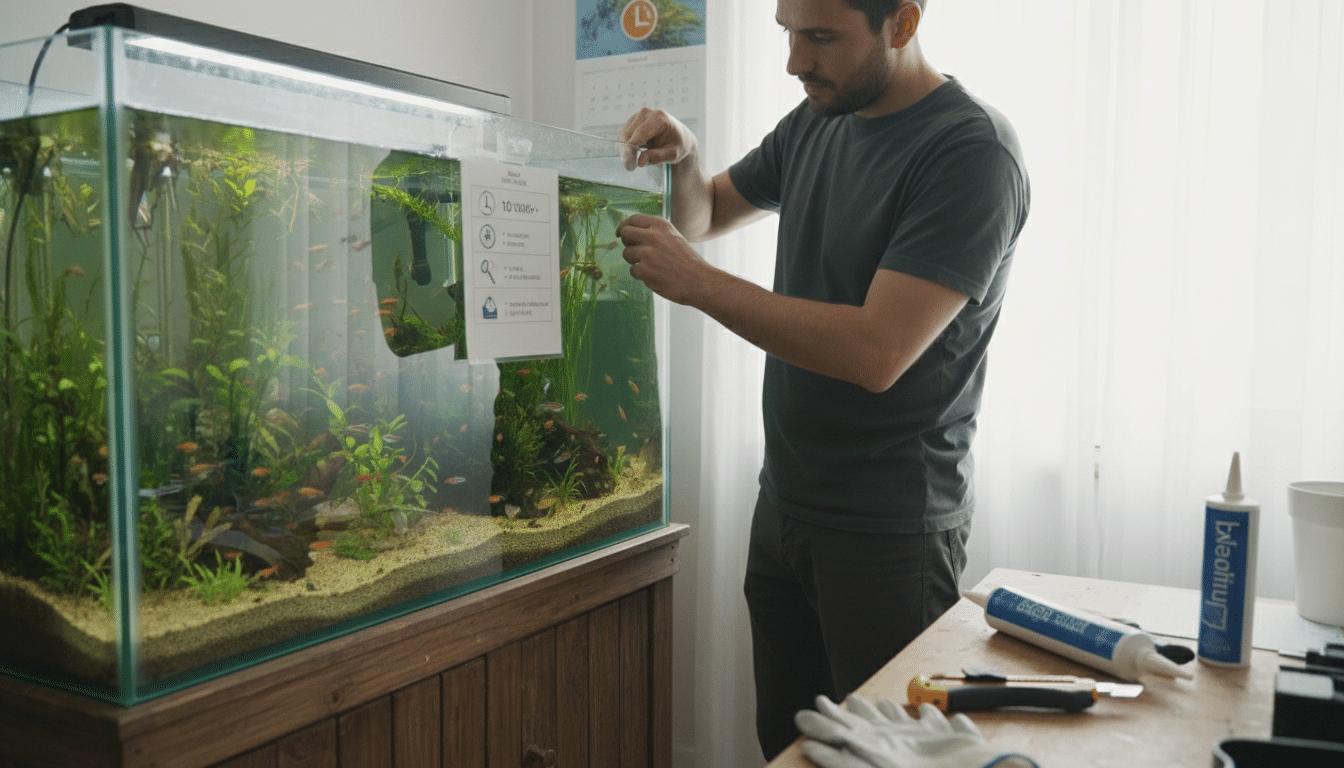
Deciding when to reseal a fish tank also means deciding who should do the work. Resealing is definitely possible as a DIY project for smaller tanks under 150 litres (40 gallons), especially if you’re reasonably handy. You’ll need aquarium-safe silicone, razor blades for removing old sealant, isopropyl alcohol for cleaning, and plenty of patience.
For larger tanks, especially those over 300 litres (79 gallons), professional resealing is worth considering. The consequences of improper sealing increase dramatically with tank size. Some aquarium specialists or glass companies offer resealing services at reasonable rates, and the peace of mind may be worth the investment.
Conclusion: Stay Proactive to Avoid Disaster
Knowing when to reseal a fish tank is about being observant, understanding your aquarium’s age and history, and taking action before small problems become big disasters. Regular inspections, awareness of warning signs, and age-appropriate preventative maintenance will keep your aquatic environment safe for years to come.
Remember that resealing isn’t a reflection of poor tank quality or maintenance; it’s simply part of responsible aquarium ownership. The silicone that keeps hundreds of litres of water contained is working constantly under pressure, and eventually, it needs attention. By staying ahead of the curve and resealing proactively, you protect not only your fish but also your home and your peace of mind.
If your tank is approaching that 10-year mark or showing any of the warning signs discussed, don’t wait. Start planning your resealing project now, before you’re dealing with an emergency leak and scrambling to save your fish.