The Minimum Tank Size for a Betta Fish
Getting your first betta fish is exciting, but choosing the right tank size can make or break your fish’s health and happiness. While you might see bettas in tiny cups at pet stores, these beautiful fish actually need way more space than most people think. Let’s dive into exactly what size fish tank for a betta will keep your new finned friend thriving.
Here’s the straight answer: your betta needs at least 19 litres (5 gallons) as an absolute minimum. Sure, bettas can survive in smaller spaces, but there’s a huge difference between surviving and actually living well. Think of it like this: you could technically live in a closet, but wouldn’t you prefer a proper bedroom?
The reality is that betta fish tanks smaller than 19 litres create serious problems. Water quality deteriorates quickly in small volumes, meaning toxins like ammonia and nitrites build up faster than you can manage them. This puts constant stress on your betta’s immune system and can lead to diseases and a shortened lifespan.
Why Bigger Is Actually Better
Here’s something most people don’t know: bettas in larger tanks of 38 litres (10 gallons) or more display significantly more natural behaviors than those kept in minimum-sized tanks. Research shows they’re more active, build better bubble nests, and exhibit less stress-related behavior like glass surfing.
A larger betta fish aquarium gives you more room for plants, decorations, and swimming space. Plus, it’s way more forgiving when it comes to water quality. More water means diluted waste and more stable temperature, which translates to a healthier fish and less maintenance headaches for you.
Understanding Betta Fish Space Requirements
Wild bettas live in shallow rice paddies and slow-moving streams in Southeast Asia, but these environments stretch for metres in all directions. Your betta isn’t adapted to tiny containers; they’re actually quite active swimmers when given the chance.
When considering what size tank does a betta need, think about horizontal swimming space rather than just volume. Bettas prefer long, shallow tanks over tall, narrow ones because they naturally swim horizontally and need to surface frequently for air. Yes, bettas are labyrinth fish, meaning they breathe atmospheric air at the surface, which is why a longer tank with more surface area works better.
The Hidden Cost of Small Tanks
Here’s another lesser-known fact: bettas kept in tanks smaller than 19 litres (5 gallons) have measurably higher stress hormone levels, which directly impacts their coloration, fin quality, and overall vitality. Those vibrant colors you love? They’ll fade in a cramped environment.
Small betta bowls also make it nearly impossible to maintain stable water parameters. Temperature fluctuations happen rapidly in small volumes, and bettas are tropical fish requiring consistent warmth between 24-27°C (75-80°F). Without a heater, which is difficult to use effectively in tiny tanks, your betta faces constant temperature stress.
Recommended Tank Sizes for Different Setups
The 19-Litre (5-Gallon) Setup
This is your starting point for a proper betta tank size. A 19-litre tank gives you enough space for a heater, filter, some plants, and swimming room. It’s manageable for beginners and fits on most desks or counters. You’ll need to stay on top of weekly water changes, but water parameters remain relatively stable.
The 38-Litre (10-Gallon) Sweet Spot
This is where things get really good. A 38-litre tank offers exceptional water stability, room for elaborate aquascaping, and the option to add compatible tank mates like snails or certain small schooling fish. Bettas in 38-litre tanks show up to 40% more swimming activity compared to those in minimum-sized enclosures. The extra space lets you create different zones with plants and decorations, giving your betta mental stimulation.
Going Larger: 75+ Litres (20+ Gallons)
While not necessary, larger tanks create stunning display pieces and the most stable environments possible. You’ll have endless options for betta tank setup creativity, and your fish will have room to truly explore and exercise. Many experienced keepers find that once they upgrade to this size, they never go back.
Common Mistakes When Choosing Tank Size
The biggest mistake new owners make is believing the myth that bettas prefer small spaces because they come from “puddles.” While wild bettas do encounter shallow water during dry seasons, these are temporary situations they endure, not ideal conditions. Wild bettas will actually travel considerable distances to find larger bodies of water when their pools start shrinking.
Another misconception is that you can’t use a filter in a betta tank because they need still water. Actually, bettas appreciate gentle water flow and benefit enormously from filtration. The key is choosing a filter with adjustable flow or baffling the output so it doesn’t create a strong current.
Some people also think that upgrading tank size means more work, but the opposite is true. Larger volumes of water are chemically more stable, meaning fewer emergency water changes and less chance of sudden parameter swings that stress your fish.
Setting Up Your Betta Tank Properly
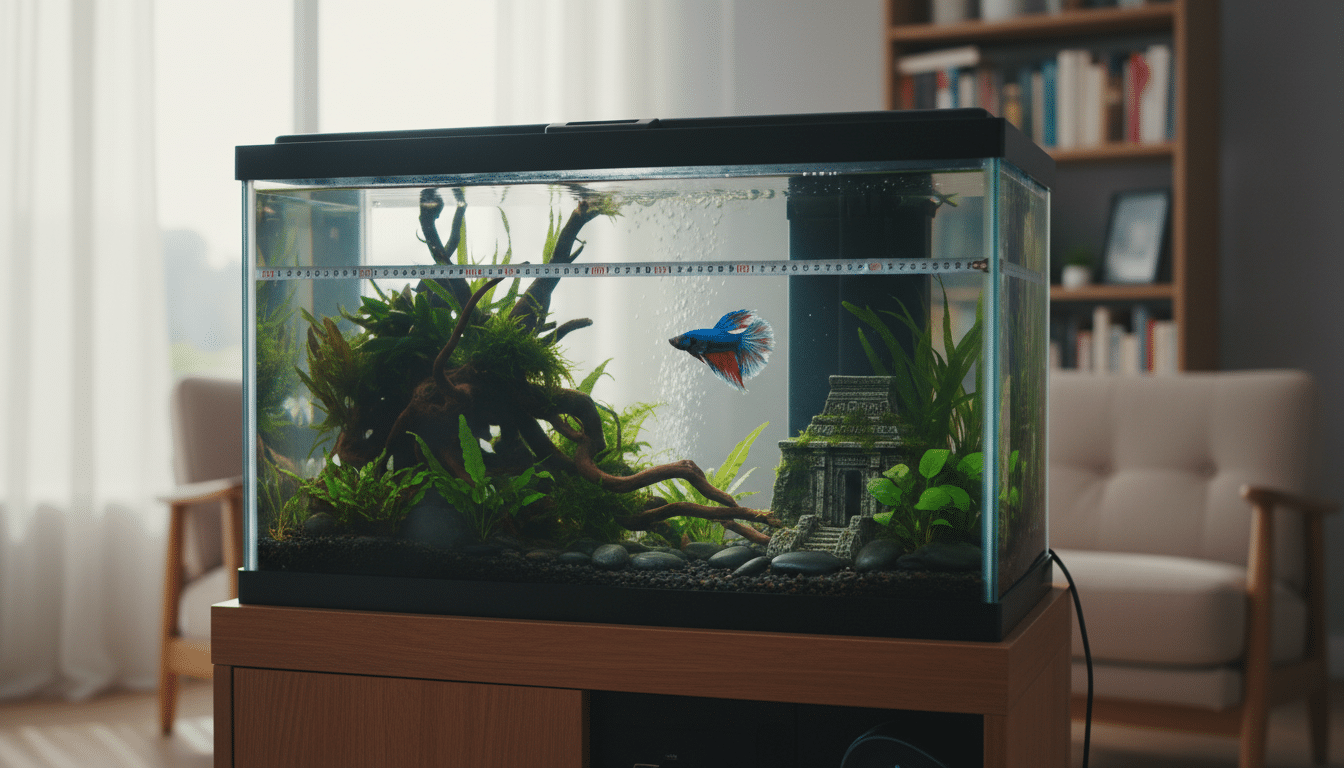
Once you’ve chosen the right size aquarium for betta, proper setup matters just as much. Your tank needs a gentle filter rated for your tank size, a reliable heater to maintain 24-27°C (75-80°F), and a thermometer to monitor temperature.
Fill your tank with live or silk plants rather than plastic ones that can tear delicate betta fins. Include hiding spots like caves or driftwood, but ensure there’s still plenty of open swimming space. A darker substrate often helps bettas feel more secure and enhances their colors.
Here’s a crucial detail many overlook: bettas can jump, especially in new environments or when startled, so always use a lid with your tank. Leave a small gap between the water surface and lid so your betta can easily access air.
Tank Size Impact on Betta Health and Lifespan
The connection between best tank size for betta fish and longevity is clear. Bettas in properly sized tanks of 19 litres or more typically live 3-5 years, with some reaching 7 years with excellent care. Those kept in undersized containers rarely make it past 1-2 years.
Larger tanks reduce the incidence of common betta diseases like fin rot and ich because water quality remains consistent. The reduced stress also means stronger immune systems and more resistance to pathogens. You’ll spend less money on medications and treatments when you invest in proper housing from the start.
Making the Final Decision
When deciding what size fish tank for a betta, consider your space, budget, and commitment level. If you’re new to fishkeeping, a 19-litre (5-gallon) tank hits the minimum requirement while remaining manageable. If you’ve got the space and want to provide an exceptional home, aim for 38 litres (10 gallons) or larger.
Remember that your initial tank investment pays off through easier maintenance, healthier fish, and fewer problems down the road. A properly sized tank isn’t just better for your betta; it’s actually easier for you as a keeper. Plus, your betta deserves space to swim, explore, and display its natural behaviors.