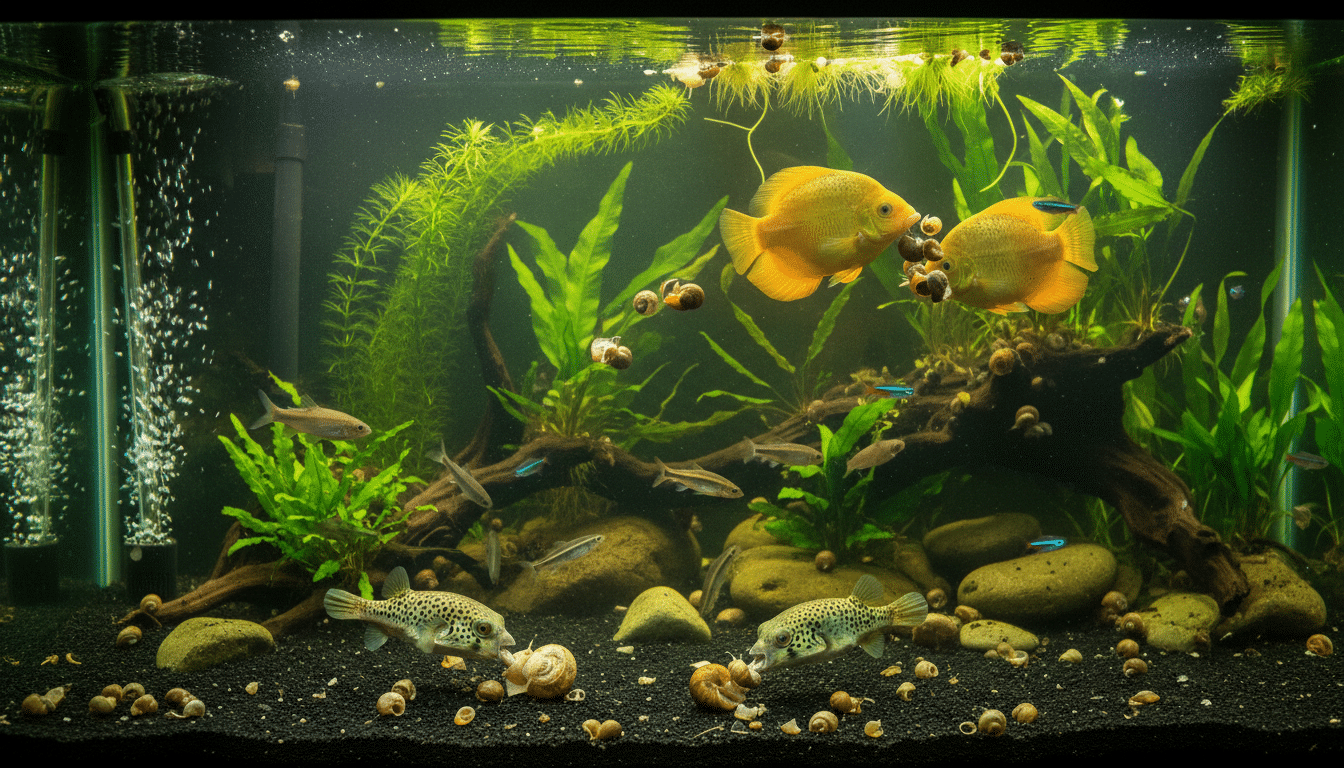
What Fish Eat Snails?
Dealing with a snail infestation in your aquarium can be frustrating. These little creatures multiply quickly and can overwhelm your tank if left unchecked. While manual removal and chemical treatments are options, many people prefer a natural solution: introducing fish that eat snails. Let’s explore which fish make the best snail-eating tank mates and how to successfully use them to control your snail population.
Why You Might Need Snail-Eating Fish
Before diving into which fish eat snails, it’s worth understanding why you might want them. Snails often arrive in aquariums as hitchhikers on plants or decorations. While a few snails can be beneficial for cleaning algae, pest snails like bladder snails, pond snails, and Malaysian trumpet snails can reproduce rapidly, leading to an unsightly infestation.
Natural predators offer an eco-friendly pest control method that doesn’t require chemicals or constant manual intervention. Interestingly, some snail-eating fish can detect snail eggs and will consume them before they hatch, providing preventative control rather than just dealing with existing populations.
Top Fish That Eat Snails in Aquariums
Clown Loaches (Chromobotia macracanthus)
When discussing what fish eat snails, clown loaches often top the list. These striking orange and black striped fish are voracious snail eaters and can completely eliminate even stubborn infestations. They use their downward-facing mouths to extract snails from their shells with remarkable efficiency.
However, there’s a catch: clown loaches grow large, reaching 20-30 cm (8-12 inches) in captivity, and they’re social fish that need to be kept in groups of at least five. This means you’ll need a tank of at least 300 litres (75 gallons) to house them properly. They prefer temperatures between 25-30°C (77-86°F) and thrive in well-oxygenated water with plenty of hiding spots.
Yoyo Loaches (Botia almorhae)
The yoyo loach is a smaller alternative to clown loaches, making them suitable for medium-sized aquariums. Growing to about 10-13 cm (4-5 inches), they’re excellent snail predators while being more manageable for the average home aquarium.
These active bottom-dwellers work best in groups of three or more and need a minimum tank size of 150 litres (40 gallons). They’re hardy fish that adapt well to various water conditions, with ideal temperatures ranging from 24-28°C (75-82°F). Yoyo loaches can live for up to 16 years with proper care, making them a long-term commitment for snail control.
Assassin Snails (Clea helena)
While not technically a fish, assassin snails deserve mention as natural snail predators. These carnivorous snails target other snail species, making them a unique biocontrol option. They’re particularly effective against smaller pest snails and won’t damage plants.
The beauty of assassin snails is their slow reproduction rate compared to pest snails. They breed much less aggressively, so you’re unlikely to trade one snail problem for another. They work well in tanks from 40 litres (10 gallons) upward and tolerate temperatures between 20-28°C (68-82°F).
Dwarf Chain Loaches (Ambastaia sidthimunki)
For smaller aquarium setups, dwarf chain loaches provide effective snail control without requiring massive tank space. Growing to just 5-6 cm (2-2.5 inches), these peaceful fish can thrive in tanks as small as 75 litres (20 gallons).
Dwarf chain loaches are perhaps the most effective option against snail eggs and juvenile snails rather than fully grown adults. This makes them excellent for prevention but potentially less useful for clearing existing heavy infestations. They prefer temperatures around 23-26°C (73-79°F) and appreciate planted tanks with gentle water flow.
Pea Puffers (Carinotetraodon travancoricus)
Pea puffers are tiny but mighty snail destroyers. These freshwater pufferfish reach only 2.5 cm (1 inch) but have powerful beaks capable of crushing snail shells. They’re particularly enthusiastic about eating small snails and will actively hunt them.
These fish require specialized care, however. They can be aggressive toward tank mates and do best in species-only setups or with very carefully chosen companions. A trio can live in a 40-litre (10-gallon) tank with temperatures maintained at 22-28°C (72-82°F). Pea puffers actually need to eat hard-shelled foods like snails to prevent their continuously growing teeth from becoming overgrown, so they’re naturally motivated hunters.
Goldfish and Koi
While typically thought of as pond fish, both goldfish and koi will readily consume snails when available. They’re particularly useful for outdoor pond snail control but can also work in large indoor aquariums.
These cold-water fish prefer temperatures between 18-24°C (65-75°F) and need substantial tank space. Fancy goldfish require at least 75 litres (20 gallons) for the first fish, while common goldfish and koi need much larger setups or ponds.
Important Considerations Before Adding Snail-Eating Fish
Tank Compatibility
Not all snail-eating fish will suit every aquarium. Consider your existing tank inhabitants, water parameters, and available space before introducing new species. Some loaches, for instance, can be boisterous and may stress shy fish, while pea puffers often nip fins of slow-moving tank mates.
Supplementary Feeding
Once your snail-eating fish clear the infestation, they’ll need alternative food sources. Loaches who previously feasted on snails can become quite shy and withdrawn without their natural hunting behavior, so providing varied enrichment becomes important.
Ensure you’re prepared to offer appropriate alternatives like sinking pellets, frozen bloodworms, or other protein-rich foods. Some hobbyists even maintain a separate “snail farm” tank to provide ongoing nutrition for their snail-eating fish.
Prevention is Better Than Cure
While fish that eat snails provide excellent control, preventing infestations remains the best strategy. Quarantine new plants in a separate container for a week or two, inspecting them regularly for snails and eggs. A little-known trick is to briefly dip new plants in a diluted potassium permanganate solution, which kills snail eggs without harming most plant species.
How Effective Are Snail-Eating Fish?
The effectiveness of biological snail control depends on several factors: the size of your snail population, the type of snail-eating fish you choose, and their number relative to your tank size. A single yoyo loach in a heavily infested 200-litre (50-gallon) tank won’t make much impact, but a group of five can clear it within weeks.
Patience is essential. Unlike chemical treatments that work quickly but may harm beneficial bacteria and other invertebrates, biological control takes time. You might see an initial population decrease within days, but complete control could take several weeks or months.
Making Your Choice
Selecting the right snail-eating fish comes down to matching species requirements with your existing setup. For large, warm-water community tanks, clown loaches or yoyo loaches work wonderfully. Smaller setups benefit from dwarf chain loaches or pea puffers. If you’re looking for a set-and-forget solution that won’t require feeding adjustments, assassin snails might be your best bet.
Remember that introducing any new species means taking responsibility for their long-term welfare. These fish aren’t disposable pest control tools but living creatures deserving proper care, appropriate tank conditions, and suitable nutrition throughout their lives.
Conclusion
Understanding what fish eat snails opens up natural, sustainable options for managing aquarium pest populations. Whether you choose the enthusiastic hunting of clown loaches, the manageable size of yoyo loaches, or the specialized appetite of pea puffers, biological control offers an effective alternative to manual removal or chemicals.
The key to success lies in choosing species appropriate for your tank size, maintaining proper water conditions, and understanding that these fish will need ongoing care beyond just eating snails. With the right approach, you can enjoy a balanced, snail-free aquarium while providing a natural hunting environment for fascinating fish species.
By combining preventative measures with the right snail-eating species, you’ll maintain control over unwanted snail populations while creating a more dynamic and interesting aquarium ecosystem.