Do Fish Prefer Vertical Or Horizontal Tanks?
When you’re setting up a new aquarium, one of the most important decisions you’ll make is choosing between a vertical or horizontal tank. While aesthetics might be your first consideration, what your fish actually prefer should be the deciding factor. Let’s dive into what really matters for your fish and how tank orientation affects their wellbeing.
Understanding Fish Swimming Patterns and Natural Habitats
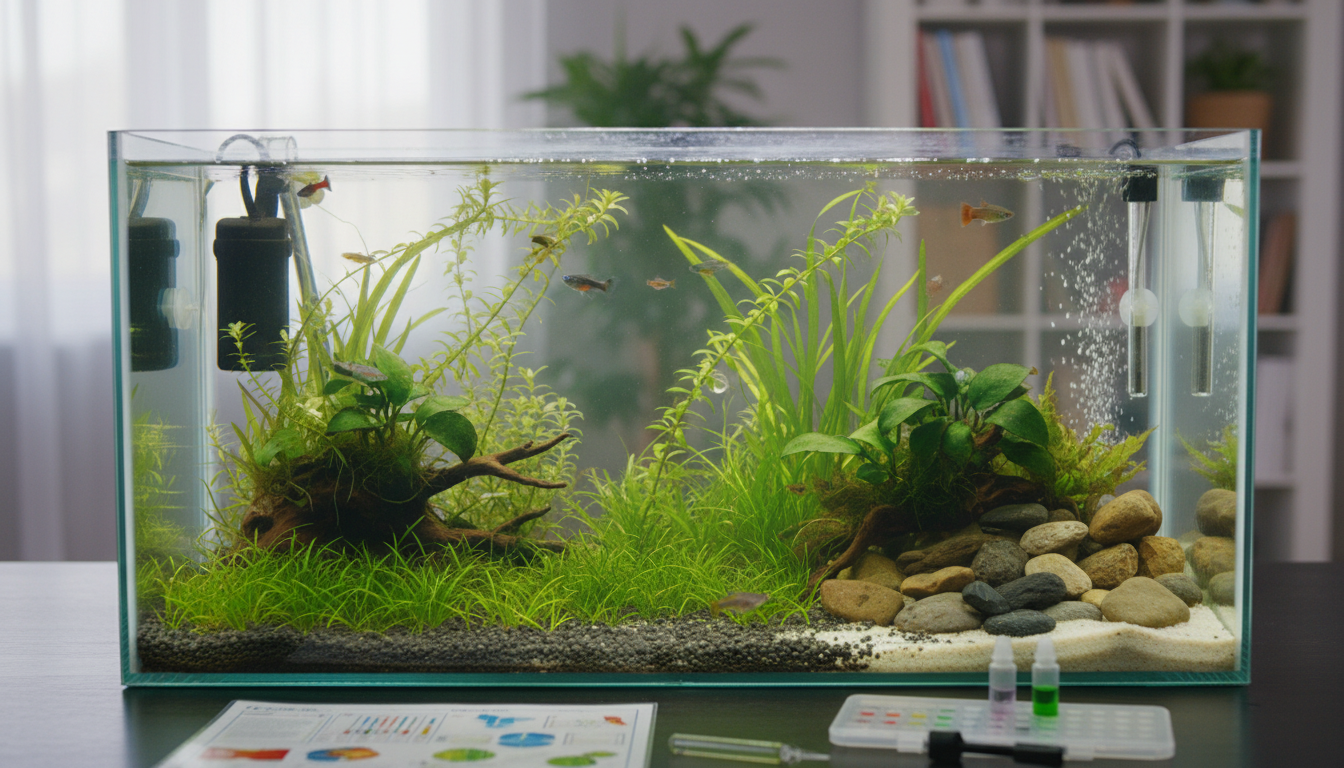
The simple answer to whether fish prefer vertical or horizontal tanks is that most fish species thrive better in horizontal tanks. This preference comes down to basic biology and natural behaviour. In the wild, the majority of fish swim horizontally through their environments, covering distance rather than depth. They’re built for forward motion, with streamlined bodies designed to move efficiently through water in a straight line.
Horizontal tanks provide more swimming space where it counts. A tank that’s 120cm long gives your fish far more room to exhibit natural behaviours than one that’s 120cm tall. Think about it like this: would you rather live in a narrow tower or a spacious bungalow? Your fish feel the same way about their living space.
The Science Behind Surface Area
Here’s something many aquarium owners don’t realize: surface area matters more than total water volume when it comes to oxygen exchange. A horizontal tank with dimensions of 90cm x 30cm provides significantly more surface area for gas exchange than a tall, narrow tank holding the same volume of water. This means better oxygenation for your fish, which directly impacts their health and activity levels.
Interestingly, studies have shown that fish in tanks with greater horizontal space exhibit less stress-related behaviour and maintain healthier immune systems. The additional swimming room allows them to establish territories properly and reduces aggressive encounters that commonly occur in cramped vertical spaces.
Which Fish Species Can Live in Vertical Tanks?
While horizontal tanks win for most species, there are exceptions. Some fish are actually adapted for vertical environments and can do well in tall aquarium setups. Angelfish, discus, and some species of gouramis have tall, laterally compressed bodies that allow them to navigate vertical spaces effectively.
However, even these vertically-oriented fish still need adequate horizontal swimming room. A tank that’s 60cm tall should still be at least 45cm long to accommodate their needs properly. Here’s what makes a difference for vertical-friendly species:
These fish have evolved in environments with tall aquatic plants, submerged tree roots, and rocky outcrops where vertical movement is advantageous. Their body shape allows them to slip between vegetation and navigate complex three-dimensional spaces. But this doesn’t mean they live their entire lives swimming up and down.
Rare Exceptions: True Vertical Swimmers
One lesser-known fact is that seahorses and pipefish are among the only fish that genuinely prefer vertical orientation. Their unique body structure and swimming method using dorsal fin oscillation makes them naturally suited to tall, narrow tanks. A seahorse tank of 45 litres (12 gallons) that’s 60cm tall and 30cm wide works better than a traditional horizontal setup.
The Problems with Tall Aquarium Tanks
Vertical tanks create several practical challenges beyond fish preference. Maintenance becomes significantly harder as tank height increases. Cleaning algae from the bottom, trimming plants, and catching fish for health checks requires longer tools and more awkward positioning.
Temperature stratification is another issue rarely discussed. Water in tall tanks develops distinct temperature layers, with warmer water rising to the top and cooler water settling at the bottom. The difference can be as much as 2-3°C (4-5°F) between top and bottom in a 75cm tall tank, creating inconsistent living conditions. Fish swimming between these zones experience constant temperature fluctuations that can stress their systems.
Additionally, tall tanks require more powerful filtration systems. The water pressure at the bottom of a tall tank is greater, and ensuring proper circulation throughout the entire water column demands stronger equipment. This often means higher electricity costs and more noise from equipment.
Optimal Tank Dimensions for Different Fish Types
Understanding what tank shape suits your fish depends on knowing their natural behaviour. Active swimmers like danios, barbs, and most tetras need length above all else. A tank that’s at least three times as long as your fish’s adult body length is the minimum recommendation, though more is always better.
Bottom Dwellers and Territory
Bottom-dwelling species like Corydoras catfish, loaches, and plecos benefit massively from horizontal tanks. These fish establish territories based on floor space, not water volume. A fascinating fact that many fishkeepers miss is that bottom feeders measure their territory in square centimetres of substrate, not litres of water. A 190 litre (50 gallon) vertical tank might hold the same volume as a horizontal one, but it provides far less usable territory for these species.
Cichlids, particularly African species, are extremely territorial and map their environments based on horizontal landmarks. They need length and width to create distinct zones, reduce aggression, and display natural behaviours like breeding rituals that require specific spaces.
The Bioload Capacity Myth
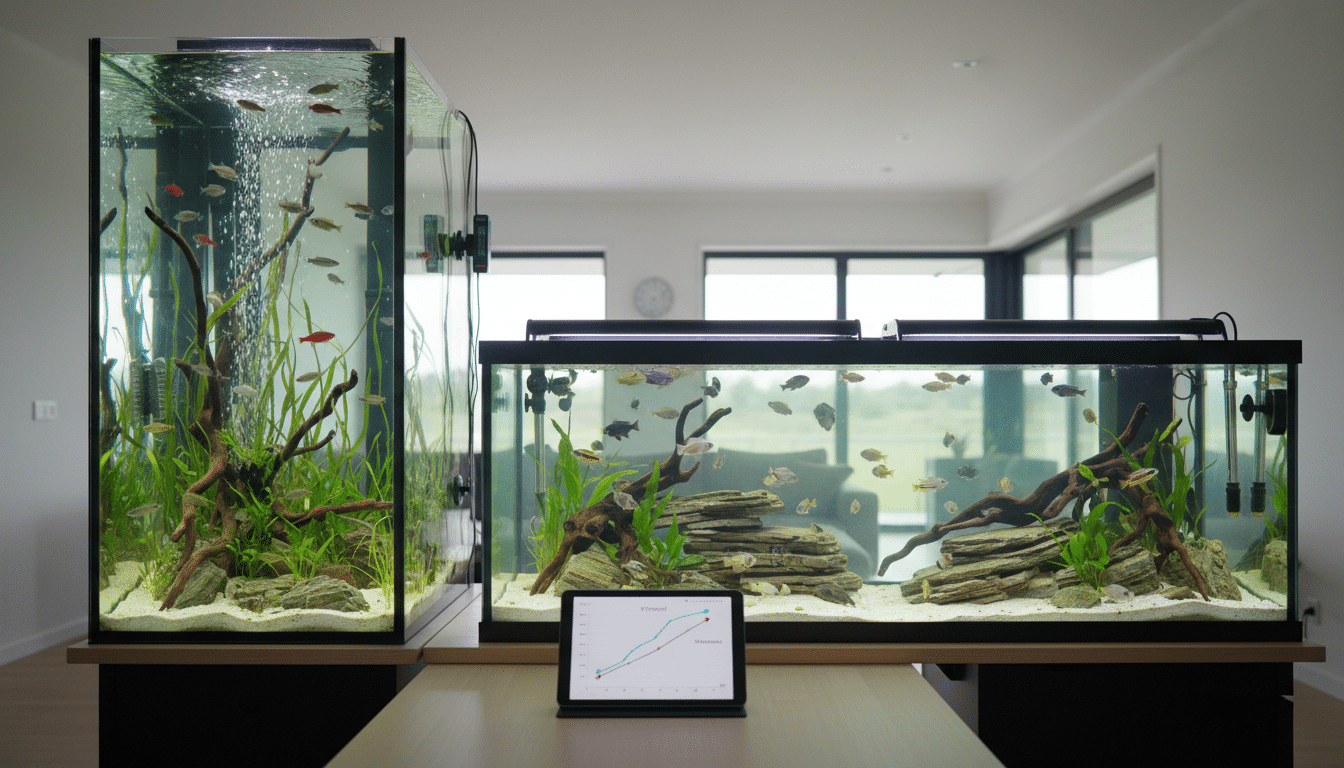
There’s a common misconception that tank volume alone determines how many fish you can keep. The reality involves surface area, filtration capacity, and horizontal space. A 150 litre (40 gallon) breeder tank with dimensions of 90cm x 45cm x 40cm supports a healthier fish population than a 150 litre tall tank measuring 50cm x 50cm x 60cm, despite identical volumes.
This happens because the horizontal tank provides better oxygenation, more swimming space, and easier maintenance. Fish waste settles more evenly in horizontal tanks, making biological filtration more efficient. The improved water circulation prevents dead zones where harmful bacteria can proliferate.
Making Vertical Tanks Work
If you’re committed to a vertical tank for space or aesthetic reasons, you can optimize it for fish welfare. Focus on creating horizontal movement opportunities at different levels using hardscape and plants. Arrange driftwood, rocks, and sturdy plants to create platforms and pathways that give fish places to swim horizontally at various heights.
Choose species carefully, sticking with those that naturally inhabit complex vertical environments. Hatchetfish, for instance, are surface dwellers that occupy the top 15cm of any tank, making them suitable for vertical setups. Importantly, hatchetfish are one of the few species that actually utilize vertical space by being able to jump and briefly fly above the water surface to catch insects, making tank height advantageous for their natural behaviour.
Invest in superior filtration and ensure multiple circulation points throughout the water column. Position heaters at different heights or use inline heaters to prevent temperature stratification. Regular water testing at different depths helps you monitor for inconsistencies.
The Practical Choice for Most Aquariums
For beginners and experienced fishkeepers alike, horizontal tanks remain the most practical choice. They accommodate the widest variety of species, require less specialized equipment, and are easier to maintain. A standard rectangular tank with a length at least twice its height provides the best environment for community fish.
When selecting dimensions, aim for tanks where length is the dominant measurement. Popular sizes like 90cm x 30cm x 45cm or 120cm x 40cm x 50cm work excellently for most common aquarium fish. These proportions give fish the swimming distance they instinctively seek while maintaining manageable height for maintenance.
Conclusion: Prioritizing Fish Welfare Over Aesthetics
While vertical tanks can make striking display pieces and fit into tight spaces, the biological needs of most fish point clearly toward horizontal tanks. The extra swimming length, better oxygenation, improved temperature consistency, and easier maintenance make horizontal setups the superior choice for fish health and happiness.
If you’re asking do fish prefer vertical or horizontal tanks, remember that your fish can’t tell you directly, but their behaviour will. Active swimming, natural feeding patterns, successful breeding, and long lifespans indicate contentment. These positive signs appear far more consistently in properly sized horizontal aquariums than in vertical alternatives.
Choose your tank based on the fish you want to keep, not just the space you have available. Your aquatic friends will reward you with vibrant colours, engaging behaviour, and years of enjoyment when their home matches their natural needs. The investment in a properly oriented tank pays dividends.