Smart Aquarium Storage: Keep Your Tank Healthier and Save Money
Keeping an aquarium thriving goes way beyond feeding time and choosing pretty plants. One of the biggest game-changers—that hardly anyone talks about—is how you store your water, food, equipment, and supplements. Get this right, and you’ll see better water quality, less waste, and a setup that’s kinder to both your wallet and the planet.
Let’s walk through some practical storage tricks that’ll make your fishkeeping life easier and your aquarium healthier.
Why Storage Actually Matters
Here’s the thing: how you store your aquarium essentials directly affects your water chemistry, your fish’s wellbeing, and how long your gear lasts. Take liquid water conditioners, for example—many lose their punch after about 12 months once opened, even though they look and smell exactly the same. Or consider fish food: expose it to humid air for just a few weeks and oxidation kicks in, stripping away nutrients and leaving your fish with weakened immune systems.
Poor storage doesn’t just waste money. It can genuinely harm your tank.
How to Store Aquarium Water the Right Way
The way you handle water storage influences everything from algae outbreaks to stress levels in your fish, whether you’re running a tiny nano tank or a sprawling community setup.
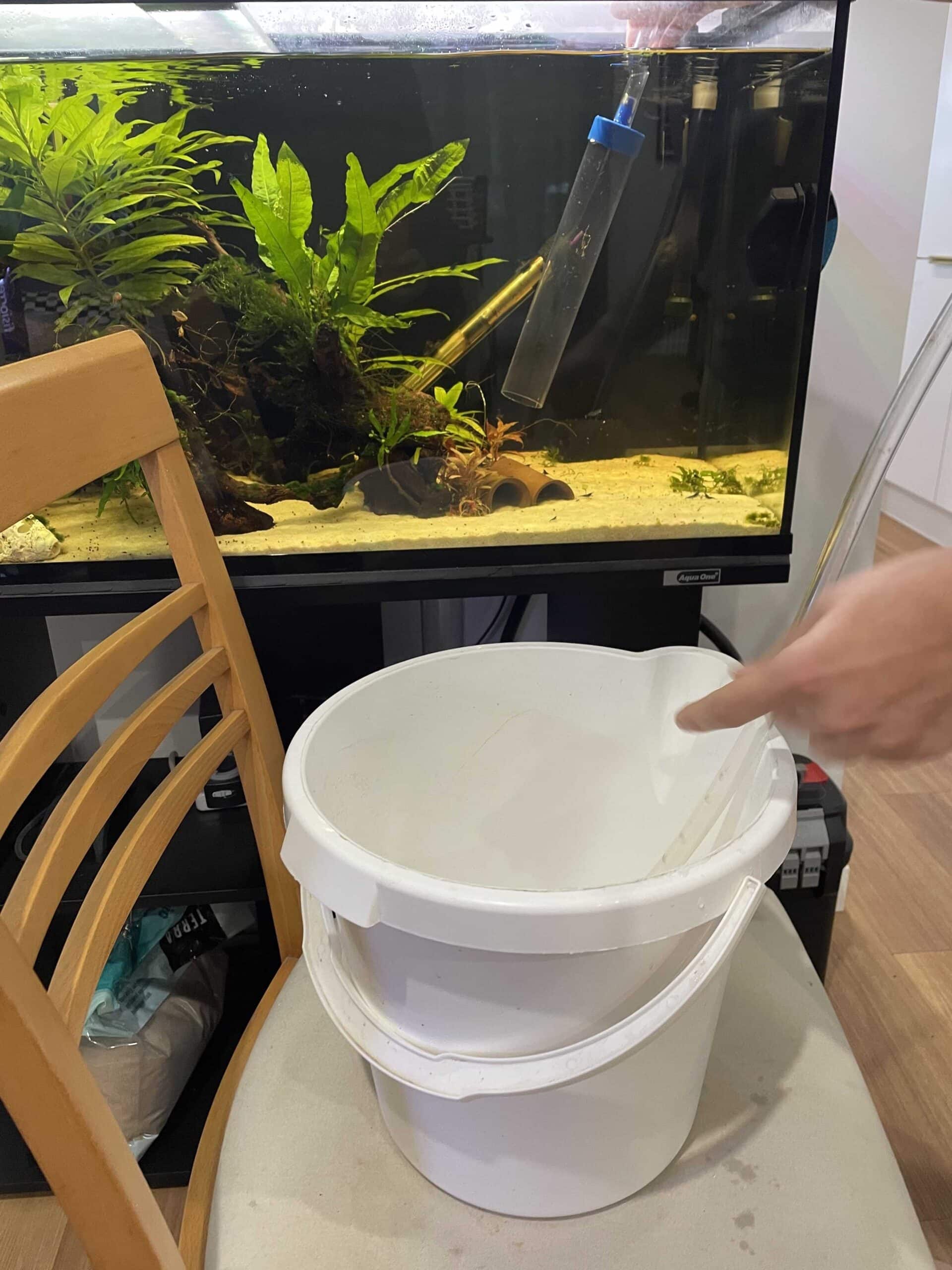
Pick the right containers. Go for food-grade options that hold at least 20 litres, ideally made from BPA-free plastic or HDPE (High-Density Polyethylene), which won’t leach chemicals. Label them clearly as “Aquarium Only” to avoid any nasty cross-contamination. Keep them somewhere cool—between 18–22°C works well—and always use sealed lids to keep out dust, spores, and insects.
Here’s something most people don’t realise: if you store water in a clear container near sunlight, you’re basically inviting green algae to throw a party. Those blooms then hitch a ride straight into your tank during water changes.
Condition your water properly before storing it. If you’re using tap water, add dechlorinator immediately—yes, letting water sit removes some chlorine naturally, but chloramine sticks around. Many aquarists also warm stored water to match their tank temperature (usually 24–26°C) before water changes. Your fish will thank you for avoiding that cold shock.
Keeping Fish Food Fresh and Nutritious
Different foods need different approaches, but they all share one enemy: exposure to air and moisture.
For dry foods like flakes and pellets, airtight containers are your best friends. Tuck them away in a cupboard or drawer, well away from heaters and sunny windows. If you’ve got a big tub, consider decanting smaller portions into separate containers—this limits how much air the bulk food gets exposed to. Write the opening date on each lid so you know when it’s time to replace it. And don’t trust colour alone to judge freshness—some pigments stay vibrant long after the nutrients have degraded.
Frozen foods need airtight bags or hard containers to prevent freezer burn. If you’re culturing live foods like brine shrimp or daphnia, keep them in separate small containers to avoid cross-contamination. Just remember to wash your hands well after handling them—they can carry microbes that, while harmless, are surprisingly persistent.
Organising Your Aquarium Gear
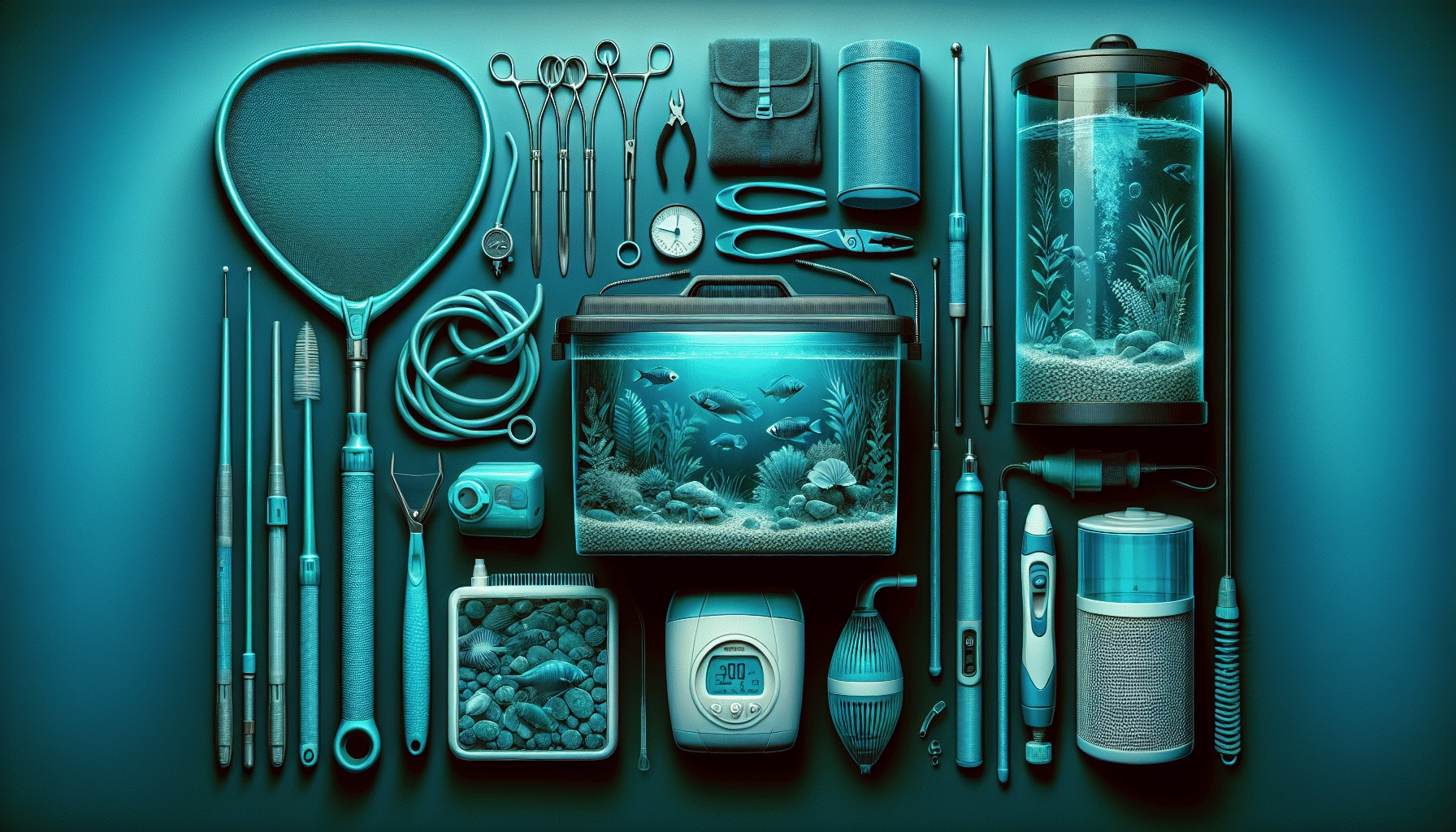
Nets, siphons, spare filters, air pumps—keeping this stuff organised saves time and prevents problems between tanks.
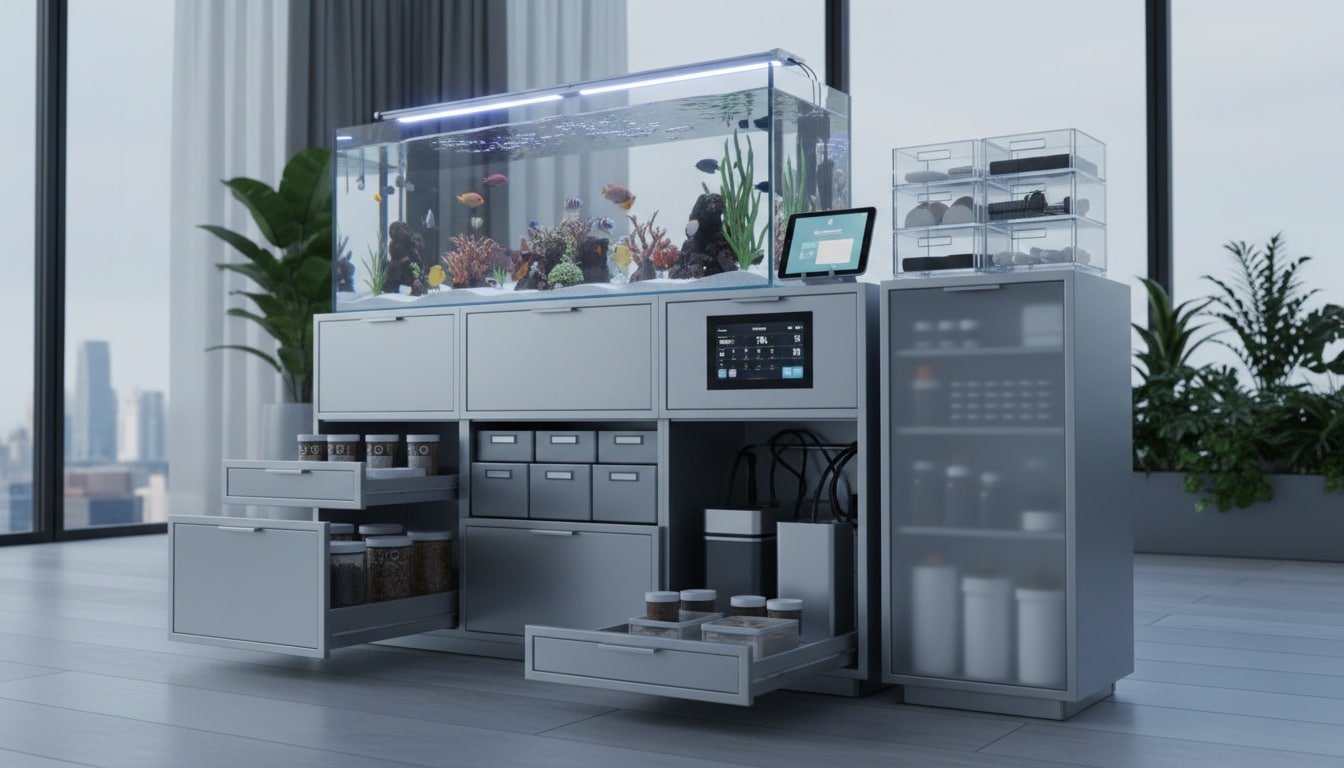
Stackable crates with ventilation holes work brilliantly. Label them by category: Water-Change Tools, Electrical Items, Medications, Maintenance Spares. Keep that medications crate completely separate to avoid accidentally transferring chemicals to your main equipment.
And here’s a tip that could save you from a parasite outbreak: aquarium nets can harbour nasties for up to 48 hours if you leave them damp. Always dry them thoroughly before storing.
Storing Chemicals and Supplements Safely
Test kits, fertilisers, CO₂ cartridges, and bacterial starters all need a bit of care.
Test kits last longest in a cool, dark drawer—heat can wreck reagents in just weeks. Keep those caps sealed tight to prevent evaporation, and plan to replace kits every 12–18 months for reliable results.
For fertilisers and additives, store bottles upright to prevent leaks. CO₂ cartridges should also stand upright and stay well away from direct heat sources.
Looking After Biological Media
Your ceramic rings, sponges, and bio-balls are the unsung heroes of a stable tank, so treat them with respect.
For short-term storage (under 24 hours), keep media submerged in tank water or dechlorinated water. Pop in an air stone if you can to maintain oxygen levels. If you need longer storage, rinse the media gently and let it dry completely—this prevents harmful bacteria from multiplying. Whatever you do, never store biological media in chlorinated tap water. It’ll wipe out your beneficial microbial colonies instantly.
Building Sustainable Storage Habits
Smart storage isn’t just good for your tank—it’s good for the environment too.
Reuse sturdy containers instead of always buying new ones. Buy food in quantities you’ll actually finish within a few months. Store leftover substrate or hardscape materials in dry, labelled bags for future projects. Keep a simple inventory so you’re not constantly overbuying and wasting resources.
These small habits add up to real environmental benefits and genuine cost savings over time.
The Bottom Line
Storage might seem like a small detail, but it makes a massive difference to your aquarium’s health and your success as a fishkeeper. A few simple practices—airtight containers, cool storage spots, clear labels, and thoughtful purchasing—keep everything from your water quality to your fish in top condition.
Better storage means better stability, healthier fish, and a more sustainable hobby. It’s honestly one of the easiest and most effective upgrades you can make.