Ich Fish Disease
If you’ve noticed your fish flashing against rocks, developing white spots that look like grains of salt, or behaving unusually lethargic, you’re likely dealing with one of the most common aquarium diseases: ich. Also known as white spot disease, ich can quickly spread through your tank if left untreated, but the good news is that with prompt action and the right approach, your fish can make a full recovery.
What is Ich Fish Disease?
Ich, scientifically known as Ichthyophthirius multifiliis, is a parasitic infection that affects freshwater fish. The parasite appears as small white spots across your fish’s body, fins, and gills, resembling sprinkled salt or sugar grains. This highly contagious condition is one of the most frequently encountered problems in home aquariums and can affect virtually any species of freshwater fish.
The ich parasite has a complex life cycle that makes it particularly challenging to treat. What many aquarists don’t realize is that the visible white spots on your fish are actually the parasite’s mature feeding stage, burrowed under the skin. You can only kill ich parasites during their free-swimming stage, which is why treatment requires patience and persistence over several days.
How Do Fish Get Ich?
Understanding how ich enters your aquarium helps prevent future outbreaks. The most common ways fish contract ich include introducing new fish without proper quarantine, adding contaminated plants or decorations, and stress-related immune system suppression that allows dormant parasites to multiply.
Here’s something crucial that catches many fishkeepers off guard: ich parasites can remain dormant in your aquarium for extended periods. The parasite can survive in a tank without visible symptoms for weeks or even months, waiting for the right conditions to trigger an outbreak. This typically occurs when fish become stressed due to poor water quality, sudden temperature drops, overcrowding, or aggressive tank mates.
Recognizing Ich Symptoms in Your Fish
Early detection significantly improves treatment success rates. Beyond the telltale white spots, infected fish display several behavioral changes that signal something’s wrong.
Physical Symptoms
The most obvious sign is the appearance of small white cysts on the body, fins, and gills. As the infection progresses, you might notice clamped fins, rapid gill movement indicating respiratory distress, and loss of appetite. In severe cases, fish may develop a slimy coating as their body attempts to fight off the parasites.
Behavioral Changes
Fish with ich often exhibit what’s called “flashing” or rubbing themselves against aquarium surfaces, rocks, and decorations. They’re essentially trying to scratch off the irritating parasites. You’ll also notice lethargy, hiding behavior, and fish staying near the surface gasping for air as gill function becomes compromised.
How to Treat Ich Fish Disease Effectively
Successful ich treatment requires a multi-pronged approach that addresses the parasite’s life cycle while supporting your fish’s immune system.
Temperature Method
Raising your aquarium temperature is one of the most effective natural treatments for ich. The ich parasite’s life cycle speeds up dramatically at higher temperatures, reducing the time it takes to reach its vulnerable free-swimming stage. Gradually increase your tank temperature to 30°C (86°F) over 24 hours if your fish species can tolerate it. Maintain this temperature for at least 10 days while treating with medication.
This method works because at elevated temperatures, the parasite’s life cycle completes in just 3 to 4 days instead of the usual 7 to 14 days. However, always research whether your specific fish species can handle these temperatures, as some cold-water fish cannot.
Medication Options
Several medications effectively treat ich when used correctly. Malachite green and formalin combinations are among the most potent treatments available. Copper-based medications also work well, though they’re toxic to invertebrates and must be removed with activated carbon after treatment.
For those preferring gentler approaches, aquarium salt can be effective for mild cases. Add 1 tablespoon per 19 litres (5 gallons) of aquarium water, but remember that not all fish tolerate salt well, particularly scaleless species like catfish and loaches.
Supporting Treatment Practices
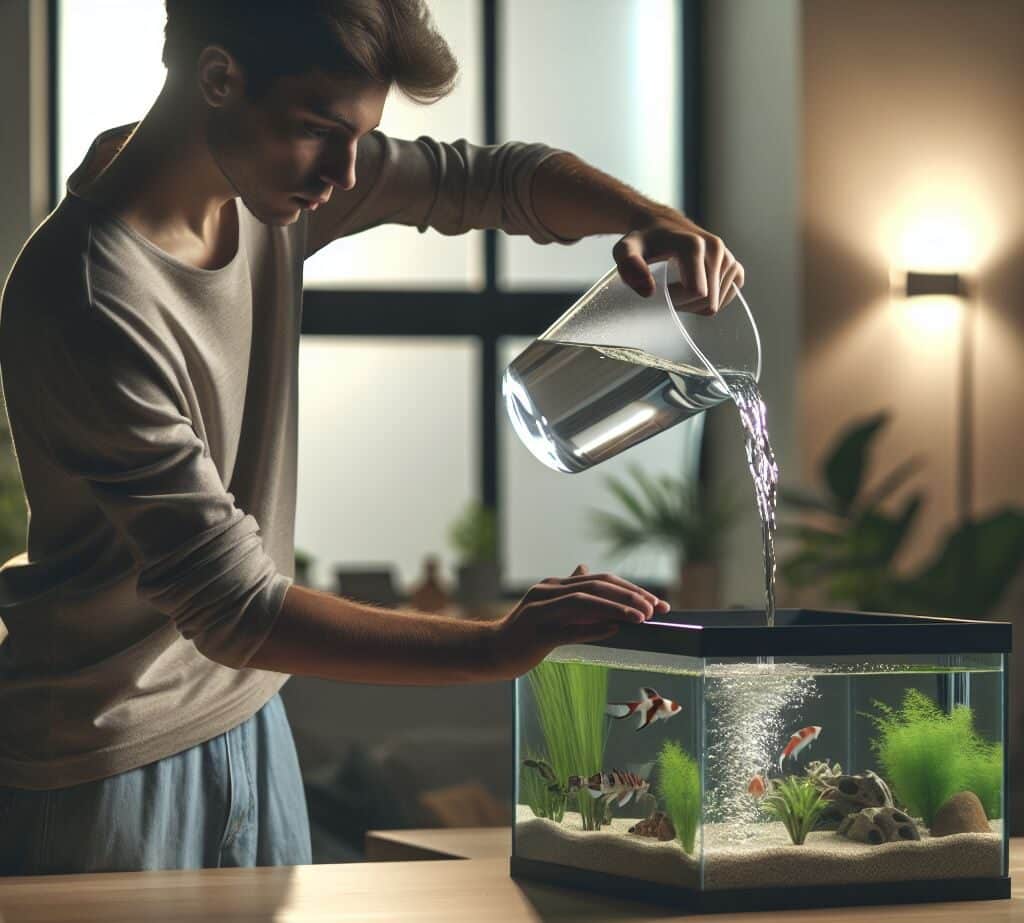
Here’s a lesser-known fact that can make or break your treatment success: performing daily partial water changes of 25-30% during treatment dramatically improves outcomes. These water changes remove free-swimming parasites from the water column and reduce the parasite load in your tank. Just remember to add medication back to match the amount of water removed.
Increase aeration during treatment, especially if raising temperatures. Warmer water holds less dissolved oxygen, so additional air stones or surface agitation help your fish breathe more comfortably while their gills are compromised.
The Complete Ich Life Cycle Explained
Understanding the parasite’s life cycle explains why treatment takes time and why you can’t simply treat visible spots. The ich parasite goes through four distinct stages: the feeding stage under the fish’s skin (visible white spots), the reproductive stage when the parasite drops off and forms a cyst on the tank bottom, the division stage where hundreds of new parasites develop inside the cyst, and finally the free-swimming stage when baby parasites called tomites search for a host.
A single ich cyst can produce up to 1,000 free-swimming tomites, which explains how quickly an infection can overwhelm your tank. These tomites must find a host within 48 hours or they die, which is why maintaining treatment for the full duration is critical even after spots disappear from your fish.
Preventing Future Ich Outbreaks
Prevention is always easier than treatment when it comes to ich fish disease. Establishing a proper quarantine protocol for new arrivals is your first line of defense. Quarantine all new fish for at least 3 to 4 weeks in a separate tank before introducing them to your main aquarium.
Maintain stable water parameters and avoid sudden temperature fluctuations. Most ich outbreaks occur after temperature drops of just 2-3°C (4-5°F), which stress fish and weaken their immune systems. Use a reliable heater with a backup if possible, especially during winter months.
Regular water changes, proper filtration, and avoiding overcrowding keep fish healthy and stress-free. Healthy fish with strong immune systems can often resist ich infections even when exposed to the parasite.
Here’s an interesting fact many don’t know: some fish species can develop partial immunity to ich after recovering from an infection. While they can still contract the disease again, their immune response is faster and more effective at fighting it off.
When to Seek Additional Help
Most ich cases respond well to home treatment, but sometimes professional intervention becomes necessary. If your fish aren’t improving after 7 days of treatment, if they’re showing signs of secondary bacterial infections like fin rot, or if you’re experiencing repeated outbreaks despite proper treatment, consult with an aquatic veterinarian or experienced aquarium specialist.
Additionally, if you keep sensitive species like discus or rare expensive fish, professional guidance from the start can prevent costly mistakes and improve survival rates.
Final Thoughts on Managing Ich
Dealing with ich fish disease can feel overwhelming, especially for newer aquarists, but armed with the right knowledge and approach, you can successfully eliminate this parasite from your aquarium. Remember that consistency and patience are your greatest allies in fighting ich. Complete the full treatment course even after white spots disappear, as this ensures you’ve eliminated parasites in all life cycle stages.
By maintaining excellent water quality, quarantining new additions, and monitoring your fish daily for early signs of stress or disease, you’ll create an environment where ich struggles to gain a foothold. Your fish depend on you to provide the best care possible, and understanding how to prevent and treat common diseases like ich is an essential part of responsible fishkeeping.
With prompt treatment and proper technique, the vast majority of fish recover completely from ich infections and go on to live long, healthy lives. Stay observant, act quickly when you spot problems, and don’t hesitate to reach out to the aquarium community for support when you need it.