How to Safely Lower pH in Your Aquarium: A Simple Guide
Watching your aquarium’s pH climb higher than your fish can handle? Don’t worry—you’re not alone, and it’s easier to fix than you might think. Once you understand what’s causing the rise and which methods actually work, lowering pH safely becomes straightforward.
This guide will walk you through proven, gentle ways to bring your pH down without stressing your fish or throwing your tank’s balance out of whack. You’ll also pick up some handy insights along the way that even experienced hobbyists sometimes miss.
What pH Actually Means for Your Aquarium
Think of pH as a simple scale measuring whether your water leans acidic or alkaline. Seven is neutral, anything below is acidic, and above is alkaline. Most freshwater fish do well between 6.0 and 8.0, though different species have their own preferences.
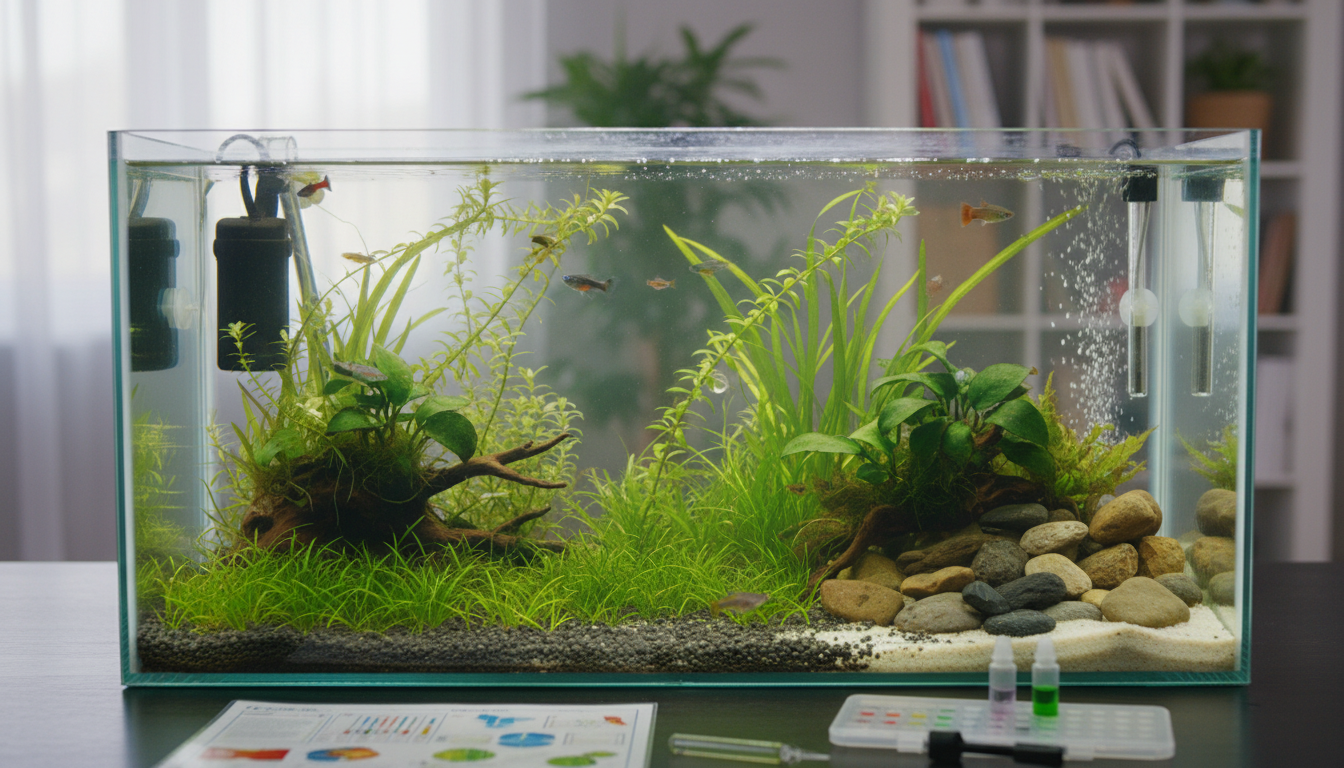
Before making any changes, test your water with a reliable kit. Digital pH meters tend to give you more accurate readings than paper strips, especially in smaller tanks under 100 litres (26 gallons) where conditions can shift quickly.
Here’s something many fishkeepers don’t realize: certain decorative “river stones” and shells actually dissolve slowly over time, releasing calcium that pushes your pH even higher. It’s a gradual process, but it adds up.
Why Your Aquarium pH Keeps Rising
High pH doesn’t just happen on its own. Getting to the root cause means you can actually solve the problem instead of constantly chasing symptoms.
Hard water naturally contains carbonates (measured as KH) that buffer pH upward. Limestone-based substrates release minerals that have the same effect. Sometimes excess aeration drives off CO₂, which also raises pH. And in tanks with very little organic matter, there aren’t enough natural acids forming to balance things out.
Warmer tanks—say 28°C (82°F) or higher—speed up mineral dissolution from rocks, which can subtly nudge pH upward over several months. It’s not dramatic, but it’s persistent.
Safe Methods to Lower Aquarium pH
You’ve got several good options here, but the golden rule is always the same: go slowly. Sudden swings shock fish and can knock out your beneficial bacteria. Here’s what actually works.
Blend in RO or Distilled Water
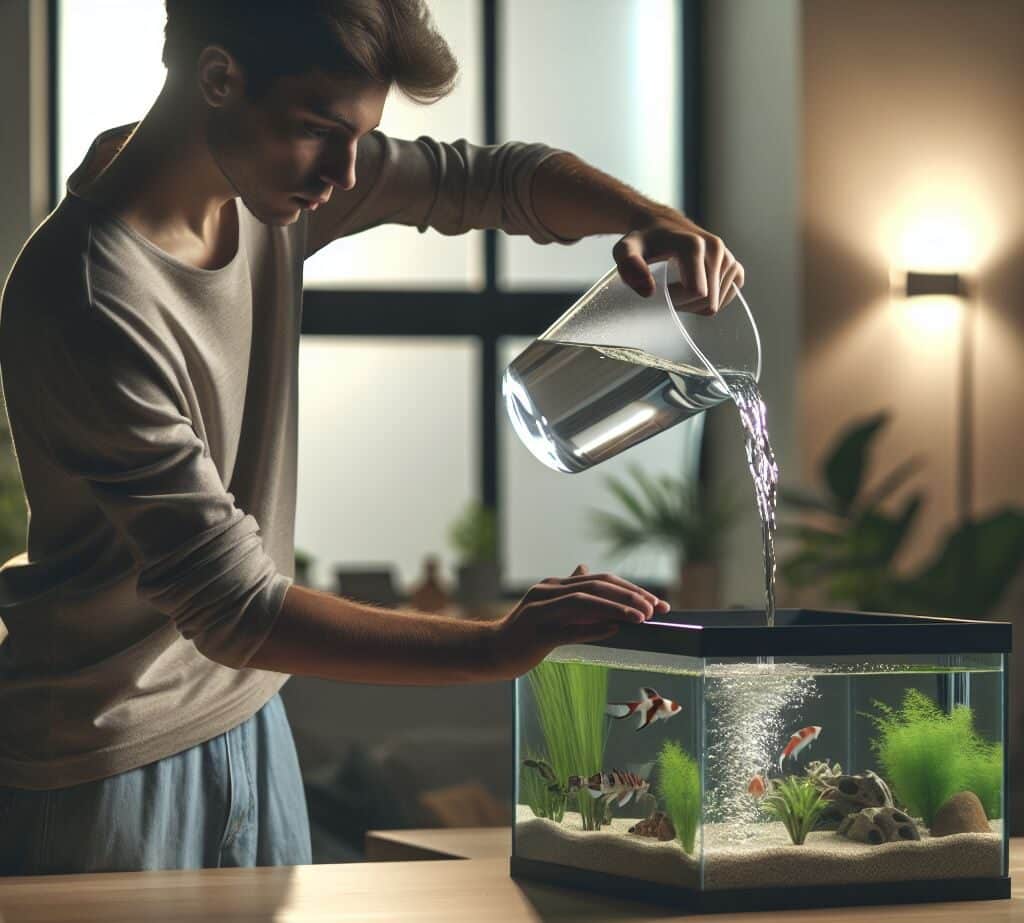
Mixing reverse osmosis or distilled water with your tap water dilutes those high mineral levels, bringing down both KH and pH naturally. Just prepare your replacement water in a separate container first, blend until you hit your target pH, then do your regular water change with the adjusted mix.
This works particularly well for larger tanks over 150 litres (40 gallons), where you want stability without constant tweaking. One surprise: RO water has almost no buffering capacity, so pH can bounce around wildly if you use it alone. But even a small splash of high-KH tap water—just 10% or so—can stabilize things beautifully.
Add Natural Materials That Release Gentle Acids
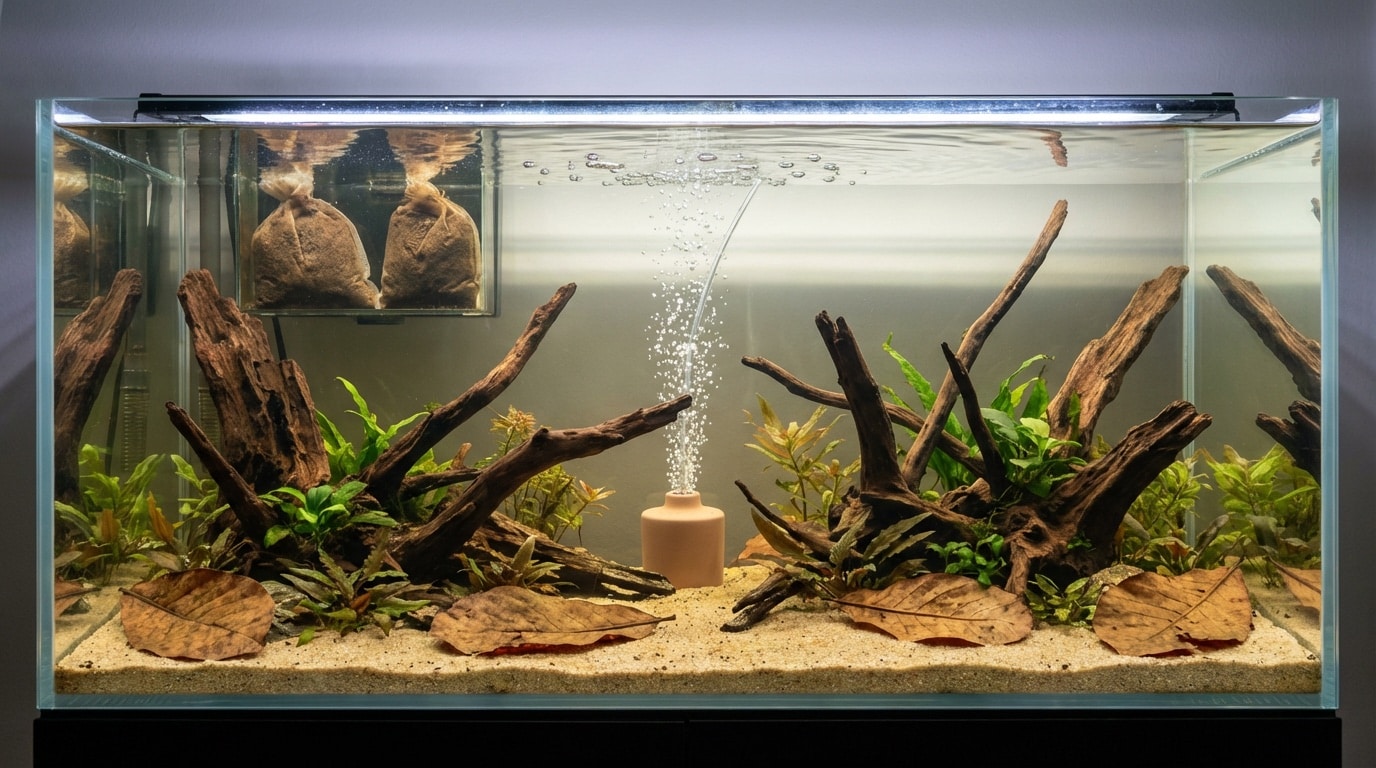
Indian almond leaves (also called Catappa leaves) release tannins as they break down, gently lowering pH while giving your water that amber tint you see in natural blackwater habitats. Authentic aquarium-safe driftwood like Malaysian or Mopani does something similar, slowly releasing organic acids that soften water.
Peat moss is another solid option. Pop some aquarium-grade peat into a filter bag, tuck it in your filter, and it’ll bring pH down quite effectively—though it might tint your water slightly. Replace it every 3–4 weeks for consistent results. Bonus: peat actually binds certain heavy metals from tap water, making conditions safer for sensitive fish like neon tetras. Most aquarists never hear about that.
Dial Back Aeration (When It Makes Sense)
This one’s a bit situational. If your pH is climbing because excess surface agitation is driving off CO₂, reducing that movement can help CO₂ levels stabilize and pH drop naturally. Just don’t eliminate oxygen exchange entirely.
If your fish need strong oxygenation—goldfish or hillstream loaches, for example—be cautious with this approach. And here’s an interesting tidbit: in deeper tanks over 50 cm (20 inches), airstones don’t actually oxygenate the water much. Their main job is creating surface movement, which affects pH.
Use Commercial pH-Lowering Products Carefully
Chemical solutions can work, but they’re not magic. If your KH is high, these products often do nothing, which leads people to accidentally overdose. Always test both pH and KH before using them, start with half the recommended dose, and wait a full 24 hours before considering more.
Encourage Natural Organic Activity
In lightly stocked tanks, not having enough dissolved organic matter can actually push pH higher. Adding leaf litter, choosing a softer substrate, or incorporating live plants helps create a more natural balance. Plants consume carbonates and release mild acids through their roots, especially when planted in nutrient-rich substrates.
How Quickly Should You Lower pH?
Aim for slow and steady—no more than 0.2–0.3 per day. Fish like bettas, angelfish, and dwarf gouramis handle gradual change well. More sensitive species like rasboras and Corydoras appreciate an even gentler pace.
If you accidentally drop pH too far, resist the urge to toss baking soda straight into the tank. Instead, do a partial water change using pre-adjusted tap water to bring it back up gradually.
Keeping pH Stable After You’ve Adjusted It
Once you’ve lowered pH, stability becomes your main focus. Fish handle a slightly imperfect number far better than they handle constant drifting. Test pH twice a week after any adjustment, check KH weekly to ensure you’ve got enough buffering capacity, and watch for any new décor, rocks, or substrates that might be influencing things.
KH is honestly the unsung hero here—many new aquarists overlook it, but it’s often the reason pH won’t stay where you want it.
The Bottom Line: Take Your Time and Stay Consistent
Understanding your tank’s chemistry really does make the whole process smoother. Whether you go with natural materials like driftwood and Catappa leaves or prefer blending RO water, consistency and patience are what matter most.
Keep an eye on those hidden factors—mineral-rich décor, water temperature, and KH levels—and you’ll be able to lower and maintain a healthy pH that keeps your fish comfortable for the long haul.