Understanding Why Water Changes Matter
Keeping your fish healthy and happy starts with clean water, but figuring out exactly how often to perform water changes can feel confusing, especially when you’re new to keeping fish. Too much maintenance seems wasteful, while too little can harm your aquarium. Let’s break down everything you need to know about water change frequency.
Before we dive into the how often to change fish tank water question, it’s important to understand why this matters. Your fish tank is a closed ecosystem where waste products accumulate over time. Fish produce ammonia through their waste and breathing, which beneficial bacteria convert into nitrites and then nitrates. While this nitrogen cycle is essential, nitrates still build up and need removing through regular water changes.
Here’s something many people don’t realize: even with perfect filtration, dissolved organic compounds that aren’t measured by standard test kits accumulate in your aquarium. These compounds can affect fish health by lowering pH over time and creating an environment where harmful bacteria thrive. Regular water changes are the only way to remove these invisible troublemakers.
The Standard Water Change Schedule
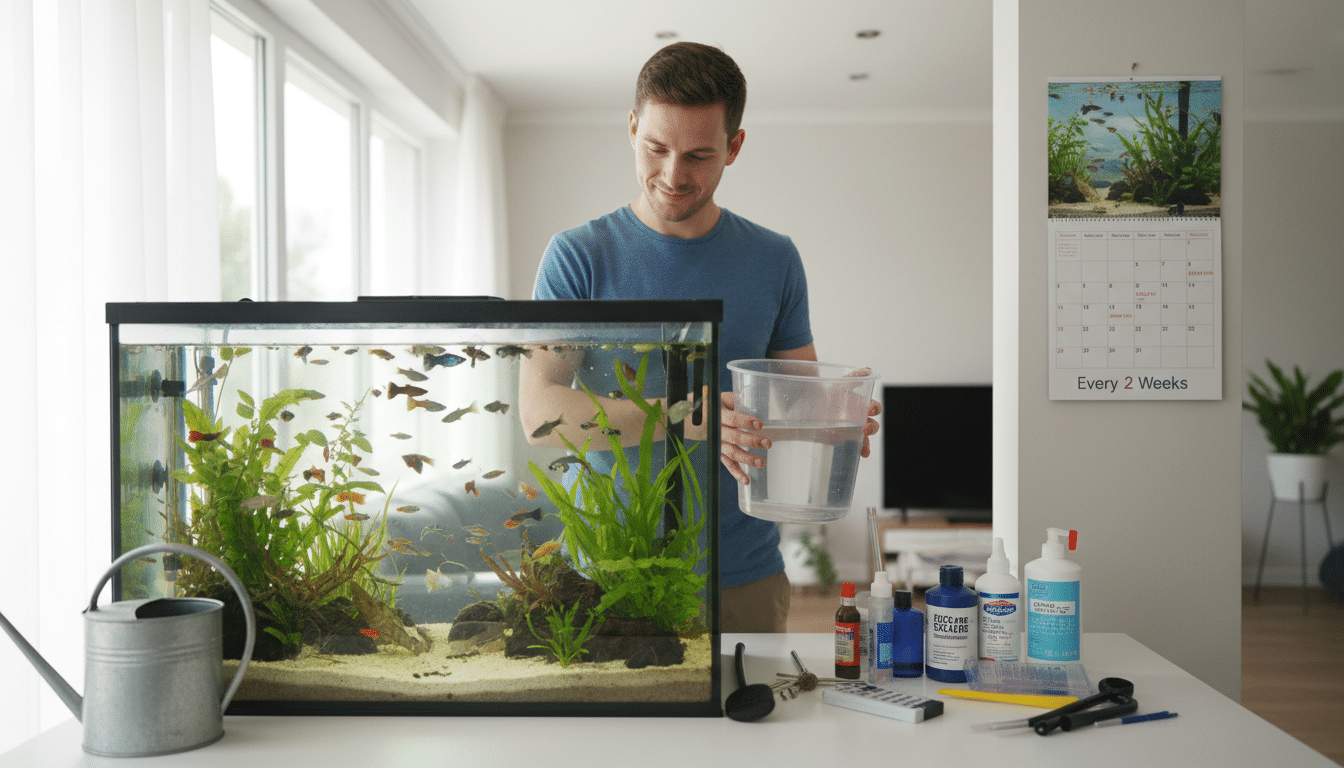
For most freshwater aquariums, the fish tank water change frequency should follow this basic guideline: change 25% of your tank water every two weeks, or 10-15% weekly. This schedule works well for moderately stocked tanks with proper filtration.
However, this isn’t a one-size-fits-all answer. Several factors influence how often you should change aquarium water, including tank size, number of fish, filtration quality, and the species you keep.
Small Tanks (Under 40 Litres/10 Gallons)
Smaller tanks require more frequent attention because waste products concentrate faster in limited water volume. For nano tanks and bowls, you’ll need to perform 20-25% water changes weekly, sometimes even twice weekly if heavily stocked. This is because smaller water volumes have less capacity to dilute toxins, making your fish more vulnerable to ammonia and nitrite spikes.
Medium Tanks (40-200 Litres/10-50 Gallons)
These are the sweet spot for maintenance schedules. A weekly 15-20% water change or bi-weekly 25-30% change keeps most community tanks in excellent condition. These tanks offer enough water volume to maintain stable parameters between changes while being manageable to maintain.
Large Tanks (Over 200 Litres/50 Gallons)
Larger aquariums benefit from greater water volume stability, allowing for bi-weekly or even monthly water changes of 20-30%. However, many people still prefer weekly changes for large tanks because it’s easier to remove smaller amounts regularly than tackle a massive water change monthly.
Factors That Increase Water Change Frequency
Several situations demand more frequent aquarium water maintenance than the standard schedule:
Heavy Stocking: If your tank is densely populated with fish, waste accumulates faster. Increase your water change frequency to weekly or even twice weekly, adjusting based on your nitrate readings.
Messy Eaters: Species like goldfish, oscars, and plecos produce significantly more waste than typical community fish. Goldfish, surprisingly, produce ammonia through their gills as well as their waste, which is why they need exceptionally clean water with 30-50% weekly water changes.
Live Plants: While plants help reduce nitrates, heavily planted tanks can experience sudden parameter swings when plants decay. Interestingly, very densely planted tanks following the Walstad method or using CO2 injection may require fewer water changes because plants consume most waste products. Some fishkeepers with mature, balanced planted tanks successfully maintain them with just 10% monthly changes.
Poor Filtration: Under-filtered tanks need more frequent water changes to compensate. Your filter should process at least 4 times your tank volume per hour for most setups.
Signs Your Fish Tank Needs More Frequent Water Changes
Your aquarium will tell you when your current schedule isn’t working. Watch for these warning signs:
Nitrate levels above 20 ppm indicate that waste is accumulating faster than you’re removing it. While some sources suggest nitrates up to 40 ppm are acceptable, keeping them below 20 ppm promotes better long-term fish health and coloration.
Cloudy or discolored water, especially with a yellowish tint, signals dissolved organic buildup. This yellowish tint comes from tannins and proteins that accumulate even in filtered tanks.
Algae blooms appearing between water changes mean excess nutrients are present. Here’s something many don’t know: persistent algae problems often improve more from consistent water changes than from reducing lighting or adding algae-eaters.
Fish gasping at the surface or showing reduced activity can indicate poor water quality. Additionally, if your fish develop clamped fins, loss of color, or increased susceptibility to disease, these are often early warnings that water quality has declined.
The Aquarium Maturity Factor
A lesser-known fact that affects how often to change fish tank water is aquarium maturity. Newly established tanks (under 6 months old) benefit from more frequent small water changes, around 10-15% weekly, to help establish stable beneficial bacteria colonies without causing dramatic parameter swings.
Mature tanks (over 1 year old) with established biological filtration can often maintain stability with slightly less frequent changes, though this doesn’t mean neglecting maintenance. The biological stability in mature tanks comes from diverse bacterial colonies throughout your substrate, decorations, and filter media, not just in your filter. In such cases, you can get a feel of when to change the water e.g., it’ll discolor or the filter outflow will start to reduce its rate.
Proper Water Change Technique
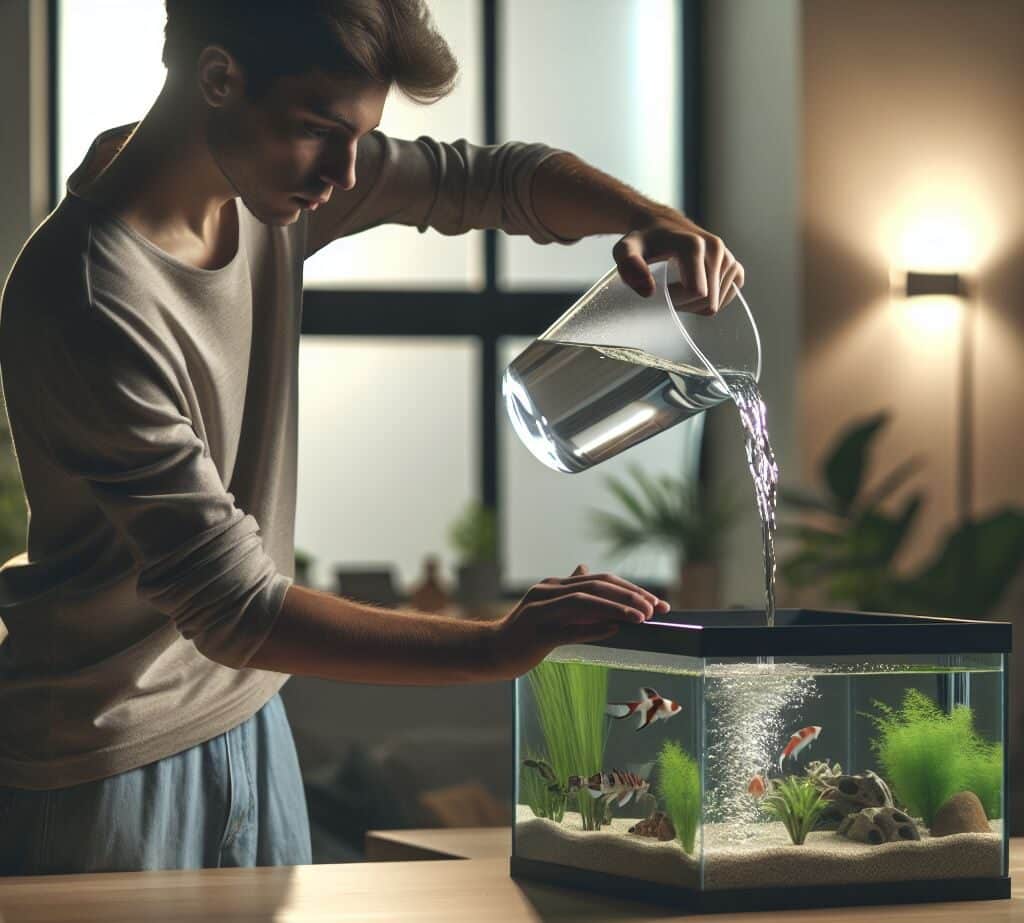
How you perform water changes matters as much as frequency. Always treat new water with a quality dechlorinator before adding it to your tank. Match the temperature of new water to your tank temperature within 1-2°C (2-4°F) to avoid shocking your fish.
Use a gravel vacuum during changes to remove debris from your substrate where most waste accumulates. Many people make the mistake of just removing water from the top, missing the opportunity to clean the substrate where harmful gases can develop.
Never change more than 50% of your water at once unless dealing with an emergency, as this can crash your beneficial bacteria colony and stress your fish. Regular smaller changes are always better than infrequent large ones.
Testing Your Water
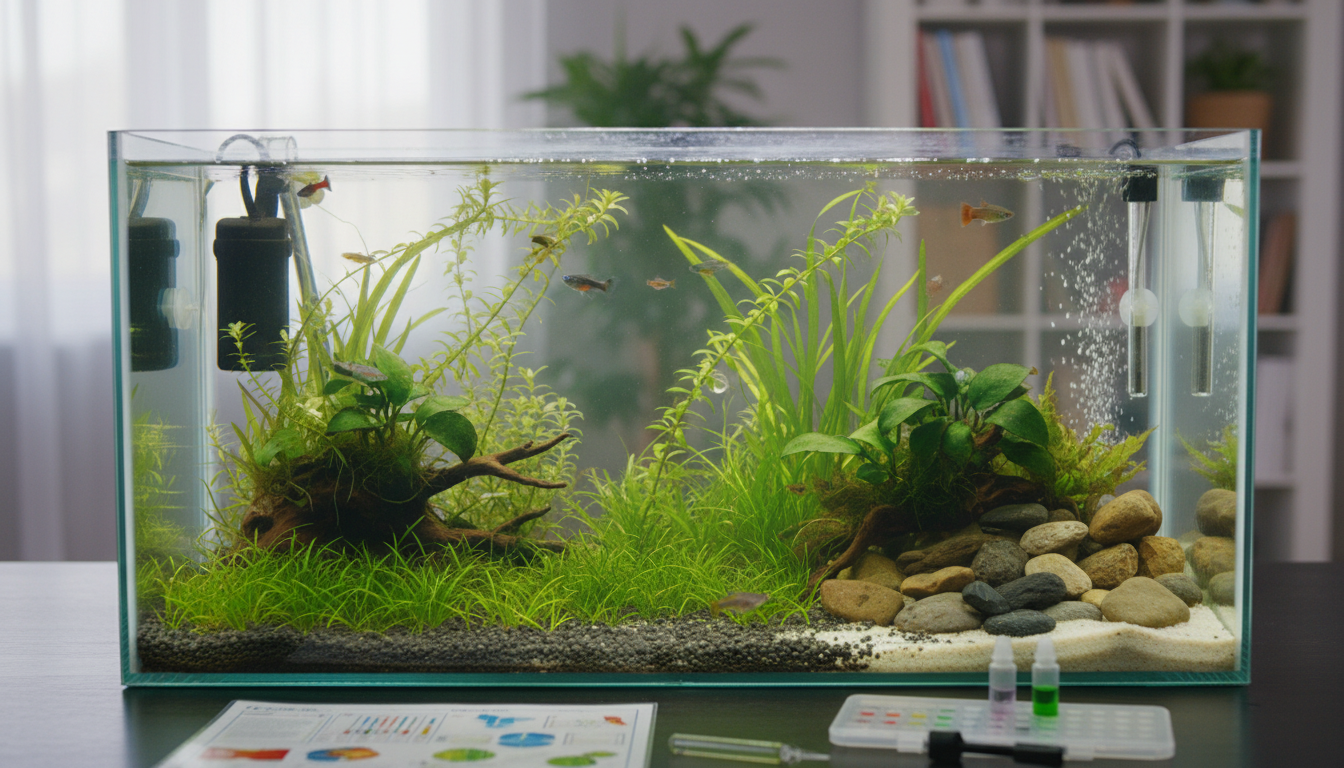
To truly optimize your aquarium maintenance schedule, regular testing is essential. Test your water weekly for ammonia, nitrite, nitrate, and pH. Keep a log of your results to identify trends.
If your nitrates consistently read under 10 ppm before water changes, you might be changing water more often than necessary. Conversely, if they’re climbing above 20 ppm, increase your frequency. This personalized approach based on actual testing beats following generic schedules.
Special Considerations for Different Tank Types
Saltwater and reef tanks require different maintenance schedules, typically 10% weekly or 20% bi-weekly, with parameters measured more precisely. Marine environments are less forgiving of parameter swings.
Breeding tanks need more frequent changes, sometimes daily small changes of 5-10%, to support growing fry and remove excess food.
Quarantine or hospital tanks may require daily 25-50% changes when treating sick fish, as medications and stress increase waste production.
Common Water Change Mistakes to Avoid
Don’t skip water changes because your tank “looks clean.” Many harmful compounds are invisible to the naked eye.
Avoid inconsistent schedules. Your tank establishes balance based on regular maintenance patterns. Skipping weeks then doing massive changes causes more harm than good.
Never use untreated tap water, even for topping off evaporation. Chlorine and chloramine kill beneficial bacteria and harm fish. Even when water only evaporates, you’re still topping off, not doing a water change, so minerals and waste products continue concentrating.
Making Water Changes Easier
Consistency comes easier when maintenance isn’t a chore. Invest in a quality siphon system that makes water removal and substrate cleaning simple. For larger tanks, consider a Python-style water changer that connects to your tap.
Keep supplies nearby and set a regular schedule on the same day each week. Many people find that Sunday morning water changes become an enjoyable routine rather than a dreaded task.
For multiple tanks, prioritize the smallest and most heavily stocked tanks first, as these are most sensitive to parameter swings.
Conclusion
So, how often should you change fish tank water? For most aquariums, a weekly 15-20% change or bi-weekly 25-30% change provides the sweet spot between maintaining excellent water quality and manageable effort. However, let your specific tank conditions guide you. Test regularly, observe your fish, and adjust your schedule based on what your aquarium tells you it needs.
Remember that consistent smaller water changes always beat irregular large ones. By establishing a regular maintenance routine matched to your tank’s needs, you’ll create a healthy environment where your fish thrive, display their best colors, and live longer, healthier lives. Clean water isn’t just about removing waste; it’s about creating a stable, comfortable home for your aquatic companions.