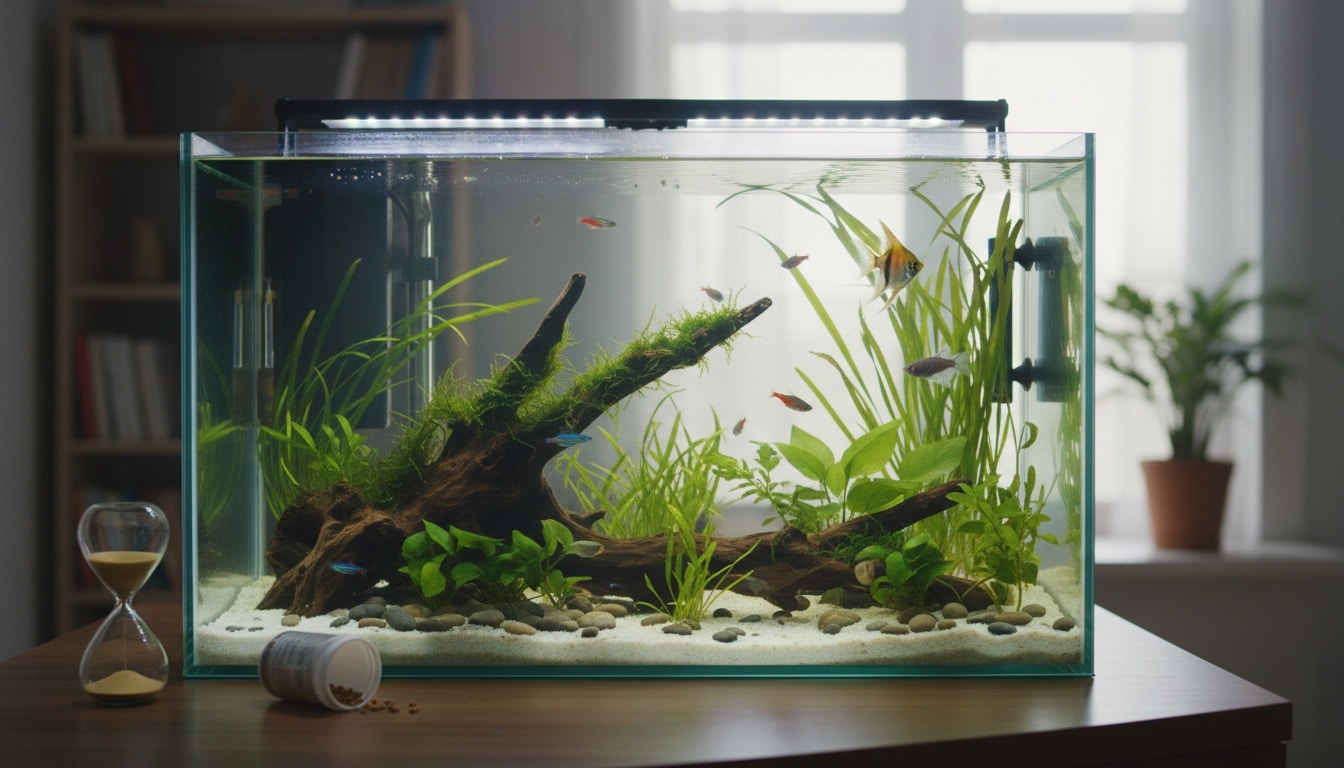
If you’ve ever wondered whether your fish will be okay when you go on vacation or if you accidentally miss a feeding, you’re not alone. Understanding how long fish can survive without food is crucial for any fish keeper, and the answer might surprise you. Most healthy adult fish can actually go anywhere from 3 days to 2 weeks without eating, depending on several factors including species, age, and overall health.
Understanding Fish Metabolism and Feeding Needs
Fish are cold-blooded creatures, which means their metabolism works very differently from ours. Their body temperature adjusts to their environment, and this directly affects how quickly they process food and burn energy. In cooler water temperatures between 10-15°C (50-59°F), fish naturally slow down their metabolism and require less frequent feeding compared to warmer conditions of 24-28°C (75-82°F).
What many fish keepers don’t realize is that fish in the wild often go days or even weeks between meals. This is especially true during seasonal changes or in environments where food sources fluctuate. Your aquarium fish have inherited this ability to survive periods of fasting, making them surprisingly resilient when it comes to missed feedings.
How Long Can Different Types of Fish Go Without Food?
The duration fish can survive without eating varies significantly based on the species and their natural habits. Here’s what you need to know about different types of fish:
Freshwater Community Fish
Popular species like tetras, guppies, and mollies can typically manage 7 to 14 days without food when they’re healthy adults. These fish have adapted to occasional food scarcity in their natural habitats. It’s important to keep in mind that overfeeding poses a far greater risk to these fish than occasional fasting, as excess food deteriorates water quality and can lead to fatal ammonia spikes.
Goldfish and Koi
Goldfish are remarkably hardy and can survive 2 to 3 weeks without feeding. Koi, their larger pond-dwelling cousins, can go even longer, particularly during winter when they enter a semi-dormant state. During cold months when water temperatures drop below 10°C (50°F), koi naturally stop eating altogether and can survive the entire winter on stored body reserves.
Predatory and Large Fish
Species like oscars, cichlids, and arowana can go 2 to 3 weeks or more without eating. In the wild, predatory fish often go extended periods between successful hunts. These fish actually benefit from occasional fasting days, as it mimics their natural feeding patterns and can improve digestion while reducing waste in the aquarium.
Fry and Juvenile Fish
Baby fish are a completely different story. Fry and juveniles have extremely fast metabolisms and are still developing. They typically need to eat multiple times daily and can only survive 2 to 3 days maximum without food. Missing feedings during their critical growth phase can permanently stunt their development.
Factors That Affect How Long Fish Can Survive Without Food
Several environmental and biological factors influence your fish’s ability to go without eating. Understanding these can help you make better decisions about feeding schedules and vacation planning.
Water Temperature
Temperature is the single most important factor affecting fish metabolism. In tropical aquariums maintained at 26°C (79°F), fish burn energy faster and will become hungry more quickly than those in cooler waters. If you’re planning to be away, slightly lowering your tank temperature by 2-3 degrees can help reduce your fish’s metabolic demands.
Fish Health and Body Condition
Healthy fish with good body mass can draw on fat reserves during fasting periods. Fish that are already thin, stressed, or fighting disease have limited reserves and need more consistent feeding. Here’s a fascinating detail: fish can actually reabsorb parts of their own muscle tissue for energy during extended fasting, though this is a last resort that indicates severe nutritional stress.
Tank Size and Bioload
Larger aquariums with lower stocking densities provide a more stable environment. In spacious tanks of 200 litres (53 gallons) or more with moderate fish populations, there’s often naturally occurring food sources like algae and microorganisms that fish can nibble on between regular feedings. Conversely, heavily stocked tanks with 30 litres (8 gallons) or less per fish require more careful feeding attention.
What Happens to Fish When They Don’t Eat
When fish go without food, their bodies undergo a systematic response. Initially, they’ll utilize glucose stored in their liver and muscles. After about 3 to 5 days, they begin metabolizing fat reserves. Fish that are well-fed before a fasting period handle this transition smoothly.
An important fact that many people overlook is that short fasting periods of 1 to 2 days can actually be beneficial for adult fish. It gives their digestive system a break and can help prevent obesity, particularly in overfed aquarium fish that don’t get as much exercise as their wild counterparts.
Extended fasting beyond 2 weeks typically results in noticeable weight loss. Fish may appear thinner, with a pinched appearance behind the head. Their activity levels often decrease as they enter a conservation mode, swimming less to preserve energy.
Planning for Vacations and Extended Absences
If you need to be away from your aquarium for more than a few days, you have several reliable options that don’t involve risky overfeeding before departure.
For trips of 5 to 7 days, healthy adult fish generally don’t need any feeding at all. Simply perform a partial water change before leaving and ensure your filtration is working properly. This approach is often safer than using automatic feeders or asking inexperienced friends to help.
For longer absences of 1 to 2 weeks, automatic feeders provide consistent portions without the risk of overfeeding. Quality programmable feeders cost between $30-80 and can dispense precise amounts once or twice daily.
Slow-release feeding blocks are available but should be used cautiously. Many of these products can cloud water and deteriorate quality. If you choose this option, test a block in your tank while you’re home first to see how your specific setup responds.
Having a knowledgeable friend or pet-sitter feed your fish is ideal for absences longer than 2 weeks. However, here’s a critical tip: prepare individual portions in small containers or pill organizers so your helper simply drops in pre-measured amounts. Pill organizers can be a great way to do this. This prevents the common problem of well-meaning visitors drastically overfeeding your fish.
Signs Your Fish Are Too Hungry
While fish are resilient, you should watch for signs that fasting has gone too long. Noticeable weight loss, particularly a sunken belly or pinched appearance behind the head, indicates your fish need more regular feeding. Increased aggression at feeding time or fish constantly scavenging the substrate suggests they’re genuinely hungry rather than just opportunistically eating.
Interestingly, healthy fish should show enthusiastic feeding responses but shouldn’t appear desperately hungry at every meal. If your fish act starved constantly, you might actually be overfeeding them, training them to expect food constantly rather than maintaining natural eating patterns.
Best Practices for Feeding Your Fish
Understanding how long fish can go without food helps put regular feeding into perspective. Most adult fish thrive on once-daily feeding, with amounts they can consume in 2 to 3 minutes. Some keepers successfully feed every other day with slightly larger portions.
Consider incorporating a weekly fasting day for adult fish, particularly for species prone to constipation like goldfish and bettas. This mimics natural feeding patterns and promotes digestive health.
Feed variety is equally important as frequency. Rotating between quality flakes, pellets, frozen foods, and occasional live foods ensures complete nutrition and makes fish more resilient during any necessary fasting periods.
Conclusion
Understanding how long fish can survive without eating takes much of the stress out of keeping fish. Most healthy adult fish easily manage a week or more without food, and short fasting periods won’t harm them. The key is maintaining overall health through proper water conditions, appropriate tank size, and balanced nutrition during regular feeding times.
Rather than worrying about missing an occasional feeding, focus your energy on maintaining excellent water quality and providing nutritious food when you do feed. Your fish’s wild ancestors survived unpredictable food availability, and your aquarium fish retain these survival capabilities. Whether you’re planning a vacation or simply curious about your fish’s resilience, you can rest assured that they’re more adaptable than you might think.