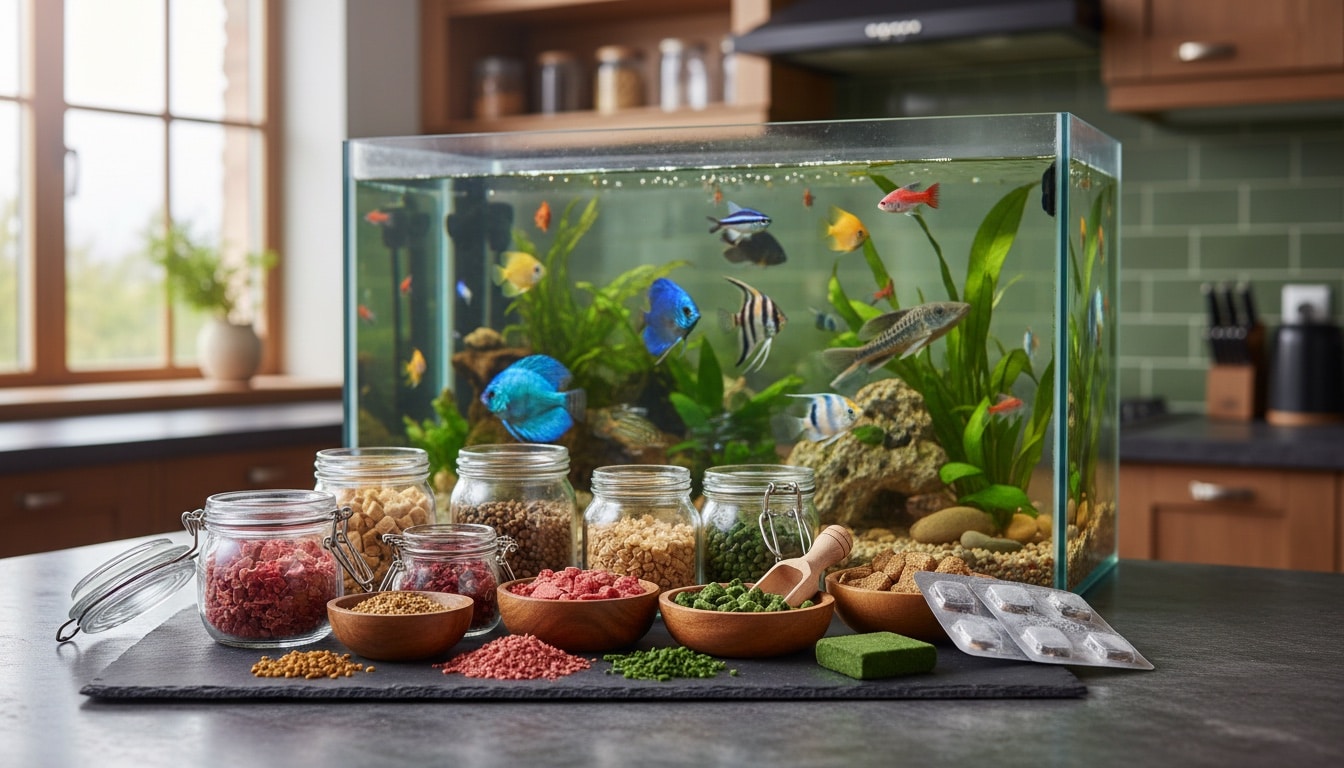
What’s the Best Food for Your Aquarium Fish? A Complete Feeding Guide
Feeding your fish should be one of the highlights of fishkeeping. But standing in front of those shelves packed with flakes, pellets, freeze-dried treats, and live cultures can feel overwhelming. The good news? Once you understand what your fish actually need, feeding becomes straightforward and genuinely enjoyable.
What Do Aquarium Fish Eat in Nature?
Fish have evolved to eat very different things depending on where they come from. Some graze on plants and algae, others hunt tiny insects, and many happily eat a bit of everything. When you match their food to these natural habits, you’re supporting better digestion, stronger immunity, and more natural behaviour.
Most community favourites—tetras, guppies, barbs, rasboras, mollies, and peaceful cichlids—are omnivores, meaning they thrive on variety. Herbivores stick mainly to plant matter, while carnivores need protein from insects, larvae, or small prey. Knowing which camp your fish fall into is half the battle.
Common Types of Aquarium Fish Food
Walk into any fish shop and you’ll see the same core options. Here’s what each one brings to the table.
Flake food floats at the surface, perfect for fish that feed near the top. It breaks down quickly though, so go easy—uneaten flakes cloud the water fast and mess with your clarity.
Pellets and granules are denser and sink more slowly, giving mid-level swimmers and bottom dwellers a fair shot at mealtime. Premium pellets often pack in spirulina or krill to really bring out colour, and here’s something interesting: spirulina isn’t even a plant—it’s actually a cyanobacteria that offers highly digestible protein and can help reduce bloating in fish like mollies and platies.
Freeze-dried foods like bloodworms, tubifex, or daphnia give you the protein boost of live food without the hassle or risk of introducing pests. Just soak them briefly first so they don’t expand inside your fish.
Frozen foods—brine shrimp, mysis shrimp, insect larvae, chopped seafood—are about as close to a wild diet as most home aquariums get. They hold onto more nutrients than dry foods and carnivorous or omnivorous fish really respond to them. Worth noting: newly hatched brine shrimp (under 24 hours old) are nutritional gold, packed with enzymes that adult brine shrimp no longer carry.
Live foods like brine shrimp, microworms, daphnia, and blackworms tap straight into hunting instincts. They’re brilliant for raising fry and getting fish ready for breeding.
How Much and How Often Should You Feed?
This is where most beginners second-guess themselves, but it’s simpler than you think. Feed small portions once or twice a day—only what your fish can polish off in about 30 seconds. If there’s food drifting around after that, you’ve overdone it. Scoop out any leftovers to keep your water quality stable.
If you’ve got a busy tank full of fast eaters, a feeding ring can stop flakes from floating all over the place.
Feeding Fish Based on Where They Swim
Not all fish eat at the same level, so it helps to think about where they spend their time.
Surface feeders like guppies, hatchetfish, and danios do best with floating flakes, floating pellets, or slow-sinking insect-based granules. Mid-water swimmers—your tetras, barbs, and gouramis—prefer slow-sinking granules, crushed flakes, and small frozen foods like cyclops or baby brine shrimp. Many community fish actually prefer micro-sized particles even when fully grown; species like neon tetras, ember tetras, and small rasboras have tiny mouths their whole lives, so smaller food means less waste and happier fish.
Bottom feeders like corydoras, loaches, and plecos need sinking pellets, algae wafers, and fresh veg. Some bottom feeders, particularly plecos from the genera Panaque and Panaqolus, naturally rasp wood to support their gut flora—you’ll even find specialised foods now that include powdered driftwood for exactly this reason. Thin slices of courgette, blanched spinach, or cooked peas (skins removed) work brilliantly. Just don’t leave vegetables in the tank longer than 2–3 hours.
Fresh Vegetables and Homemade Options
Plant-eaters and omnivores love fresh veg once or twice a week. A quick 30-second blanch softens things up and makes them easier to nibble. Courgette, spinach, peas, romaine lettuce, and cucumber are all safe bets. Avoid starchy options like carrots or potatoes—they break down fast and wreck your water quality.
Why Water Quality Matters for Feeding
Even premium food won’t do much if your tank conditions are off. Stable temperatures between 22–28°C help regulate metabolism, and good aeration ensures fish can process oxygen while digesting—especially important after protein-rich meals. Regular water changes stop leftover particles from spiking nitrate levels.
If your fish start spitting out food, acting lethargic, or ignoring mealtimes, check your water parameters before blaming the food. Poor water quality often looks like picky eating.
Building a Simple Weekly Feeding Routine
A varied schedule keeps things interesting without getting complicated. Try something like this:
Day 1 and 3: main flake or pellet food. Day 2: frozen or freeze-dried protein. Day 4: vegetable day. Day 5: pellets or granules. Day 6: frozen food treat. Day 7: light feeding or a rest day.
That rest day gives digestion time to catch up and helps keep your aquarium’s nutrient load in check.
How to Tell You’re Doing It Right
When you’ve nailed the feeding routine, your fish will show you. Look for bright, natural colours, clean fins, curious and active behaviour, clear eyes, and steady growth without bloating. Fish should look confident and relaxed at feeding time—not hiding or fighting aggressively over every flake.
One more thing worth knowing: colour-enhancing foods don’t actually add new colours—they just reveal pigments your fish already have. Ingredients like krill meal and marigold extract support carotenoid absorption, but they can’t create colours the fish isn’t genetically wired to express.
Final Thoughts
Choosing the right food doesn’t have to be complicated. Learn what your fish eat naturally, mix in the right formats—flakes, pellets, frozen, or live—and stick to a few smart habits. Variety keeps your fish healthy and engaged.