Thinking about setting up your first aquarium? That’s awesome! But before you dive in, let’s talk about the real cost of keeping fish. Many beginners get surprised by ongoing expenses, so understanding what you’re getting into financially is crucial. The good news? Running a fish tank doesn’t have to break the bank if you know what to expect.
Are Fish Tanks Expensive to Run? The Real Cost Breakdown
Understanding Your Monthly Fish Tank Running Costs
The honest answer is that fish tank running costs vary dramatically depending on tank size, fish species, and equipment choices. A small 40-litre (10-gallon) freshwater tank might cost you £5-10 ($6-12) monthly, while a large 380-litre (100-gallon) marine setup could easily reach £50-100 ($60-120) per month.
Here’s what actually impacts your aquarium electricity bill and overall expenses: electricity consumption for heating and filtration, water treatment costs, fish food, and periodic equipment replacement. Understanding each component helps you budget accurately and avoid nasty surprises.
Electricity Costs: The Biggest Running Expense
Heater Energy Consumption
Your aquarium heater is typically the biggest energy consumer, especially in cooler climates. Most tropical fish need water temperatures between 24-27°C (75-80°F). A standard 100-watt heater running 8-12 hours daily costs roughly £2-4 ($2.50-5) monthly, though this fluctuates with room temperature and insulation.
Placing your tank in a naturally warmer room can reduce heating costs by up to 40%. Though, you’ll want to avoid positioning your tanks near windows or exterior walls where temperature fluctuations force your heater to work overtime.
Filter Running Costs
Your filter runs 24/7, but modern equipment is surprisingly efficient. A typical aquarium filter uses 5-20 watts, costing approximately £1-3 ($1.20-3.60) monthly. Canister filters for larger tanks consume more power but remain relatively inexpensive to operate.
Lighting Expenses
LED aquarium lights have revolutionized the hobby. Older fluorescent systems could add £5-8 ($6-10) monthly, but LED alternatives use 80% less electricity while lasting years longer. Running LED lights 8-10 hours daily typically costs under £2 ($2.50) monthly, even for well-lit planted tanks.
Water and Maintenance Costs
Water Changes and Treatment
Regular water changes keep your fish healthy, but they add to operating costs. Plan on changing 20-30% of water weekly. For a 190-litre (50-gallon) tank, that’s roughly 38-57 litres (10-15 gallons) weekly.
Water itself is cheap, but dechlorinator and water conditioners add £3-5 ($3.60-6) monthly for average-sized tanks. Many people don’t know that using a good water conditioner can actually save money long-term by reducing fish illness and stress-related problems.
Replacement Filter Media
Filter media needs replacing periodically. Budget £5-15 ($6-18) monthly depending on your filter type. Carbon needs monthly replacement, while ceramic media lasts years. Here’s a money-saving tip: you can rinse and reuse mechanical filter foam for months, only replacing it when it physically breaks down. Just rinse it in tank water (not tap water), else you might crash your cycle.
Fish Food and Feeding Costs
Quality fish food is essential but relatively affordable. A container of premium flakes or pellets costs £5-12 ($6-14) and lasts 2-3 months for small to medium communities. Overfeeding wastes money and decreases water quality, so feeding the right amount actually saves cash.
Specialist diets for carnivorous or herbivorous species cost more. Marine fish often require frozen foods adding £10-20 ($12-24) monthly. Many experienced people culture their own live foods like brine shrimp, reducing feeding costs by 50-70% while providing superior nutrition.
Tank Size Impact on Running Costs
Contrary to what you’d expect, larger tanks aren’t always proportionally more expensive to run. A 380-litre (100-gallon) tank doesn’t cost ten times more than a 38-litre (10-gallon) tank because water volume provides thermal stability, reducing heater cycling.
Small tanks under 40 litres (10 gallons) paradoxically cost more per litre to maintain. They experience rapid temperature and parameter swings, requiring more intervention and potentially more fish losses. Here’s what many beginners miss: temperature fluctuations in nano tanks can cause heaters to cycle 3-4 times more frequently than in larger, more stable systems.
Freshwater vs Saltwater Running Costs
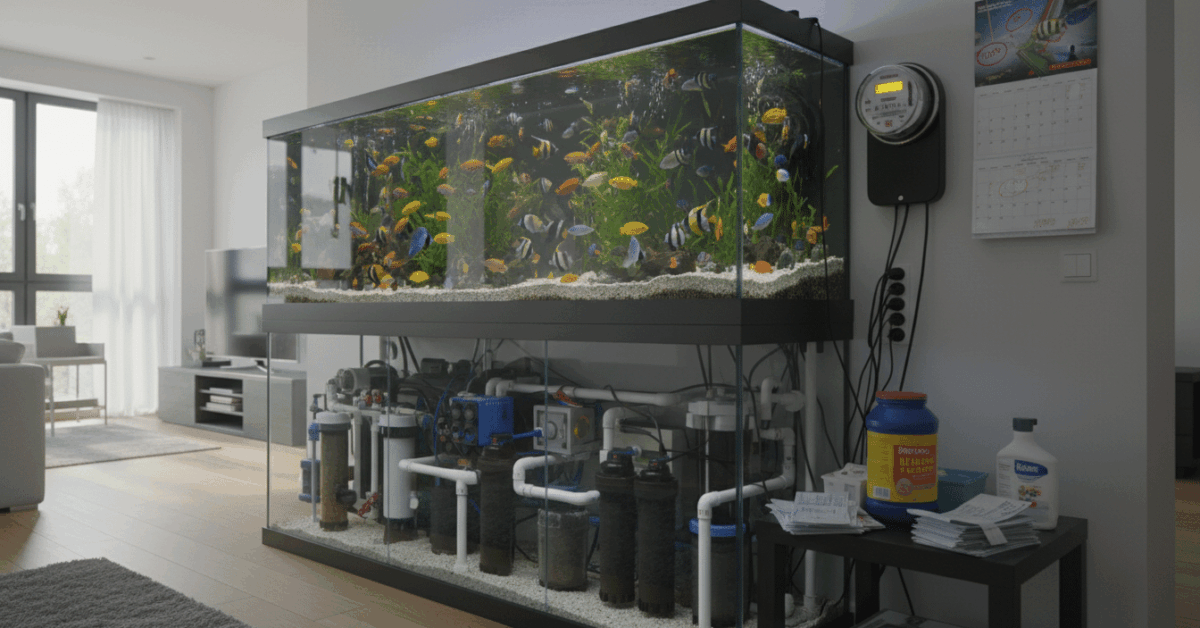
Marine aquariums definitely cost more to operate. Beyond standard equipment, reef tanks need protein skimmers, powerheads for water movement, and often calcium reactors or dosing systems. Monthly costs easily double or triple compared to freshwater setups.
Salt mix adds £10-20 ($12-24) monthly, and testing kits for marine parameters like calcium, alkalinity, and magnesium cost significantly more. However, fish-only saltwater tanks (FOWLR) cost only 20-30% more than freshwater systems when you skip coral-specific equipment, making keeping marine fish more accessible than many assume.
Ways to Reduce Aquarium Running Costs
Energy-Saving Strategies
Insulating your tank reduces heating costs substantially. Polystyrene backing on external walls can cut heater runtime by 25%. Setting lights on timers prevents wasteful illumination when you’re not home to enjoy the tank.
Consider room temperature species like goldfish or white cloud mountain minnows that don’t need heated water. This single choice eliminates your largest ongoing expense entirely.
Smart Equipment Choices
Investing in quality, efficient equipment pays dividends. A £60 ($72) adjustable heater with a good thermostat outlasts three cheap £20 ($24) models while using less electricity. Modern inverter-style filters adjust flow automatically, reducing power consumption by up to 30% compared to traditional models. If looking for a new heater, take a look at our most recent review article here.
DIY and Natural Methods
Growing your own aquarium plants provides natural filtration, reducing reliance on mechanical equipment. Live plants absorb nitrates and other waste products, potentially extending time between water changes. Some people maintain Walstad-method tanks that require minimal filtration and rare water changes, dramatically cutting running costs.
Hidden Costs to Consider
Beyond regular expenses, factor in occasional costs like medication for sick fish (£8-15 or $10-18 per treatment), replacement equipment when pumps fail, and test kits for monitoring water parameters (£15-30 or $18-36 annually).
Equipment failure happens eventually. Heaters last 2-4 years on average, filters 5-7 years, and lights need replacing based on technology used. Building a small emergency fund for your tank prevents financial stress when equipment needs replacing urgently.
Are Fish Tanks Worth the Cost?
Despite ongoing expenses, keeping fish remains one of the most affordable pet hobbies. Dogs cost £50-100 ($60-120) monthly for food alone, plus veterinary care, grooming, and supplies. A well-maintained aquarium provides constant entertainment, reduces stress, and studies show watching fish for just 10 minutes can lower blood pressure and heart rate as effectively as some meditation techniques, and that overall they have beneficial outcomes on your health.
The key is choosing an appropriate setup for your budget. A simple 75-litre (20-gallon) community tank with hardy species like tetras, corydoras, and a centerpiece gourami costs £15-25 ($18-30) monthly to run, which is incredibly reasonable for the enjoyment and educational value provided.
Conclusion: Budgeting for Your Aquarium
So, are fish tanks expensive to run? It really depends on your choices. A basic freshwater setup costs roughly the same as a couple of streaming subscriptions monthly, while elaborate reef systems rival car payments. The beauty of keeping fish is its scalability; you can start small and expand as your interest and budget allow.
Start with realistic expectations, choose efficient equipment, and maintain your tank properly to avoid costly problems. Factor in £10-30 ($12-36) monthly for small to medium freshwater tanks, and £40-100+ ($48-120+) for larger or marine systems. With proper planning, the joy of aquarium keeping is absolutely affordable and worth every penny.
Remember, the initial setup costs more than ongoing maintenance. Once established, a well-balanced aquarium practically runs itself with minimal intervention and expense, providing years of relaxation and fascination.