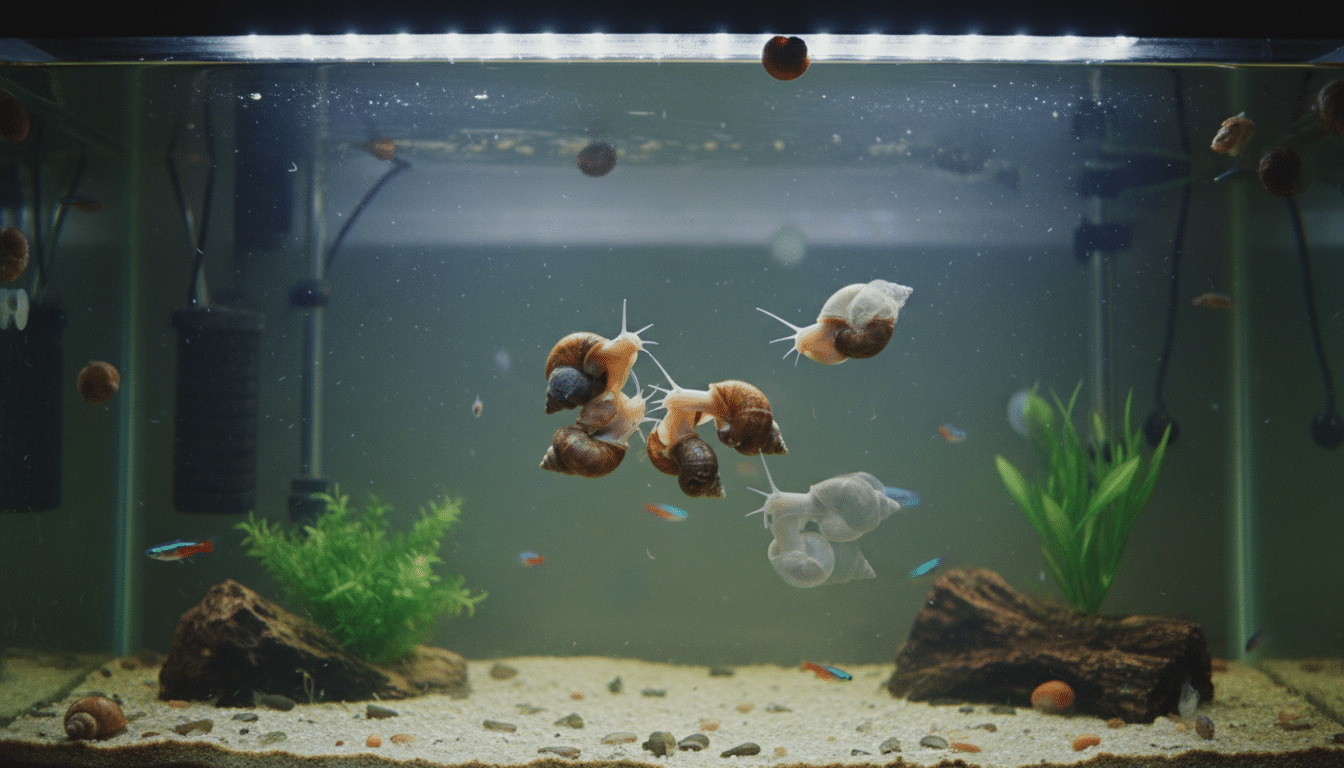
Here’s something that catches most new tank owners completely off guard: you buy one innocent-looking snail, and a few weeks later, you’re running a full-blown snail nursery. Sound familiar? The big question everyone asks when they spot those tiny eggs or baby snails is whether their single snail somehow managed to reproduce alone.
The answer isn’t as straightforward as you might hope. Some aquarium snails absolutely can reproduce without a partner, while others need two to tango. Let’s dive into the fascinating (and sometimes frustrating) world of snail reproduction so you know exactly what you’re dealing with in your tank.
The Two Camps: Asexual vs Sexual Reproduction in Aquarium Snails
Not all snails play by the same rules when it comes to making babies. Understanding whether your particular species reproduces asexually or sexually makes all the difference in predicting population explosions.
Asexual snails are basically self-sufficient baby-making machines. They don’t need a mate and can produce genetically identical offspring on their own. Think of them as the ultimate independent operators of the snail world.
Sexual reproducers need a partner to create the next generation. Even though many aquarium snails are hermaphrodites (meaning they have both male and female reproductive organs), they still typically need another snail to complete the reproductive process.
Which Common Aquarium Snails Are Actually Asexual?
The most notorious asexual reproducer in home aquariums is the Malaysian Trumpet Snail (MTS). These cone-shaped burrowers can reproduce through parthenogenesis, which is the scientific term for “making babies without mating.” One MTS in your substrate can turn into hundreds before you even realize what’s happening.
Here’s the catch though: even Malaysian Trumpet Snails aren’t purely asexual. They’re capable of both sexual and asexual reproduction depending on environmental conditions. When conditions are favorable and population density is low, they often opt for the faster asexual route.
I once helped a friend who bought “some substrate with good bacteria” from another hobbyist. Within three months, she had so many MTS that the substrate looked like it was moving at night. That’s the power of asexual reproduction in action.
The Usual Suspects: Sexual Reproducers Mistaken for Asexual
Mystery snails (Apple snails) absolutely require a male and female to reproduce. If you’ve got baby mystery snails, you definitely have at least two adults in there. The female lays distinctive pink egg clutches above the waterline, making reproduction pretty obvious.
Nerite snails also need opposite sexes to mate. The twist here? Their eggs won’t hatch in freshwater anyway, so population control isn’t an issue. You’ll see the annoying white sesame seed-looking eggs everywhere, but they’re completely infertile in your freshwater setup.
Ramshorn snails and pond snails are hermaphrodites that typically cross-fertilize with another individual. While there are rare documented cases of self-fertilization in these species, it’s not their normal reproductive strategy. If you bought one snail and suddenly have babies, chances are you accidentally got two, or hitchhiking eggs came with your plants.
Why Your “One Snail” Suddenly Became Twenty
The most common scenario isn’t asexual reproduction at all. You probably brought home snail eggs hiding on your live plants or decorations. Those tiny transparent jelly blobs are easy to miss, especially on the undersides of leaves or in crevices.
Bladder snails and pond snails are particularly sneaky hitchhikers. Their egg clutches are nearly invisible, and within two to three weeks at temperatures between 20-25°C (68-77°F), you’ve got a new generation ready to lay their own eggs.
Another possibility? Your “one snail” was actually already pregnant when you got it. Many snails can store sperm for weeks or even months. A mystery snail female, for instance, can lay multiple clutches from a single mating session weeks apart.
The Science Behind Parthenogenesis in Snails
True parthenogenesis in snails is relatively rare in the aquarium trade. It occurs when an egg develops into a complete organism without fertilization. The offspring are genetic clones of the parent, which sounds convenient but actually creates vulnerabilities.
Malaysian Trumpet Snails evolved this ability as a survival mechanism. In isolated pools or temporary water bodies where finding a mate might be impossible, asexual reproduction ensures the species continues. The trade-off is reduced genetic diversity, making populations more susceptible to diseases or environmental changes.
Research has shown that MTS populations with access to mates tend to reproduce sexually, suggesting they prefer genetic diversity when possible. It’s only when isolated that they switch to their asexual backup plan.
Managing Snail Populations Regardless of Reproduction Type
Whether your snails reproduce asexually or sexually, the practical concern is the same: keeping populations manageable. The good news? The strategies work for both types.
The number one factor in snail population explosions is overfeeding your fish. Excess food sinking to the substrate is like an all-you-can-eat buffet for snails. Cut back on feeding, and you’ll see snail numbers stabilize naturally. Most people overfeed by about 30-40%, which directly fuels snail reproduction.
Manual removal works surprisingly well if you’re consistent. Pull out 10-15 snails every few days during water changes, and you’ll keep ahead of reproduction rates. Some people use blanched vegetables as traps, placing a piece of cucumber or zucchini in the tank overnight and removing it covered in snails the next morning.
For Malaysian Trumpet Snails specifically, reducing the depth of your substrate can help. They prefer deeper substrate (7-10 cm or 3-4 inches) for burrowing. A shallower layer of 3-5 cm (1-2 inches) makes the environment less ideal for population explosions.
Chemical-Free Population Control
Introducing assassin snails provides natural predation without chemicals. These carnivorous snails hunt other snails but reproduce slowly themselves (they’re sexual reproducers that lay single eggs). A few assassins in a 75-litre (20-gallon) tank can keep pest snail populations in check indefinitely.
Certain fish species also love snail snacks. Pea puffers are absolute snail-destroying machines, though they come with their own care requirements and territorial behaviors. Yoyo loaches and clown loaches will also munch on snails, making them good dual-purpose additions if they fit your tank parameters.
The Benefits of Having Snails (Yes, Really)
Before you declare war on every snail in sight, remember they’re actually beneficial in controlled numbers. Snails are your cleanup crew, consuming algae, dead plant matter, and leftover food that would otherwise rot and spike ammonia.
Malaysian Trumpet Snails specifically aerate your substrate through their burrowing behavior. This prevents anaerobic pockets that can produce toxic hydrogen sulfide gas. Think of them as tiny rototillers working the night shift in your tank.
Many experienced tank keepers actually maintain small snail populations intentionally. The key word is “small.” A few dozen snails in a 150-litre (40-gallon) tank? That’s helpful. Three hundred snails? That’s a problem.
Identifying What You Actually Have
If you’re dealing with unexpected baby snails, proper identification is your first step. Malaysian Trumpet Snails have elongated, cone-shaped shells and are mostly active at night. During the day, they burrow into the substrate, often leaving only the shell tip visible.
Bladder snails and pond snails have more rounded shells and crawl all over the glass and decorations. Ramshorn snails are flat-coiled and come in various colors from brown to bright pink. Mystery snails are much larger (up to 5 cm or 2 inches) with rounded shells and a distinctive trapdoor they can close.
Taking the time to identify your species tells you whether you’re dealing with true asexual reproduction (very rare), hermaphroditic sexual reproduction (common), or simply hitchhiker eggs you didn’t notice (most common).
The Bottom Line on Snail Reproduction
So are fish tank snails asexual? Most commonly kept aquarium snails are not truly asexual. The Malaysian Trumpet Snail is the notable exception that can reproduce without a mate, though even they prefer sexual reproduction when possible.
If you’re seeing population explosions with other snail species, you’re dealing with sexual reproducers that either came as pairs or arrived as hitchhiker eggs on plants. The solution isn’t necessarily elimination but management through proper feeding, manual removal, and understanding their life cycle.
Snails get a bad reputation, but they’re really just responding to the environment we create. A well-balanced tank with appropriate feeding won’t support massive snail populations regardless of their reproductive strategy. View them as indicators of tank health rather than pests, and you’ll find they’re actually useful members of your aquatic community.