Setting up the perfect aquarium lighting can be tricky, especially when you’re worried about water splashing onto your expensive LED fixtures. If you’ve been wondering whether fish tank lights are waterproof, you’re not alone. This is one of the most common questions among both beginner and experienced aquarium hobbyists, and the answer isn’t always straightforward.
Are Fish Tank Lights Waterproof? Everything You Need to Know
Understanding Waterproof vs Water-Resistant Aquarium Lights
Here’s the truth: most aquarium lights are not fully waterproof, but many are water-resistant. There’s a crucial difference between these two terms that every fish keeper should understand.
Water-resistant lights can handle splashes, humidity, and occasional water exposure without breaking down. They’re designed to survive in the damp environment around your tank. Waterproof lights, on the other hand, can be completely submerged underwater without any damage. While submersible aquarium lights do exist, the majority of standard fish tank lighting fixtures are built to sit above the water line.
When shopping for fish tank lighting, you’ll often see an IP rating listed in the specifications. This Ingress Protection rating tells you exactly how much water exposure the light can handle. An interesting fact that many aquarium owners don’t know is that an IP rating consists of two digits: the first indicates dust protection, while the second indicates water protection. For aquarium use, you want to focus on that second number.
IP Ratings Explained for Aquarium Lighting
Understanding IP ratings will help you choose the right waterproof aquarium light for your setup. Here’s what the common ratings mean:
IP Rating Guide
IP65: Protected against water jets from any direction. This rating is suitable for most open-top aquariums where splashing occurs.
IP67: Can withstand temporary immersion in water up to 1 meter deep for 30 minutes. These lights offer excellent protection for humid environments.
IP68: Fully submersible and suitable for continuous underwater use. These are your true submersible fish tank lights.
Most clip-on and hanging LED aquarium lights carry an IP65 or IP67 rating, which is perfectly adequate for standard setups. What many people don’t realize is that even with a high IP rating, the power supply and connectors are often the weak points. These components typically aren’t rated as highly as the light unit itself, so keeping them away from direct water contact is essential.
Types of Aquarium Lights and Their Water Resistance
LED Aquarium Lights
LED lights have become the gold standard for aquarium lighting systems. Modern LED fixtures designed specifically for aquariums typically feature IP65 to IP67 ratings, making them splash-proof and humidity-resistant. They’re energy-efficient, produce less heat than older lighting technologies, and last significantly longer.
A lesser-known advantage of quality LED aquarium lights is that their sealed construction not only protects against water but also prevents salt creep in marine tanks from corroding internal components. This is particularly important for reef aquarium enthusiasts running high-powered lighting systems.
Submersible Aquarium Lights
These lights are specifically designed to go underwater. They’re commonly used for underwater tank lighting effects, highlighting specific features, or providing additional illumination in deep tanks. Submersible lights always carry an IP68 rating and use sealed, waterproof connections.
What’s interesting is that submersible LED lights often run cooler than you’d expect. Because water conducts heat away from the fixture efficiently, a properly designed submersible light won’t significantly raise your aquarium temperature, even in smaller tanks under 40 litres (10 gallons).
Clip-On and Hanging Lights
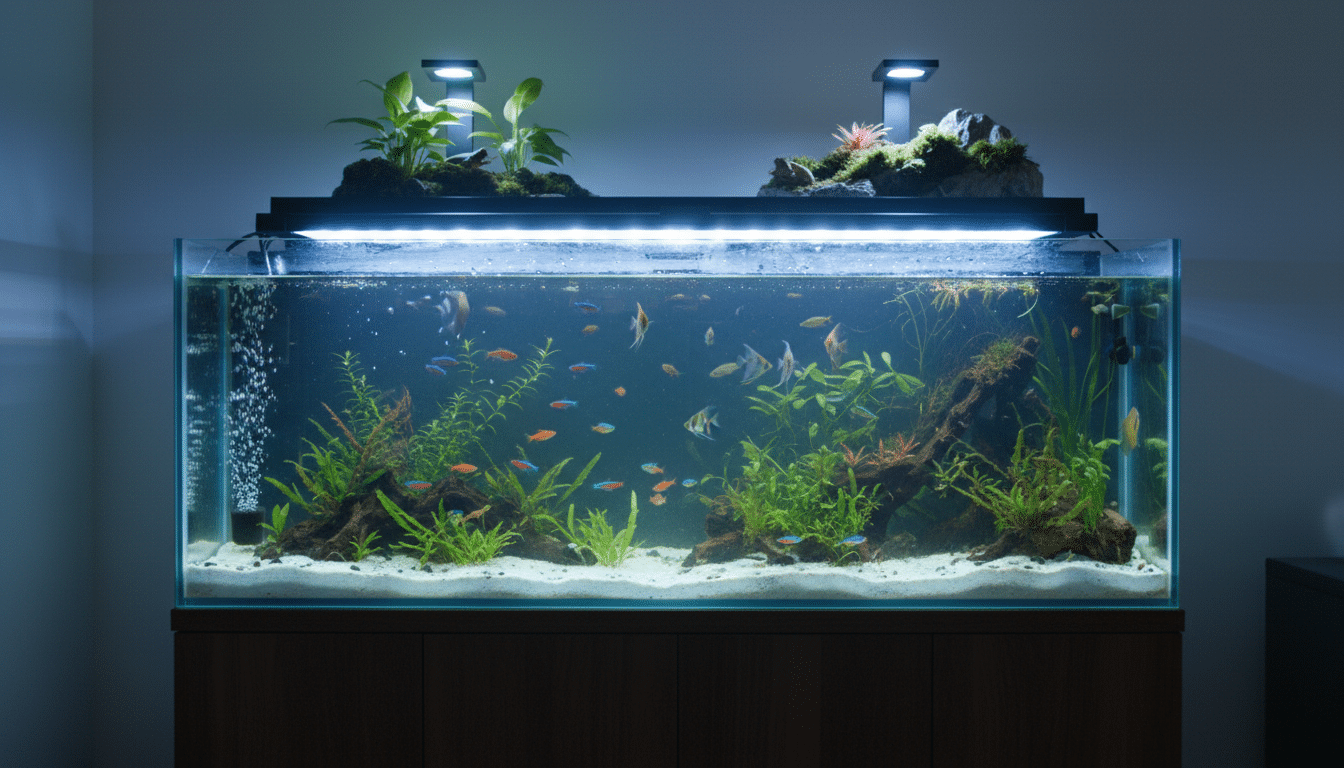
These popular options sit above the water surface and range from basic water-resistant models to more advanced splash-proof designs. While they’re not meant for submersion, quality versions can handle the humid environment around your tank without issues.
Common Risks and How to Protect Your Lights
Even with water-resistant aquarium lighting, certain situations can lead to damage. Understanding these risks helps you take preventive measures.
Splash Damage
Active fish like bettas, cichlids, and surface-dwelling species can splash water onto your lights during feeding time or territorial displays. While an IP65-rated light can handle occasional splashes, constant water exposure to the same spot may eventually find its way into seals and connections.
Condensation Issues
Here’s something most aquarium guides don’t mention: condensation forming inside light fixtures is often not a waterproofing failure. Instead, it’s usually caused by temperature differences between the warm light fixture and cooler room air. This typically happens with cheaper lights that lack proper ventilation design. Quality aquarium LED lights incorporate ventilation that allows air circulation while maintaining water resistance.
Hood and Canopy Considerations
If you’re installing lights inside a glass canopy or hood, moisture can accumulate much faster than with open-top setups. In these enclosed spaces, even water-resistant lights face higher humidity levels. Many experienced aquarists don’t know that drilling small ventilation holes in glass canopies can significantly reduce moisture buildup without compromising the hood’s fish-jumping prevention function.
Best Practices for Aquarium Light Installation
Maintain proper clearance: Keep non-submersible lights at least 5-10cm above the water surface. This simple step prevents most splash-related damage.
Secure all connections: Use silicone sealant or waterproof connection covers on any plugs or wire junctions near your tank. Power supplies should always be positioned below outlet level to create a drip loop.
Regular maintenance checks: Inspect seals and gaskets every few months, especially on older fixtures. Salt creep in marine tanks can degrade rubber seals faster than you’d expect.
Consider your fish species: Jumpers like killifish and hatchetfish require covered tanks, which affects your lighting choices. Surface-dwelling species that create more splash need better water protection.
When to Choose Submersible vs Non-Submersible Lights
For most standard freshwater and marine aquariums, non-submersible lights with IP65 or IP67 ratings provide excellent performance and longevity. They’re easier to maintain, typically more powerful, and offer better spectrum options for plant growth and coral health.
Choose submersible aquarium lights when you’re creating special underwater effects, need additional lighting in very deep tanks (over 60cm/24 inches), or want to illuminate specific rock formations or plants from below. Submersible lights are also ideal for outdoor pond features where above-water mounting isn’t practical.
An often-overlooked consideration is that submersible lights in freshwater tanks under 80 litres (20 gallons) can contribute to algae growth if left on too long, as the concentrated light in close proximity to surfaces creates perfect conditions for algae blooms.
Protecting Your Investment
Quality fish tank lights represent a significant investment, so protecting them makes financial sense. Always keep your original packaging and documentation, as most manufacturers require proof of proper installation for warranty claims. Many warranties specifically exclude water damage from improper installation or use beyond the stated IP rating.
If you’re using lights near a saltwater aquarium, weekly wipe-downs with a damp cloth prevent salt accumulation that can corrode fixtures over time. For freshwater setups, monthly cleaning usually suffices.
Conclusion: Making the Right Choice for Your Aquarium
So, are fish tank lights waterproof? Most aren’t fully waterproof, but they don’t need to be. Quality aquarium lights with appropriate IP ratings provide more than enough protection for typical use. The key is matching the right light to your specific setup and understanding the difference between waterproof and water-resistant.
Whether you’re setting up a planted freshwater tank, a reef aquarium, or a simple goldfish bowl, choosing lights with at least an IP65 rating gives you peace of mind against splashes and humidity. For special applications requiring underwater placement, invest in properly rated submersible fixtures.
Remember that proper installation and regular maintenance matter just as much as the IP rating itself. Keep lights at appropriate distances from water surfaces, protect connections, and perform regular inspections. With these precautions, your aquarium lighting system will provide years of reliable service while keeping your aquatic environment beautifully illuminated.