Are Fish Tank Lights UV?
When you’re setting up or maintaining your aquarium, lighting is one of those crucial elements that can make or break your tank’s ecosystem. You might have noticed different types of aquarium lights on the market and wondered: are fish tank lights UV? It’s a question that comes up surprisingly often, and the answer isn’t as straightforward as you might think.
Understanding UV Light and Aquarium Lighting
Most standard fish tank lights do not emit significant amounts of UV light. The typical LED and fluorescent aquarium lights you’ll find in pet stores are designed to emit visible light in the spectrum that promotes plant growth and shows off your fish’s colours, without producing harmful UV radiation.
However, some specialized aquarium lights do contain UV components. These are usually designed for specific purposes, like supporting coral growth in reef tanks or enhancing certain fish colours. Many people don’t realize that some “full spectrum” LED lights actually include a small UV component, typically in the UV-A range (315-400nm), which is generally considered safe and can even benefit certain aspects of aquarium life.
Why Most Aquarium Lights Avoid UV
There are several good reasons why manufacturers typically keep UV out of standard aquarium lighting. UV light, particularly UV-B and UV-C wavelengths, can be harmful to both fish and beneficial bacteria in your tank. These wavelengths can damage DNA, harm delicate tissues, and disrupt the biological balance you’ve worked hard to establish.
Standard aquarium lights focus on the photosynthetically active radiation (PAR) spectrum, which ranges from 400 to 700 nanometers. This is the sweet spot for plant growth and creating a visually appealing display without the risks associated with UV exposure.
When UV Lighting Actually Matters in Aquariums
Reef and Marine Tanks
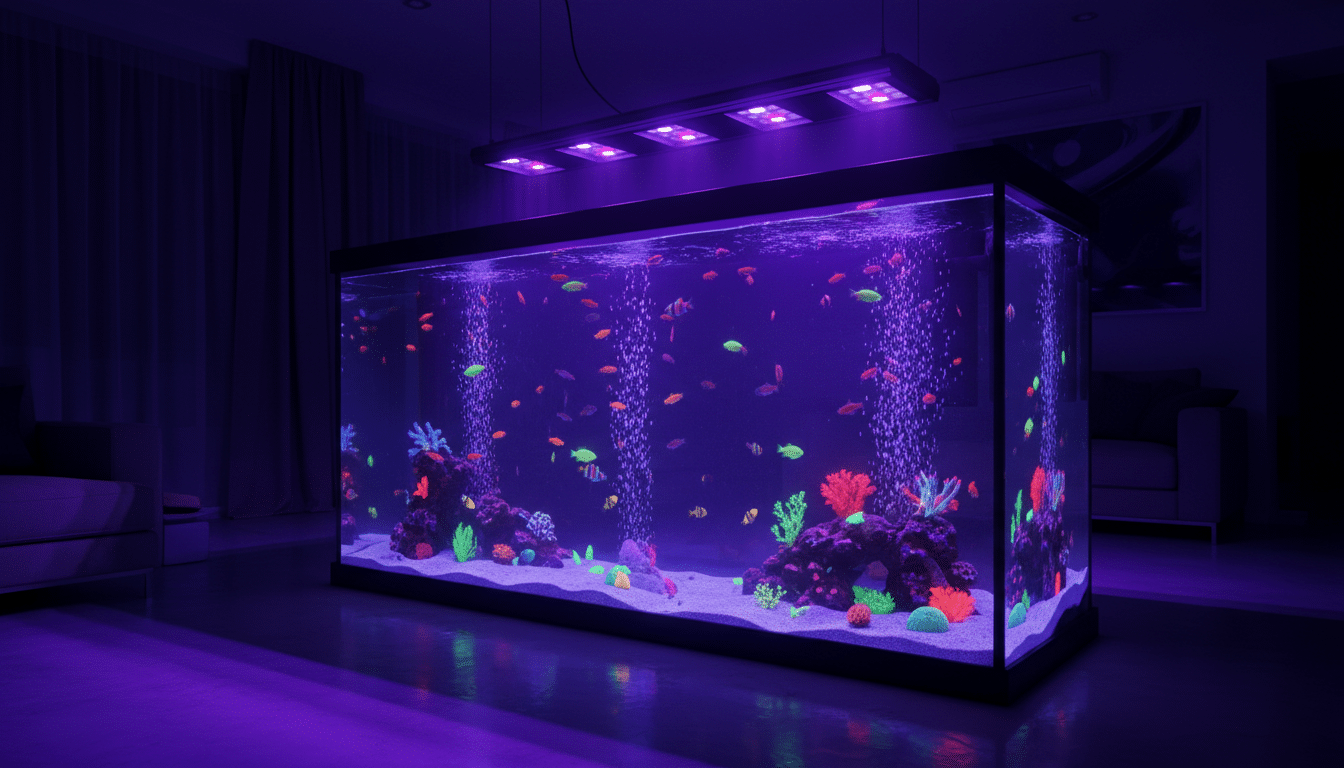
If you’re keeping a saltwater reef aquarium, UV lighting becomes more relevant. Many corals in their natural habitat receive some UV exposure, and certain species of coral actually require small amounts of UV-A light to maintain their vibrant colours and produce protective compounds. High-end marine aquarium lights often include UV-A LEDs specifically for this purpose.
Some coral species actually use UV light to trigger the production of UV-protective proteins that create those stunning fluorescent colours we love in reef tanks. Without at least some UV-A exposure, these corals can appear washed out or fail to develop their full colour potential.
Sterilization Systems
There’s another context where UV and aquariums intersect: UV sterilizers. These are separate devices from your main tank lights and use UV-C light (the most powerful germicidal wavelength) to kill parasites, bacteria, and algae as water passes through them. It’s worth noting that UV sterilizers don’t add UV light to your display tank; the water is exposed to UV in a closed chamber before returning to the aquarium.
The Impact of UV on Fish Health
Most freshwater fish don’t need UV light exposure, and excessive UV can actually stress them or damage their eyes and skin. However, there’s an interesting exception: some studies suggest that minimal UV-A exposure may support vitamin D synthesis in certain fish species, similar to how it works in humans. This is still an emerging area of research in aquarium science.
What’s particularly fascinating is that many fish species can actually see into the UV spectrum, which plays a role in their natural behaviours like mate selection and food recognition. Some aquarists with specialized setups include minimal UV-A to support these natural behaviours, though it’s not necessary for keeping healthy fish.
Checking Your Aquarium Lights for UV
If you’re concerned about whether your fish tank lights emit UV, here are some practical ways to find out. First, check the product specifications or contact the manufacturer. Quality aquarium light manufacturers will clearly state whether their products include UV wavelengths.
Most LED aquarium lights are UV-free because standard LED technology doesn’t naturally produce UV light. Traditional fluorescent bulbs may produce trace amounts of UV, but the protective coating inside the tubes typically blocks it. If you’re using specialized grow lights or reptile bulbs (which some aquarists experiment with), these may contain more significant UV output.
Do You Actually Need UV in Your Aquarium?
For the vast majority of aquarium setups, the answer is no. A standard planted freshwater tank, goldfish bowl, or tropical community aquarium will thrive perfectly well without any UV exposure. Your focus should be on providing appropriate intensity and spectrum of visible light for your plants and creating a day-night cycle that mimics natural conditions.
If you’re keeping a reef tank with demanding corals, you might benefit from lights that include a UV-A component. Look for full-spectrum reef lights that specifically mention UV-A LEDs. These are designed to provide the benefits without the harmful effects of stronger UV wavelengths.
Safety Considerations
When dealing with any lighting that might emit UV, safety matters. Even UV-A, while generally safer than UV-B or UV-C, can affect your eyes with prolonged exposure. If you’re using high-intensity reef lights with UV components, avoid staring directly at them and consider wearing UV-protective glasses during extended maintenance sessions.
For UV sterilizers, these devices are completely safe when used properly because the UV light is contained within the unit. Just make sure never to look directly at an operating UV-C bulb if you need to service the sterilizer, as this wavelength can cause serious eye damage.
Making the Right Choice for Your Tank
When selecting aquarium lighting, consider what you’re actually keeping. Freshwater planted tanks do best with LED lights in the 6500K to 8000K colour temperature range without UV. Community fish tanks can use similar lighting, focusing on intensity appropriate for any live plants and a colour temperature that makes your fish look their best.
Reef keepers should invest in quality marine-specific LED fixtures that include appropriate UV-A along with other wavelengths corals need. These lights typically run in the 10,000K to 20,000K range and cost more, but they’re designed specifically for the demanding requirements of coral reefs.
Conclusion
So, are fish tank lights UV? The simple answer is that most are not, and that’s actually a good thing for the majority of aquarium setups. Standard aquarium lights focus on providing safe, effective illumination that supports plant growth and showcases your fish without the potential downsides of UV exposure.
Unless you’re maintaining a specialized reef aquarium or considering a UV sterilizer for water quality management, you don’t need to worry about UV in your aquarium lighting. Focus instead on choosing quality lights with the right spectrum and intensity for your specific setup, and your aquatic environment will flourish.
Understanding what your aquarium actually needs, rather than getting caught up in every lighting technology out there, will help you create a healthier, more beautiful underwater world for your fish and plants.