Are Fish Tank Lights Supposed to be on All The Time?
If you’ve just set up your first aquarium or you’re looking to improve your fish keeping game, you’ve probably wondered about lighting schedules. Should fish tank lights be on all the time? The short answer is no, and understanding why can make a huge difference to your fish’s health and your tank’s overall ecosystem.
Understanding the Natural Light Cycle for Aquarium Fish
In the wild, fish experience a natural day-night cycle, and replicating this in your aquarium is essential for their wellbeing. Fish tank lights should typically run for 8 to 12 hours per day, not 24/7. This mimics the natural light patterns fish would encounter in rivers, lakes, and oceans.
When you leave your aquarium lights on constantly, you’re disrupting your fish’s circadian rhythm. Just like humans, fish need periods of darkness to rest, reduce stress, and maintain healthy immune systems. Without proper darkness, your fish can become stressed, which weakens their ability to fight off diseases and can even shorten their lifespan.
Keep in mind that fish don’t have eyelids. This means they can’t block out light when they want to sleep, making proper lighting schedules even more critical for their rest periods. Continuous bright lighting can lead to chronic stress and behavioral problems in your aquatic pets.
The Perfect Lighting Schedule for Your Aquarium
Creating the ideal lighting routine depends on several factors, including the type of fish you keep and whether you have live plants. Most community tanks thrive with 8 to 10 hours of light daily, while planted tanks might need up to 12 hours to support photosynthesis.
Setting Up Your Lighting Timer
The best investment you can make is an automatic timer for your aquarium lights. These inexpensive devices ensure consistency, which fish absolutely love. Set your lights to turn on in the morning and off in the evening, matching the times when you’re most likely to enjoy viewing your tank.
A consistent schedule helps regulate your fish’s internal clocks, promoting natural feeding patterns, breeding behavior, and overall activity levels. Random lighting patterns can confuse fish and disrupt their natural biological processes.
What Happens When You Leave Aquarium Lights On Too Long
Beyond stressing your fish, excessive lighting creates perfect conditions for unwanted algae growth. Algae thrives on light and nutrients, and when your tank receives more than 12 hours of light daily, you’re essentially inviting an algae invasion.
Green water, brown algae on decorations, and stubborn algae covering your glass are all signs your tank might be receiving too much light. Interestingly, many species of algae can actually photosynthesize more efficiently than aquarium plants under prolonged lighting, giving them a competitive advantage in your tank.
Here’s a lesser-known fact: certain fish species can actually lose their vibrant colors when exposed to constant lighting. This happens because continuous light exposure can bleach out pigmentation over time, leaving your beautiful tropical fish looking washed out and pale.
Do Fish Need Complete Darkness at Night?
Yes, most aquarium fish benefit from complete darkness during their rest period. However, some fishkeepers worry about their nocturnal species. The good news is that even nocturnal fish like plecos and catfish don’t need bright lights; they navigate using their other senses and perform perfectly well in darkness or very dim conditions.
If your aquarium is in a room with ambient light from windows or other sources, your fish will still get enough environmental light cues. You don’t need to cover the tank completely unless you’re dealing with light-sensitive species or trying to control a severe algae problem.
Moonlight and Blue Light Options
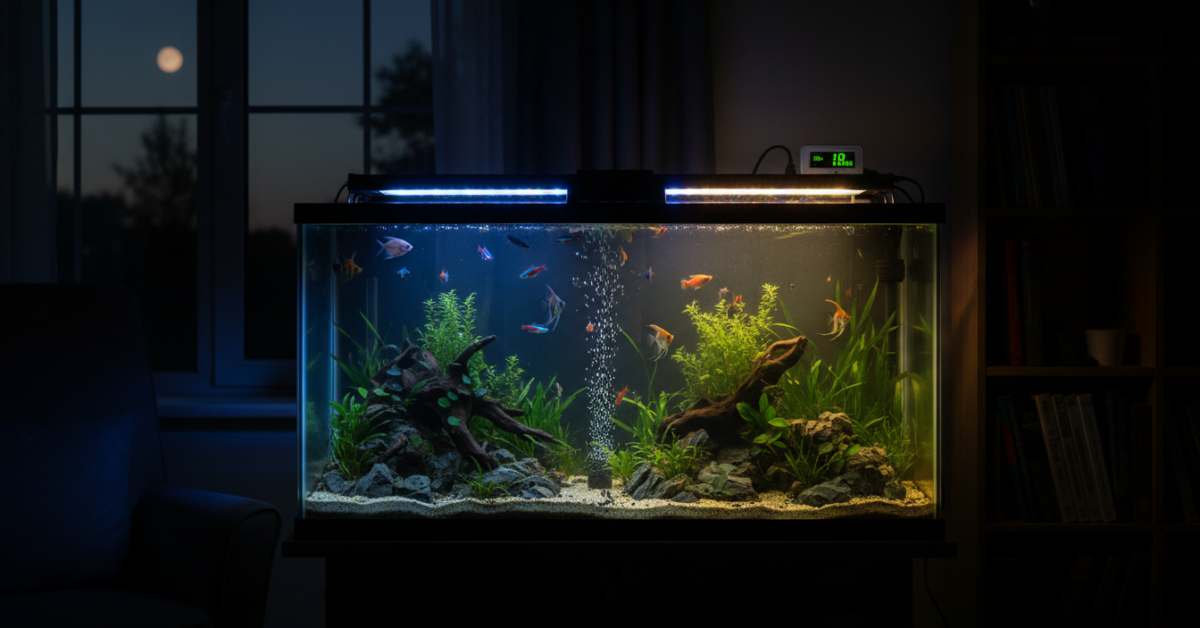
Some modern aquarium lights feature moonlight or blue LED settings. These provide minimal, dim lighting that mimics natural moonlight without disrupting your fish’s sleep cycle. This can be beneficial for viewing nocturnal fish behavior without causing stress, though it’s not necessary for fish health.
Special Lighting Considerations for Planted Tanks
If you’re keeping live aquatic plants, your lighting requirements shift slightly. Plants need consistent light for photosynthesis, typically requiring 10 to 12 hours of quality light daily. However, even planted tanks shouldn’t have lights running 24/7.
An interesting fact that surprises many aquarists: plants also need a dark period to complete certain metabolic processes. During darkness, plants undergo respiration and convert stored energy, which is essential for healthy growth. Constant lighting can actually stress plants and lead to nutrient deficiencies.
The intensity of your lighting matters more than duration for plant growth. High-quality LED lights at appropriate intensities for 10 hours will support plant health better than weak lighting left on for 16 hours.
Signs Your Lighting Schedule Needs Adjustment
Your aquarium will tell you if something’s wrong with your lighting routine. Watch for these indicators that you need to make changes:
Excessive algae growth suggests too much light or too many hours of lighting. Try reducing your photoperiod by one or two hours and monitor the results over a few weeks.
Fish hiding constantly during lit hours might indicate your lights are too bright or on for too long. Some species, particularly those from shaded forest streams, prefer dimmer conditions.
Erratic fish behavior or aggression can result from stress caused by inadequate dark periods. Fish need their rest time to maintain normal social behaviors.
Poor plant growth despite adequate light intensity might mean your plants aren’t getting their necessary dark period for metabolic processes.
The Siesta Method for Algae Control
Here’s a lesser-known technique that experienced aquarists use: the split photoperiod or siesta method. This involves running your lights for 4 to 5 hours, turning them off for 2 to 3 hours (the siesta), then turning them back on for another 4 to 5 hours.
This method can help control algae because it disrupts algae’s photosynthesis cycle while still providing enough total light for plants. Many algae species struggle to adapt to interrupted light periods, giving your plants a competitive advantage.
Common Mistakes New Fishkeepers Make with Lighting
One frequent error is placing aquariums in direct sunlight to “help” with lighting. Natural sunlight is unpredictable, often too intense, and can cause temperature fluctuations and massive algae blooms. Always rely on artificial lighting you can control.
Another mistake is using lighting duration to compensate for weak light intensity. If your plants aren’t growing well, the solution isn’t necessarily more hours of light. Often, upgrading to better quality lights at the correct intensity works better than extending your photoperiod.
Finally, many beginners forget that different fish have different lighting preferences based on their natural habitats. Research your specific species to understand their needs.
Practical Tips for Managing Your Aquarium Lights
Invest in a reliable timer to maintain consistency. Digital timers are affordable and eliminate the need to manually control your lights daily. This consistency benefits both fish and plants significantly.
Consider dimmable LED lights that allow you to gradually increase and decrease intensity, mimicking sunrise and sunset. This gentle transition is less stressful for fish than sudden changes from bright to dark.
Position your lights correctly to avoid creating overly bright or dim spots in your tank. Most fish appreciate having some shaded areas where they can retreat if the lighting feels too intense.
Keep a maintenance log noting your lighting schedule and any changes you observe in fish behavior, plant growth, or algae levels. This helps you fine-tune your setup over time.
Conclusion: Finding the Right Balance
So, are fish tank lights supposed to be on all the time? Absolutely not. Your aquarium lights should run for 8 to 12 hours daily, providing your fish with the natural day-night cycle they need for health and wellbeing. Consistent lighting schedules reduce stress, prevent behavioral problems, control algae growth, and create a more natural environment for your aquatic pets.
Remember that every aquarium is unique, and you might need to adjust your lighting schedule based on your specific setup, fish species, and whether you have live plants. Start with 8 to 10 hours daily, use a timer for consistency, and observe how your tank responds. Your fish will thank you with vibrant colors, natural behavior, and better overall health.
By understanding and implementing proper lighting practices, you’re taking an important step toward becoming a responsible and successful fishkeeper. The darkness is just as important as the light when it comes to maintaining a thriving aquarium ecosystem.