If you’re setting up a tropical aquarium or trying to keep your fish comfortable through winter, you’ve probably wondered about heater safety. The good news? When used correctly, fish tank heaters are safe and essential for maintaining a healthy aquatic environment. However, like any electrical device used near water, they do require proper understanding and maintenance.
Understanding Aquarium Heater Safety Basics
Fish tank heaters are specifically designed to operate safely in water, with sealed electrical components and waterproof construction. Modern aquarium heaters include multiple safety features like automatic shutoff mechanisms, shatter-resistant glass or plastic housing, and precise thermostats to prevent overheating.
The reality is that millions of aquarium owners worldwide use heaters daily without incident. When problems do occur, they’re typically due to improper installation, lack of maintenance, or using damaged equipment rather than inherent design flaws.
Common Risks and How to Avoid Them
Electrical Safety Concerns
The main concern most people have is the combination of electricity and water. Aquarium heaters are built with this challenge in mind, featuring fully sealed heating elements and waterproof casings. However, you should always use a drip loop with the power cord, allowing water to drip off before reaching the electrical outlet. This simple precaution dramatically reduces the risk of electrical shock.
Interestingly, most aquarium heaters actually draw less power than a standard light bulb, typically ranging from 50 to 300 watts depending on tank size. This relatively low power consumption means they’re not the electrical hazard many people imagine them to be.
Overheating and Temperature Fluctuations
One lesser-known fact is that heater malfunctions can occur when the water level drops below the minimum fill line. When a heater runs without adequate water coverage, it can overheat, crack, or even cause a fire hazard. Always ensure your heater is fully submerged to the manufacturer’s specified level.
Another surprising issue is that heaters can continue working even after cracking, which poses both electrical and water quality risks. Regular visual inspections are crucial for catching damage before it becomes dangerous.
Choosing the Right Heater for Maximum Safety
Not all aquarium heaters are created equal. The safest options include features like automatic temperature cutoffs, LED indicator lights, and external temperature controllers. Titanium heaters with external controllers are considered among the safest options, particularly for larger tanks, as the heating element is separated from the control mechanism.
For tank size, the general rule is 5 watts per 4 litres (1 gallon) of water. However, this calculation assumes your room temperature stays around 20°C (68°F). If you keep your home cooler, you’ll need a more powerful heater to maintain tropical temperatures of 24-27°C (75-80°F).
Here’s what matters most when selecting a safe aquarium heater: Look for models with automatic shutoff features that activate if the heater leaves the water or if temperatures exceed safe levels. Choose heaters with protective guards to prevent fish from burning themselves on the surface. Opt for established brands with good warranty coverage and customer support. Consider using two smaller heaters instead of one large heater for tanks over 150 litres (40 gallons), which provides redundancy and more even heat distribution.
Proper Installation for Safe Operation
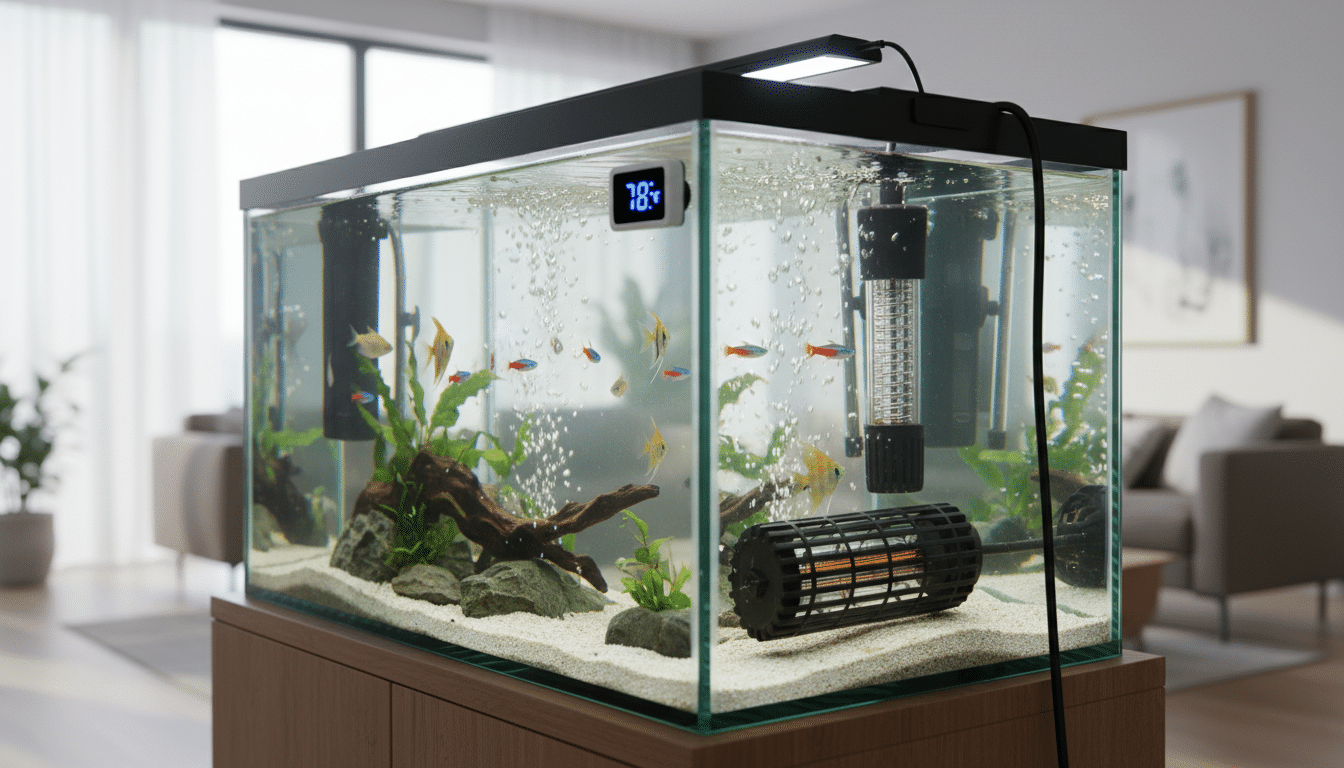
Correct installation is crucial for heater safety. Position your heater near water flow from your filter to distribute heat evenly throughout the tank. This placement prevents hot spots and ensures more accurate temperature readings.
A fact that surprises many fishkeepers is that you should never plug in an aquarium heater immediately after placing it in water. The glass or heating element needs about 15-20 minutes to acclimate to the water temperature. Plugging it in immediately can cause thermal shock and cracking.
Mount the heater at a slight angle rather than perfectly vertical when possible. This positioning helps prevent air pockets from forming inside the heater, which can lead to malfunction.
Essential Maintenance and Monitoring
Regular maintenance keeps your heater operating safely. Monthly visual inspections should check for cracks, corrosion, or mineral buildup. Any visible damage means immediate replacement, no exceptions.
Invest in a separate aquarium thermometer to verify your heater’s accuracy. Built-in thermostats can drift over time, and having an independent reading helps you catch problems early. Digital thermometers tend to be more accurate than traditional stick-on types.
What many don’t realize is that hard water can significantly shorten heater lifespan by causing mineral deposits on the heating element. These deposits reduce efficiency and can lead to malfunction. If you have hard water, you may need to replace heaters more frequently or consider using two smaller units instead of one large one.
Warning Signs Your Heater Needs Replacement
Even the best heaters don’t last forever. Most quality aquarium heaters have a lifespan of 2-3 years with regular use. Watch for these red flags: visible cracks or chips in the glass or casing, unusual sounds like buzzing or clicking, temperature readings that don’t match your separate thermometer by more than 1°C (2°F), discoloration of the water near the heater, or the indicator light staying on constantly without cycling off.
Perhaps the most important but least discussed fact is that heaters are more likely to fail in the “on” position rather than simply stopping working. This means a malfunctioning heater could continue heating your tank beyond safe temperatures. This is why having a separate thermometer and checking it daily is so important.
Using Multiple Heaters for Added Safety
For larger aquariums over 190 litres (50 gallons), using two heaters instead of one single powerful unit provides several safety advantages. If one heater fails, the other prevents the tank from getting too cold. If one malfunctions in the “on” position, it can’t raise the temperature as dramatically as a single larger heater would.
This redundancy approach also creates more even temperature distribution, eliminating cold spots in larger tanks where fish might become stressed.
Special Considerations for Different Tank Setups
Saltwater aquariums require extra attention to heater safety. The salt in marine tanks is more conductive than freshwater, making any electrical fault more dangerous. Use only heaters specifically rated for saltwater use, as they have enhanced corrosion resistance.
For breeding tanks or hospitals tanks, where temperature stability is critical, consider preset heaters that maintain a specific temperature without adjustment. These eliminate the risk of accidental temperature changes from bumped dials.
Emergency Preparedness
Even with all precautions, having an emergency plan matters. Keep a backup heater on hand, especially if you live in a cold climate. Power outages during winter can quickly drop tank temperatures to dangerous levels.
Know how to safely unplug and remove a heater if problems occur. Always unplug the heater first, wait 15-20 minutes for it to cool, then remove it from the tank. Never remove a hot heater from water, as the sudden temperature change can cause it to shatter.
The Bottom Line on Aquarium Heater Safety
Are fish tank heaters safe? Absolutely, when chosen wisely, installed correctly, and maintained properly. The technology behind modern aquarium heaters is mature and reliable, with built-in safety features that make serious incidents rare.
The key to heater safety lies in being proactive rather than reactive. Choose quality equipment from reputable manufacturers, follow installation guidelines carefully, perform regular maintenance checks, use a separate thermometer for monitoring, and replace heaters every 2-3 years or at any sign of damage.
By following these straightforward safety practices, you can confidently maintain the stable temperatures your fish need without worry. The warmth and comfort a good heater provides far outweighs the minimal risks when proper precautions are in place.