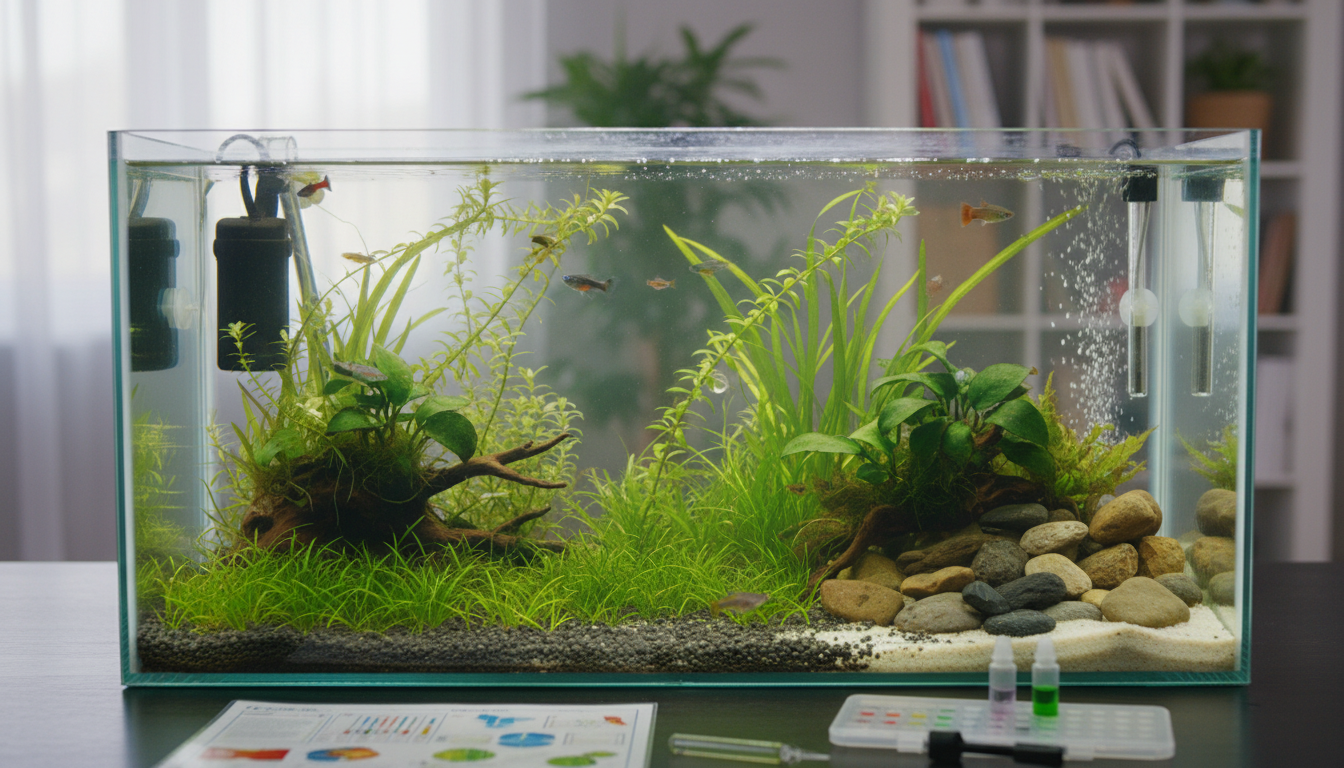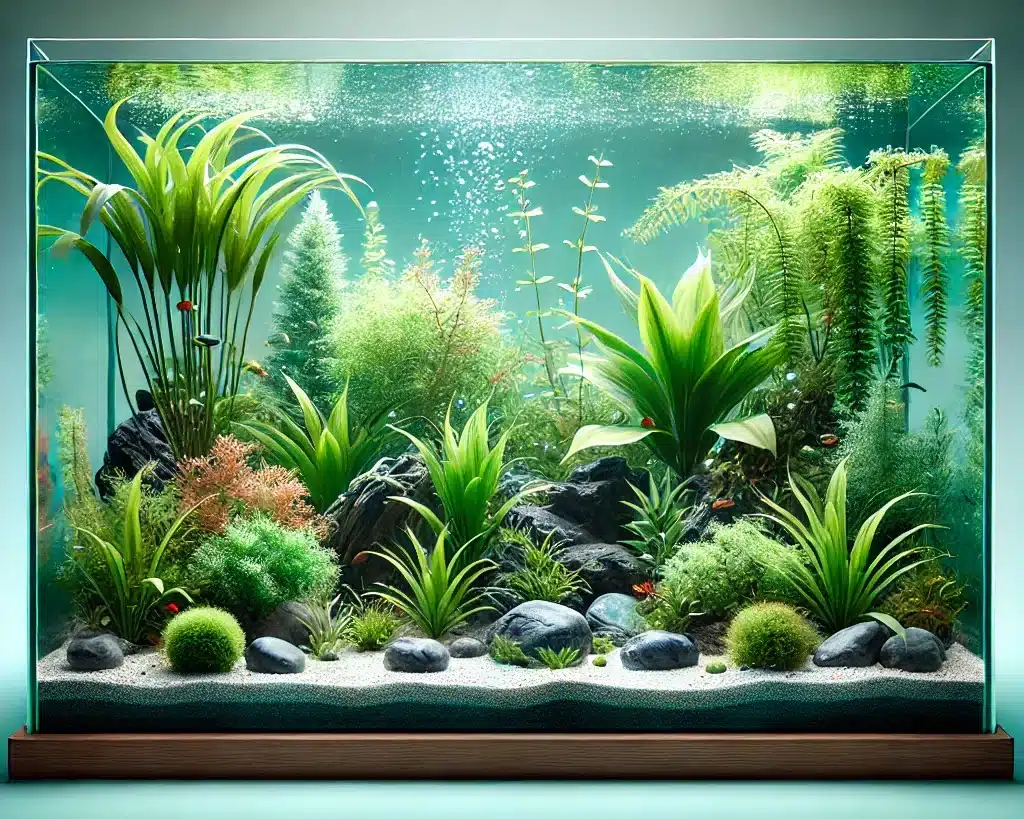
Let’s talk about something that often gets overlooked until your lovely planted tank starts looking more like a sad salad bar. You’ve got the plants, you’ve got the fish, but those leaves are pale, leggy, or just refusing to grow. Nine times out of ten, the culprit is lighting.
Here’s the thing: aquarium lights for plants aren’t just about making your tank look pretty (though that’s a nice bonus). They’re essentially artificial sunshine, and picking the wrong type is like trying to grow tomatoes in a basement closet. Your aquatic plants need specific light wavelengths to photosynthesize, and understanding this can mean the difference between lush greenery and expensive compost.
Why Your Plants Actually Need Proper Aquarium Lighting
Think of light as plant food, but instead of nutrients dissolved in water, your plants are eating photons. Most terrestrial plant advice doesn’t translate well underwater because water absorbs and scatters light differently than air. In fact, water reduces light intensity by about 50% within the first 30 cm (12 inches) of depth, which is why that standard household LED bulb won’t cut it.
Aquatic plants have adapted to this challenge over millions of years. Species from shallow streams need intense lighting, while those from murky riverbeds survive on much less. Match your lighting to your plants’ natural habitat and you’re already halfway to success.
Understanding PAR: The Measurement That Actually Matters
Forget lumens and watts. Those measurements tell you about human perception and electricity consumption, not what your plants can use. What you really need to understand is PAR (Photosynthetically Active Radiation), measured in micromoles per square meter per second (μmol/m²/s).
Here’s the practical breakdown: low light plants need 30-50 PAR at substrate level, medium light plants want 50-100 PAR, and high light species demand 100+ PAR. Most quality aquarium LED lights will provide PAR readings, though you might need to do some digging in the specifications or contact the manufacturer.
One fascinating detail that many people miss is that PAR values drop dramatically with depth and distance. A light providing 200 PAR directly beneath the fixture might only deliver 50 PAR at the bottom of a 60 cm (24 inch) deep tank. This is why mounting height matters just as much as light intensity.
The Color Spectrum Game
Plants primarily use red light (around 660 nanometers) and blue light (around 450 nanometers) for photosynthesis. The green wavelengths? They mostly reflect off, which is why plants appear green to us. A quality full spectrum aquarium light mimics natural sunlight but emphasizes these crucial red and blue peaks.
You’ll often see lights advertising a Kelvin rating, which describes color temperature. Here’s what works: 6500K to 7000K gives you that crisp, natural white light that makes colors pop while supporting healthy plant growth. Lower numbers (3000K-5000K) produce warmer, yellower light, while higher numbers (8000K+) give a cooler, bluish appearance that’s popular in marine tanks but less ideal for planted freshwater setups.
Don’t fall into the marketing trap of thinking more colors equals better growth. Those lights with red, blue, green, purple, and every color of the rainbow might look impressive, but if the actual intensity is weak, your plants won’t care about the light show.
LED vs. Fluorescent: The Modern Reality
LED aquarium lights have essentially won this battle, and for good reason. They run cooler, last 50,000 hours versus fluorescent’s 10,000, consume less electricity, and don’t gradually dim as they age (fluorescent bulbs lose about 20-30% of their output in the first year alone).
If you’re still running T5 or T8 fluorescent tubes, they’ll work fine, but plan your bulb replacement schedule. The light might still turn on after 18 months, but the spectrum has shifted and intensity has dropped enough that your plants notice, even if you don’t.
Modern LED fixtures offer another advantage: programmability. Many come with timers, sunrise/sunset simulation, and adjustable intensity. This matters because plants need consistent photoperiods. Running your lights 8-10 hours daily on a fixed schedule promotes healthy growth while helping prevent algae, which often exploits inconsistent lighting.
Matching Light Intensity to Your Tank Setup
Here’s where beginners often stumble. They see gorgeous high-tech planted tanks online and buy powerful lights to recreate that look, not realizing those tanks also require CO2 injection and meticulous fertilization. Strong lights without proper nutrient supplementation just invite algae to the party.
For a low tech planted tank (no CO2, minimal fertilization), stick with 30-50 PAR and choose plants accordingly. Java fern, Anubias species, Cryptocoryne, and most mosses will flourish. These setups are forgiving and beautiful, perfect for testing the waters before diving into more demanding species.
If you’re adding CO2 and regular fertilizers, you can push into that 50-100+ PAR range and grow carpeting plants like dwarf baby tears, red plants that actually turn red, and those Instagram-worthy stems that pearl oxygen bubbles by afternoon.
The Algae Connection Nobody Tells You About
More light doesn’t automatically mean more algae, but imbalanced light absolutely does. Algae grows when there’s excess light energy that plants can’t use due to nutrient limitations or insufficient CO2. It’s like having leftover food at a party – something’s going to eat it.
This is why planted tank veterans often recommend starting with lower intensity and gradually increasing it as your plants establish and you dial in your fertilization routine. You can always add more light later, but fighting an algae outbreak while trying to save struggling plants is miserable.
One clever trick: use a dimmer or adjustable light fixture. During the first few weeks after planting, run your lights at 50-70% intensity for 6-8 hours. This gives plants time to root and adapt without triggering algae blooms.
Calculating Your Tank’s Lighting Needs
While PAR is king, most hobbyists don’t own a PAR meter (they’re expensive). A practical rule of thumb: for LED lights, look for 0.5 watts per liter (2 watts per gallon) for low light setups, 1 watt per liter (4 watts per gallon) for medium light, and 1.5+ watts per liter (6+ watts per gallon) for high light tanks.
These numbers are rough guidelines since LED efficiency varies wildly between manufacturers. A cheap light might need more watts to achieve the same PAR as a quality fixture. Reviews from actual planted tank users matter more than manufacturer claims.
Tank dimensions also play into this equation. A shallow 40 liter (10 gallon) tank needs less powerful lighting than a deep 40 liter tank because the light doesn’t need to penetrate as far. Surface agitation from filters also affects light penetration, as ripples scatter and reflect light before it reaches your plants.
Top Features Worth Paying For
Not all features justify their price tags, but some genuinely improve your experience. A built-in timer is worth every penny because consistency matters more than intensity. Your plants need regular day/night cycles, and remembering to manually switch lights on and off gets old fast.
Adjustable mounting legs or hanging kits let you fine-tune light intensity through distance. Raising the light even 5-10 cm can significantly reduce PAR at substrate level, giving you flexibility as your plants grow or if you notice algae issues.
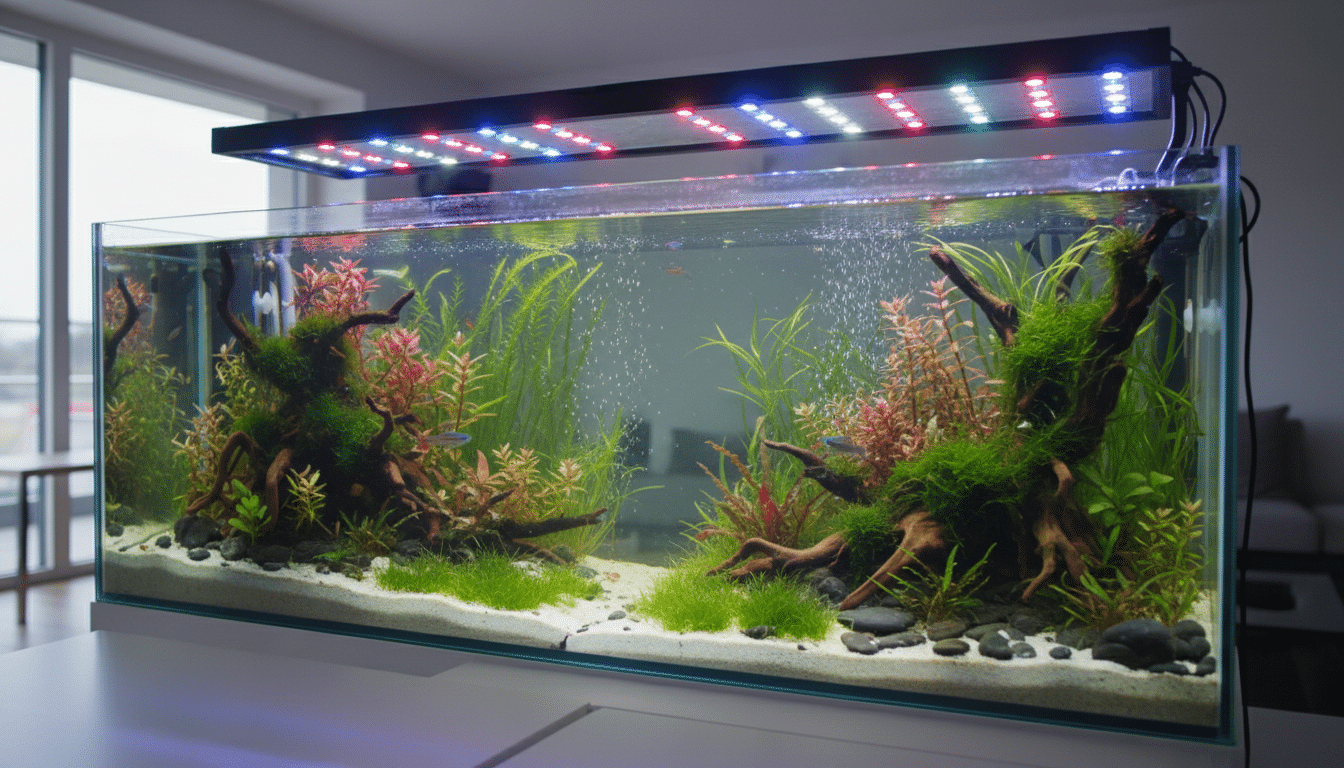
Some premium lights offer separate channel control, letting you adjust red, blue, and white LEDs independently. While not essential, this feature helps you customize spectrum for specific plant needs or aesthetic preferences. Just remember that pretty doesn’t always mean productive – prioritize plant growth over color effects.
Common Mistakes That Hold Your Plants Back
Running lights too long is the classic beginner error. More than 10 hours daily rarely benefits plants but definitely encourages algae. Eight hours is the sweet spot for most planted tanks, with 6-7 hours working fine for low light setups.
Another issue: assuming your existing light is “good enough” without actually checking. If your plants are stretching toward the light with long spaces between leaves (called etiolation), or if green plants are turning pale yellow, your lighting is insufficient regardless of what the box claimed.
Don’t forget that lights degrade over time. Even LEDs gradually lose intensity, though this happens slowly. If your five-year-old fixture isn’t growing plants like it used to, declining output might be the culprit rather than any other tank parameter.
Making Your Final Choice
Start by honestly assessing your commitment level. If you want a beautiful, low-maintenance tank, choose moderate lighting and easy plants. You’ll enjoy better success and fewer headaches than trying to manage a high-tech setup before you’re ready.
Research specific light models using planted tank forums rather than general aquarium sites. People growing similar plants in similar tank sizes offer the most relevant feedback. Pay attention to complaints about failures or customer service – a light that dies after six months isn’t a bargain at any price.
Budget appropriately. Quality planted tank lighting isn’t cheap, but it’s also not the place to cut corners. A reliable fixture will serve you for years and make the difference between flourishing plants and constant frustration. Consider it an investment in every future plant you’ll add to your tank.
Remember that lighting works as part of a system alongside nutrients, CO2, and water parameters. The perfect light won’t compensate for poor water quality or nutrient deficiencies, but the wrong light will limit your success no matter how dialed-in everything else might be. Get this piece right, and you’re setting yourself up for the lush, healthy planted tank you’ve been imagining.