You’ve probably heard someone mention UV light for aquariums and wondered if it’s just another gadget or actually something worth considering. Here’s the thing: while it’s not essential for every tank, a UV sterilizer can be a game-changer when you’re dealing with specific water quality issues or trying to keep disease outbreaks at bay.
Let me walk you through what UV light actually does in an aquarium, when it makes sense to use one, and how to choose the right setup for your tank. We’ll also tackle some common misconceptions that might be steering you in the wrong direction.
What Does UV Light Actually Do in Your Aquarium?
A UV sterilizer uses ultraviolet light to zap microscopic organisms as water flows past the bulb. Think of it as a bouncer at a club, but instead of checking IDs, it’s damaging the DNA of unwanted guests like bacteria, algae, and parasites. When these organisms can’t reproduce, they can’t cause problems in your tank.
The magic happens inside a sealed chamber where water passes by a UV-C bulb (typically 254 nanometers wavelength). This specific wavelength is particularly effective at disrupting cellular function. Your fish never see the light, and it doesn’t affect water chemistry, making it one of the safer intervention methods available.
Here’s what catches many people off guard: UV light doesn’t kill everything instantly. The effectiveness depends on contact time, which is how long the water stays exposed to the UV rays. A slower flow rate means more exposure time and better sterilization. This is why matching your UV unit to your tank size matters more than you might think.
When UV Light Makes Sense (And When It Doesn’t)
I’ll be straight with you: not every aquarium needs a UV sterilizer. If you’ve got a small, lightly stocked tank with healthy fish and manageable algae, you can probably skip it. Regular maintenance and good filtration will serve you just fine.
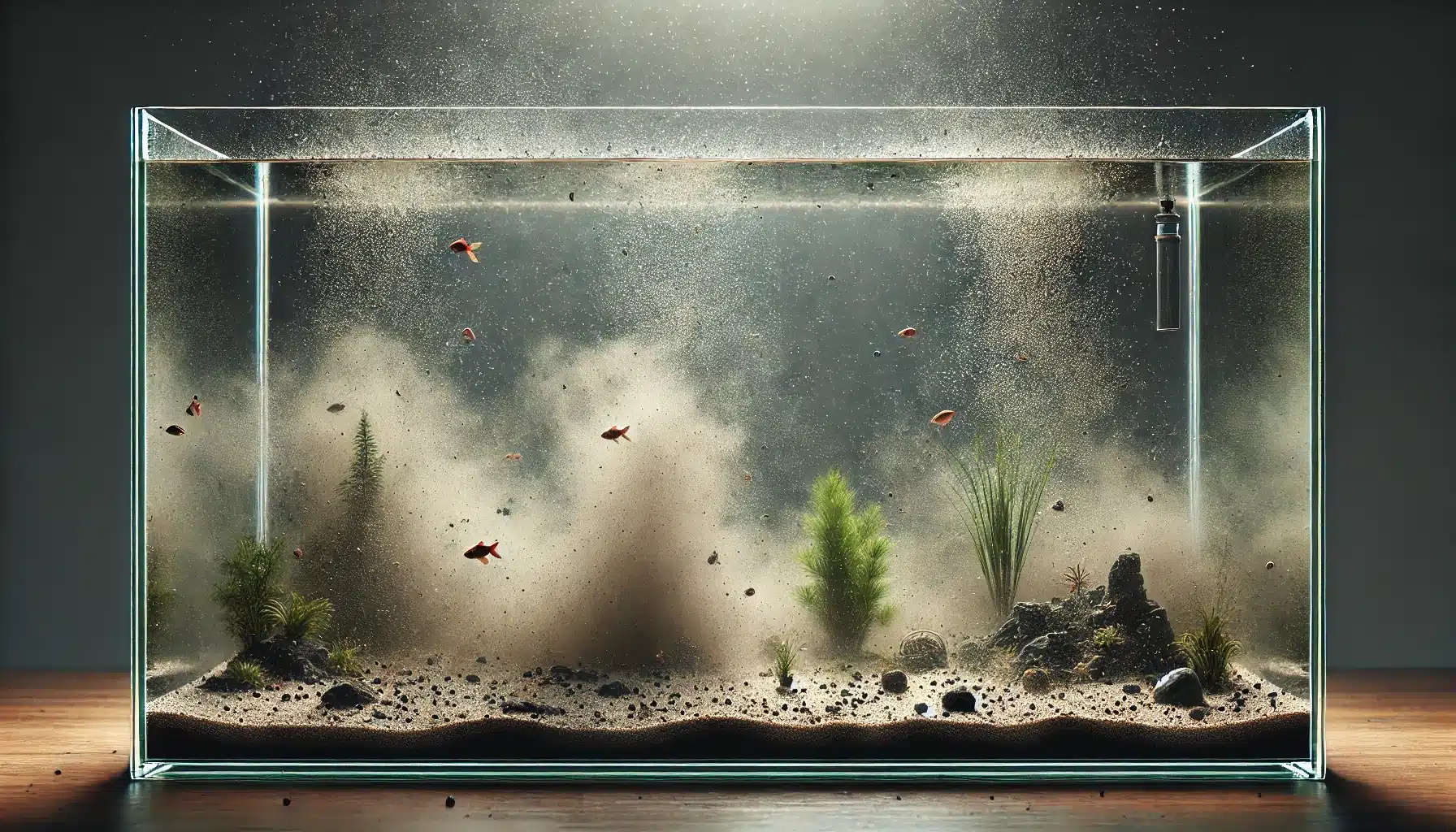
But UV sterilization really shines in specific situations. If you’re constantly battling green water caused by free-floating algae, a UV unit can clear it up within days. It’s honestly one of the most satisfying solutions because you can literally watch your water transform from pea soup to crystal clear.
Densely stocked tanks, especially with valuable fish, benefit enormously from UV protection. When you’ve got lots of fish in close quarters, diseases spread faster than gossip in a small town. A UV sterilizer helps reduce the pathogen load in the water column, giving your fish’s immune systems a fighting chance.
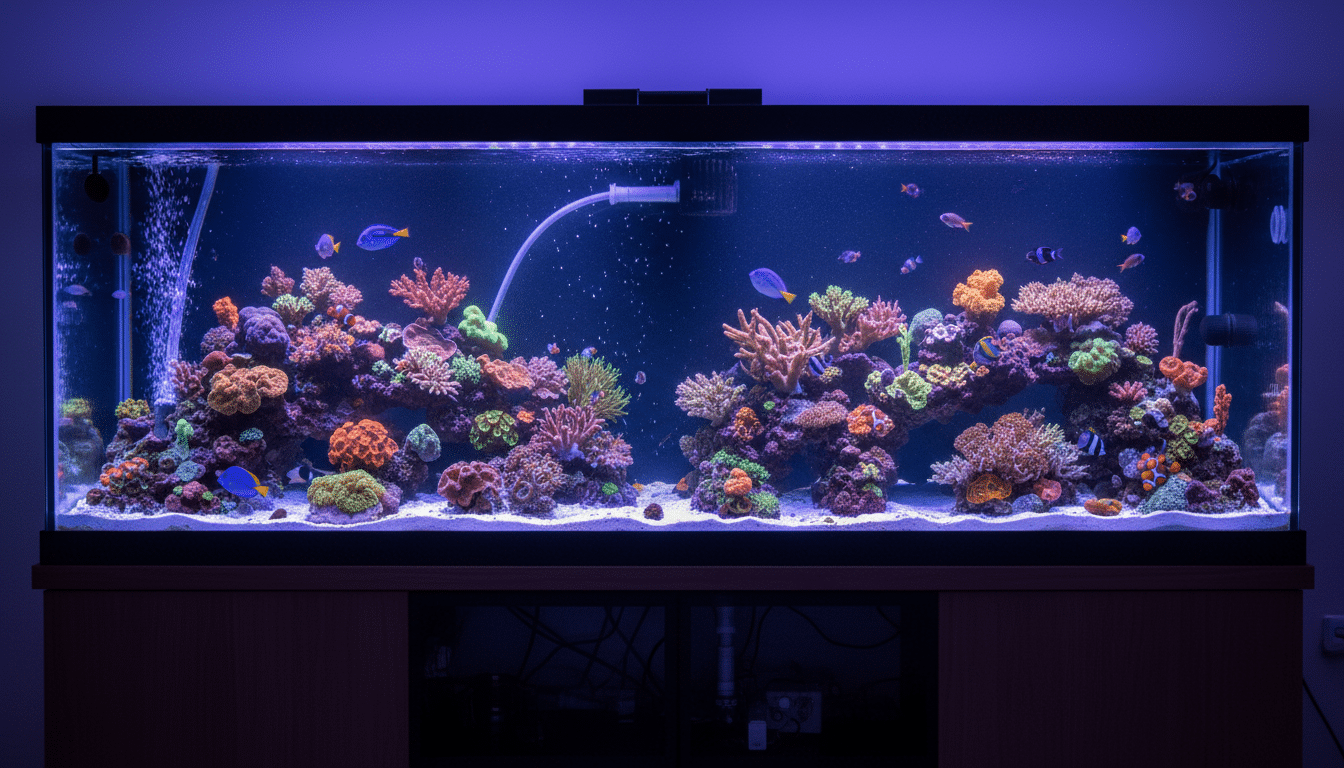
Reef aquariums and breeding setups are other prime candidates. In reef tanks, UV helps control nuisance algae without chemicals that might harm corals. For breeding operations, where you can’t risk disease wiping out an entire generation of fry, UV provides an extra insurance policy.
The Limitations You Need to Know
UV light only affects what passes through the sterilizer chamber. It won’t touch parasites attached to fish or lurking in your substrate. If you’ve got ich (white spot disease), UV can reduce free-swimming parasites after they leave the host, but it’s not a complete solution on its own.
Beneficial bacteria living in your filter media and substrate remain largely unaffected because they’re not floating in the water column. This is a common worry that keeps people from trying UV, but it’s mostly unfounded. Your biological filtration stays intact.
Choosing the Right UV Sterilizer for Your Tank
The wattage of your UV bulb needs to match your tank volume and flow rate. As a general rule, you want about 8 to 10 watts per 380 litres (100 gallons) for basic clarification, but if you’re targeting disease control, you’ll need stronger units or slower flow rates to increase contact time.
Here’s a practical example: for a 200-litre (53-gallon) tank, a 9-watt UV sterilizer running at 750 litres (200 gallons) per hour provides decent clarification. For sterilization, you’d want that same unit running at maybe 380 litres (100 gallons) per hour, which means using a valve to control flow or choosing a dedicated pump.
The dwell time calculation matters more than most product descriptions let on. You want water spending at least 1-2 seconds in the UV chamber for basic algae control, but 3-5 seconds for effective pathogen reduction. Check the manufacturer’s specifications because chamber size varies significantly between models.
Installation and Placement Considerations
Most people install UV sterilizers in-line after their main filter. This placement ensures the water is already mechanically filtered, which matters because suspended particles can shield microorganisms from UV exposure. Cloudy water means less effective sterilization.
You’ll need a pump to move water through the unit unless you’re plumbing it into an existing return line. Make sure your plumbing can handle the flow restrictions, because adding a UV sterilizer will reduce overall flow rate slightly. This is especially important in sump-based systems where you’re balancing multiple components.
Temperature also affects UV efficiency. These units work best between 40°C to 50°C (104°F to 122°F) at the bulb surface, but your aquarium water obviously runs much cooler at 24°C to 28°C (75°F to 82°F). Quality units account for this in their design, but cheaper models might underperform in cooler water.
Maintenance That Actually Matters
UV bulbs lose effectiveness over time even though they still produce visible light. Most manufacturers recommend replacing bulbs every 6 to 12 months depending on usage. Running an old bulb is like wearing sunglasses at night and expecting the same protection.
The quartz sleeve protecting the bulb needs regular cleaning because buildup blocks UV transmission. A simple wipe with vinegar every month or two keeps it clear. It’s one of those 5-minute tasks that makes a huge difference in performance.
You’ll know your UV unit is working when you see changes in water clarity or reduced disease pressure, but you can’t see UV light itself (it’s outside our visible spectrum). Some units include indicator lights or hour meters to track bulb life, which takes the guesswork out of maintenance.
Common Mistakes to Avoid
Running UV 24/7 isn’t always necessary and shortens bulb life. Many experienced tank owners run their units on timers or only during problem periods. If you’re just maintaining clear water, 8-12 hours daily often suffices.
Adding medications while running a UV sterilizer can reduce medication effectiveness since UV breaks down many compounds. Turn off the UV during treatment periods and for 24 hours afterward. It’s tempting to leave everything running, but you’re essentially working against yourself.
Oversizing seems smart but can create issues. An overpowered UV unit running too fast won’t provide adequate contact time. Undersizing means you’re spending money on equipment that can’t handle your tank’s needs. The Goldilocks principle applies here: get it just right for your specific situation.
The Real Cost-Benefit Analysis
A decent UV sterilizer runs anywhere from 50 to 300 dollars depending on size and quality. Annual bulb replacements add another 30 to 80 dollars. When you weigh that against potential medication costs, lost fish, or the frustration of chronic algae issues, it often pays for itself.
That said, UV isn’t a substitute for proper aquarium management. If your parameters are constantly swinging, you’re overfeeding, or your filtration is inadequate, adding UV is like putting a bandage on a broken leg. Fix the fundamentals first.
For quarantine systems, community tanks prone to outbreaks, or display aquariums where appearance matters most, UV sterilization often becomes invaluable. It’s one of those things you might not appreciate until you actually need it.
Making Your Decision
Consider your specific challenges before investing in UV. Are you constantly fighting cloudy water? Do disease outbreaks stress you out? Is your tank densely stocked or holding particularly sensitive species? These scenarios justify the investment.
If you’re maintaining a simple setup with hardy fish and manageable bioload, your money might be better spent on quality filtration or regular water changes. UV is a tool, not a requirement, and like any tool, it’s most valuable when you actually need what it does.
The bottom line is this: UV sterilization works exactly as advertised when properly sized and maintained. It won’t solve every problem, but for the right situations, it’s one of the most effective interventions available. Just make sure you’re buying it to solve a specific problem rather than hoping it prevents problems you might never have.