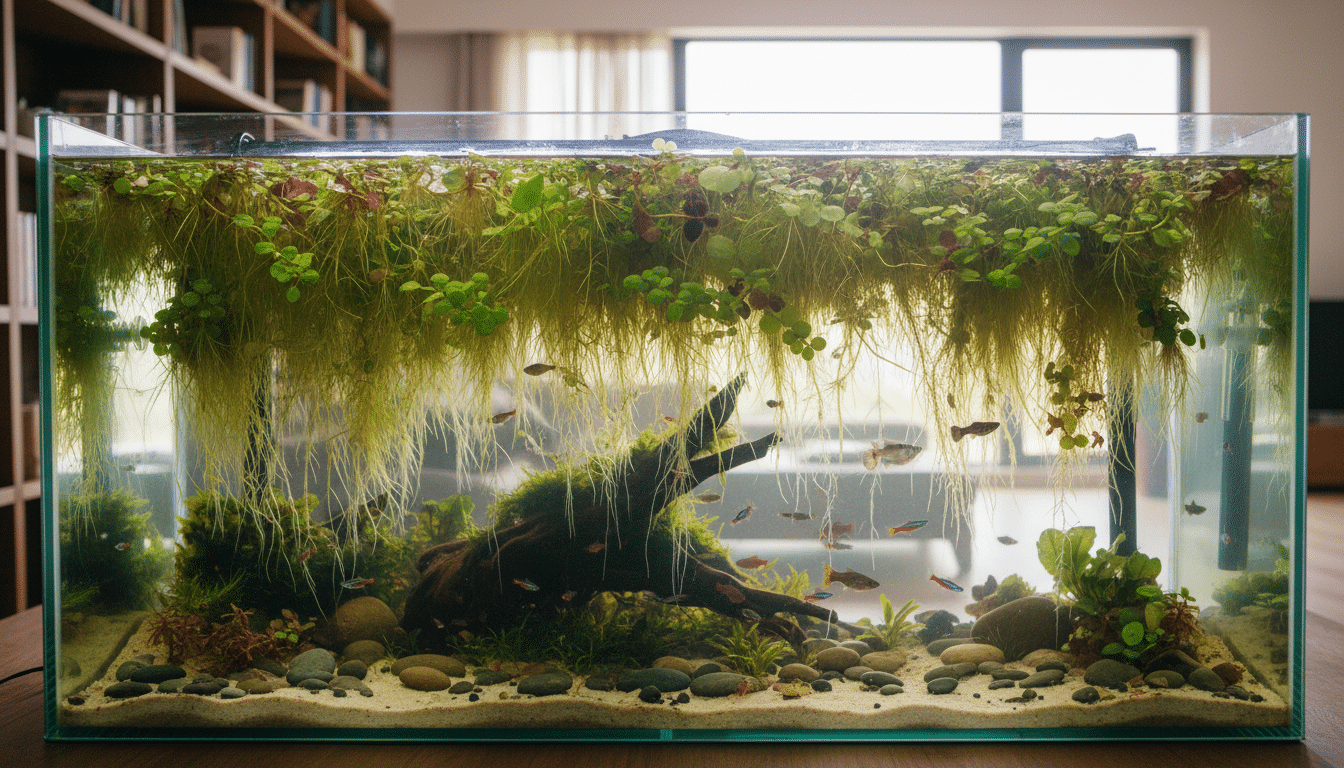
If you’re looking to add life and movement to your aquarium without digging around in substrate or worrying about planting depth, floating aquarium plants might be exactly what you need. These natural surface dwellers do more than just look pretty—they’re workhorses that filter water, reduce algae, and create shaded hideaways for shy fish. Plus, they’re ridiculously easy to care for, making them perfect whether you’re setting up your first tank or your tenth.
The best part? Most floating plants multiply faster than you can say “trimming time,” giving you endless material to share with fellow hobbyists or simply compost. Let’s dive into everything you need to know about these free-floating wonders.
What Makes Floating Aquarium Plants So Special?
Floating plants sit at the water’s surface, drawing nutrients directly from the water column through their dangling roots. Unlike rooted plants that need proper substrate and careful placement, these guys just float around doing their thing. They’ve evolved specialized air pockets in their leaves and stems that keep them buoyant—nature’s built-in life jacket.
Here’s something most people don’t know: many floating plants actually absorb ammonia and nitrates up to ten times faster than rooted species because their leaves have direct access to both air and dissolved nutrients. That’s like having a protein shake while everyone else is eating plain rice—way more efficient.
The shade they cast also plays a crucial role in any tank ecosystem. Strong overhead lighting can stress certain fish species and fuel aggressive algae growth. A layer of floating vegetation acts like a natural dimmer switch, softening the light and creating those dappled patterns you’d see in a jungle stream.
The Best Floating Plants for Your Aquarium
Amazon Frogbit: The Beginner’s Best Friend
Amazon frogbit (Limnobium laevigatum) looks like tiny lily pads scattered across your water surface. Each leaf spans roughly 2-5 cm (about 1-2 inches), and the roots dangle down like delicate white threads that fish love to explore. This plant handles a wide temperature range from 18-30°C (64-86°F), making it incredibly forgiving.
I’ve seen frogbit recover from almost total meltdown when someone forgot to close their aquarium hood during winter—the cold draft killed most leaves, but within three weeks, new growth covered the surface again. That’s resilience you can count on.
Water Lettuce: The Statement Piece
Water lettuce (Pistia stratiotes) makes a bold visual impact with its rosette of velvety, pale green leaves. Each plant can grow 10-15 cm (4-6 inches) across, so it’s better suited for larger tanks of at least 75 litres (20 gallons). The roots can extend 30 cm (12 inches) or more, creating an underwater forest effect.
Fair warning though—water lettuce is considered invasive in many regions because it reproduces aggressively. Never dump aquarium plants into local waterways, even if they look harmless. One person’s trim becomes everyone’s ecological nightmare.
Duckweed: Love It or Hate It
Duckweed (Lemna minor) is probably the most controversial floating plant out there. These tiny green specks (each leaf is only 2-3 mm) multiply with almost terrifying speed, doubling their population every 48 hours under good conditions. Some people call it an unstoppable plague; others swear by it for nutrient control and as food for goldfish or turtles.
Here’s the thing about duckweed: once it’s in your tank, it’s basically permanent. Even a single leaf left behind will restart the entire colony. But if you’ve got persistent algae problems or nitrate levels that won’t budge, duckweed might be your nuclear option.
Red Root Floater: The Colorful Showstopper
Red root floaters (Phyllanthus fluitans) bring actual color to the surface with leaves that can turn deep red or burgundy under high light conditions. The roots also display reddish hues, creating a striking two-tone effect. They prefer warmer water between 22-28°C (72-82°F) and need moderate to high lighting to develop their signature coloration.
These plants are slightly more demanding than frogbit or duckweed, but the visual payoff is worth it. They work beautifully in planted tanks where you want surface coverage without blocking all the light to lower-level plants.
Salvinia: The Textured Alternative
Salvinia species have a unique appearance with small leaves covered in water-repellent hairs that create a fuzzy texture. Water beads up on the surface like mercury droplets—it’s mesmerizing to watch. Salvinia grows moderately fast and doesn’t form the impenetrable mats that duckweed creates, giving you better control over coverage.
The modified leaves that dangle underwater aren’t actually roots—they’re specialized leaf structures that function like roots. This botanical quirk makes salvinia a type of floating fern rather than a traditional aquatic plant.
Setting Up Floating Plants in Your Tank
Getting started with floating plants couldn’t be simpler. You literally place them on the water surface and walk away. But a few strategic moves will help them establish faster and look better.
First, consider water movement. Strong surface agitation from filters or air stones can prevent floating plants from settling properly. They’ll get pushed around constantly and may even get waterlogged if waves repeatedly wash over them. Creating a calm zone using a feeding ring or adjusting your filter output angle gives plants a stable area to colonize.
Second, think about coverage. Aim for about 25-50% surface coverage initially. This provides benefits without completely blocking light to plants below or restricting gas exchange. Your floaters will fill in quickly—probably faster than you expect—so starting with less is smarter than starting with more.
Third, leave a clear area near your filter intake. Floating plants getting sucked against the intake is annoying for you and potentially fatal for them. A simple barrier made from airline tubing bent into a square and held with suction cups keeps plants contained exactly where you want them.
Care Requirements: Less Is More
The beauty of floating plants is that they need almost nothing from you. No CO2 injection, no root tabs, no substrate considerations. They pull carbon dioxide directly from the air (which is 400 times more concentrated than dissolved CO2 in water) and absorb nutrients through their roots and leaf undersides.
That said, they do appreciate good water conditions. Regular water changes benefit floating plants just like everything else in your tank. Parameters can be fairly broad—most species handle pH from 6.5-7.5 and general hardness from soft to moderately hard water just fine.
Lighting needs vary by species, but moderate light works for most common floaters. That’s roughly 30-50 PAR at the surface, or in practical terms, any standard aquarium LED fixture. The plants literally sit right under the light source, so they’re getting maximum intensity regardless of how deep your tank is.
One lesser-known tip: floating plants can show deficiency symptoms just like rooted ones. Yellow leaves with green veins often indicate iron deficiency, while yellow leaves overall suggest nitrogen shortage. A comprehensive liquid fertilizer dosed weekly usually prevents these issues, especially in heavily stocked tanks where nutrients get consumed quickly.
Managing Growth: The Weekly Trim
Your biggest job with floating plants isn’t keeping them alive—it’s preventing them from taking over completely. Plan on removing 30-50% of your floating plant mass every week or two, depending on growth speed. This sounds like a lot, but it takes maybe five minutes with a small aquarium net.
Some people compost their excess, others feed it to herbivorous fish or reptiles, and many simply bin it. If you’ve got friends with aquariums, you’ve just discovered an endless supply of gifts that actually cost you nothing. Everyone loves free plants.
Here’s a growth management trick: limit nutrients if you want slower expansion. Floating plants grow proportionally to available nitrogen and light. Reducing your feeding schedule slightly or extending time between water changes will slow them down without harming them. It’s like putting your plants on a gentle diet.
Compatibility: What Works and What Doesn’t
Most community fish absolutely love floating plants. Species like bettas, gouramis, and tetras appreciate the security of overhead cover. Shy fish become bolder, and you’ll notice more natural behaviors when they feel protected from above.
However, some fish aren’t compatible with surface plants. Large cichlids may uproot or shred them during territory disputes. Surface-feeding fish that need access to air (like bettas) require clear spaces to breathe—completely covering the surface can stress them. And if you’re breeding certain species that build bubble nests, floating plants can interfere with nest construction or fry access to the surface.
Plant compatibility matters too. If you’re running a high-tech planted tank with carpet plants like dwarf baby tears or Monte Carlo, dense floating coverage might block too much light. These demanding species need 80+ PAR at the substrate level, and a thick floating layer can cut that by 50% or more.
Common Problems and Quick Fixes
Yellowing leaves usually mean your plants are nutrient-starved. This happens most often in lightly stocked tanks with few fish producing waste. Adding a complete liquid fertilizer once or twice weekly typically solves this within a week. Don’t forget trace elements—iron especially makes a visible difference.
Melting plants often indicate a major environmental shift. Did you just introduce them from a different water chemistry? Temperature shock? Too much surface agitation causing waterlogging? Floating plants can bounce back from melting if you identify and fix the underlying cause quickly. Remove dead material so it doesn’t foul your water while healthy portions recover.
Brown, crispy leaf edges typically point to low humidity above the tank. In homes with dry air (especially during winter heating), the exposed leaf surfaces can desiccate faster than the plant can replace moisture. Using a glass lid or reducing airflow from nearby vents helps maintain humidity levels.
The Hidden Benefits You Didn’t Expect
Beyond the obvious advantages of nutrient absorption and shade, floating plants offer some surprising perks. They significantly reduce evaporation by covering the water surface—in hot climates, this can cut water top-offs by up to 40%. That’s less work for you and more stable water parameters.
They also act as natural pH buffers in an indirect way. By consuming CO2 during daylight hours, floating plants reduce carbonic acid in the water, which can slightly raise pH. Overnight, when they respire and release CO2, pH drops slightly. These gentle daily fluctuations actually mimic natural water bodies and can benefit fish health.
Perhaps most interestingly, some research suggests that certain floating plants release allelopathic compounds—natural chemicals that inhibit algae growth. While the science is still developing, many people report reduced algae after adding floaters, beyond what nutrient competition alone would explain. Your frogbit might literally be chemical warfare against the green spot algae you’ve been fighting.
Making the Final Call
Floating aquarium plants deliver maximum benefit for minimum effort. They work in nearly any tank setup, require basically zero maintenance beyond occasional trimming, and provide real functional advantages alongside their aesthetic appeal. Whether you’re battling persistent algae, want to create a more natural biotope, or just love the look of a planted water surface, floaters deliver.
Start with something forgiving like Amazon frogbit or salvinia. Watch how your fish respond and how quickly growth occurs in your specific tank conditions. You can always add more variety later or switch species if you want different coverage or visual effects.
The worst-case scenario? You remove them. No substrate disruption, no dead roots decomposing, just scoop and done. But chances are, once you see those delicate roots dangling down and notice your fish exploring their new overhead jungle, you’ll wonder why you waited so long to add them. Sometimes the best aquarium upgrades are the ones that literally float right on top.