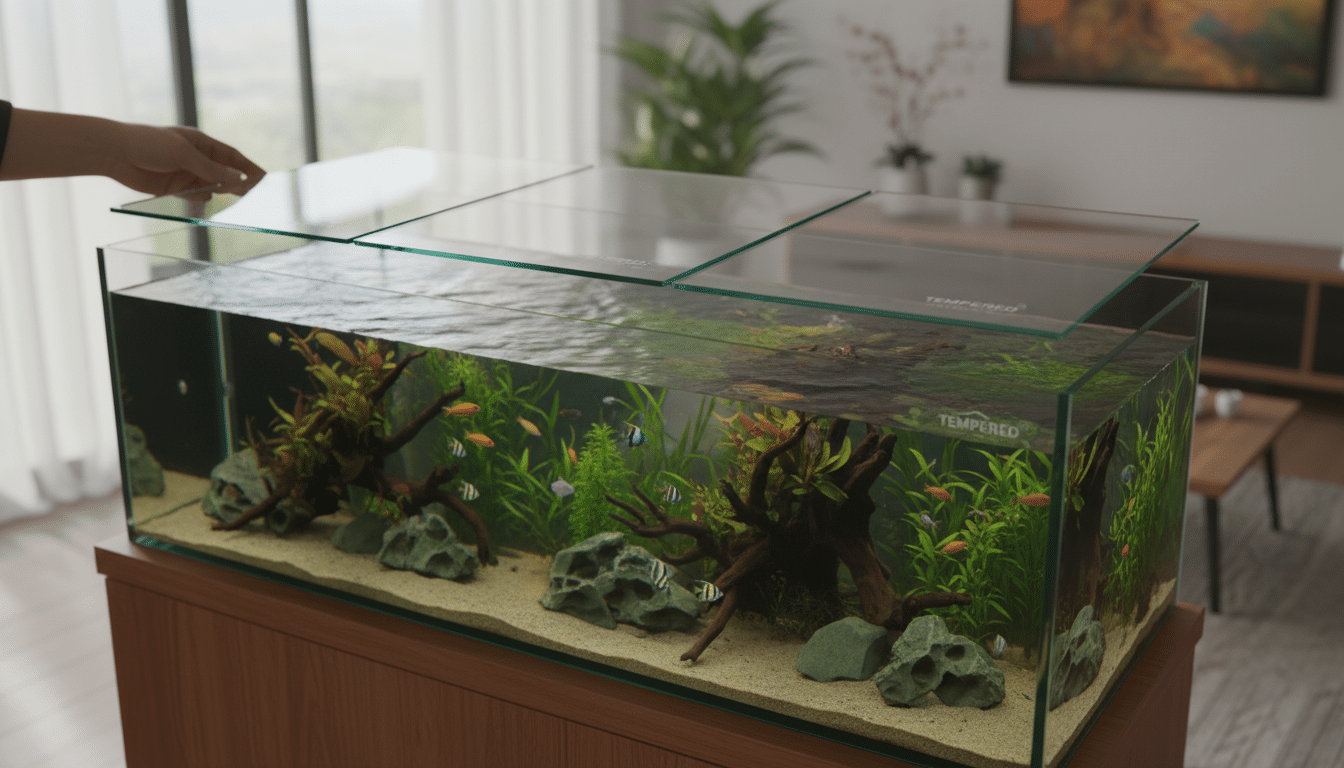
You’ve just spent good money on a beautiful aquarium setup, and now you’re staring at the lid wondering: is this tempered glass? It’s not exactly stamped with “tempered” in big letters, and let’s be honest, most of us can’t tell the difference between regular and tempered glass just by looking at it. But here’s the thing: knowing what type of glass sits on top of your tank matters more than you might think.
The Straight Answer About Fish Tank Lid Glass
Most standard fish tank lids are not tempered glass. They’re typically made from regular float glass (the same stuff in your windows) or acrylic plastic. The manufacturers choose these materials because they’re cheaper to produce and easier to cut to size. Walk into any pet store, and the majority of those rectangular glass tops sitting on the shelf? Regular glass through and through.
That said, some premium brands do use tempered glass for their lids, particularly for larger tanks over 190 litres (50 gallons). You’ll usually pay 30 to 50 percent more for these upgraded versions, but they come with significant advantages that might just be worth the extra cash.
Why Most Manufacturers Skip Tempered Glass
Here’s where it gets interesting. Tempered glass cannot be cut, drilled, or modified after the tempering process. Once it’s heat-treated, that’s it. Any attempt to cut it will cause the entire piece to shatter into those characteristic tiny cubes you’ve probably seen before.
This creates a huge problem for aquarium manufacturers. Fish tank lids need cutouts for filters, heater cables, airline tubing, and feeding openings. If they used tempered glass, they’d need to create dozens of different lid configurations at the factory, each with precise cutout placements. That’s a logistical nightmare and drives costs through the roof.
Regular glass, on the other hand, can be easily cut and customized. Your local glass shop can trim it down, add notches, or create openings wherever you need them. For manufacturers and hobbyists alike, this flexibility is incredibly valuable.
How to Tell If Your Lid Is Actually Tempered
So you’re standing there looking at your tank lid, and you need to know for certain. The most reliable method is checking for the manufacturer’s stamp or etching in one of the corners. Tempered glass legally requires a permanent mark that includes the word “tempered,” “toughened,” or the tempering company’s logo. Flip your lid over and examine all four corners carefully.
Another telltale sign involves polarized sunglasses. Put them on and look at the glass at an angle under bright light. Tempered glass will show distinctive dark lines or spots (called edge stress or strain patterns) running diagonally across the surface. Regular glass won’t display this phenomenon at all.
The sound test can also help. Tap the glass gently with your knuckle. Tempered glass produces a slightly higher-pitched, more resonant sound compared to regular glass, though this takes a bit of practice to distinguish reliably.
The Safety Trade-Off You Need to Understand
Here’s where things get genuinely important for your setup. Regular glass is actually more dangerous when it breaks because it fractures into large, jagged shards that can cause serious injuries. I’ve seen more than one person end up with stitches after a regular glass lid slipped off a tank during cleaning.
Tempered glass, in contrast, is four to five times stronger than regular glass of the same thickness. It can handle temperature changes up to about 130°C (266°F) without shattering. When it does finally break, it crumbles into relatively harmless pebble-sized pieces instead of dangerous spears.
But here’s the catch: once tempered glass decides to break, the entire piece goes at once. That means your entire lid suddenly becomes a pile of glass chunks, potentially dumping into your tank. With regular glass, a crack might stay localized, giving you time to replace it before total failure.
When Tempered Glass Actually Makes Sense
If you’ve got a rimless tank, tempered glass lids become significantly more appealing. These modern aquariums look stunning but rely entirely on the glass strength since there’s no plastic frame providing structural support. The edges of the tank and lid experience more stress, making the extra strength of tempered glass a smart investment.
Large tanks benefit too. Once you’re dealing with lids spanning 120 cm (47 inches) or more, the weight and size make them more prone to accidents during handling. A 6mm tempered glass lid for a 380 litre (100 gallon) tank might cost you $150 compared to $90 for regular glass, but you’re buying serious peace of mind.
Households with kids or pets should also consider the upgrade. If there’s a chance someone might knock, drop, or otherwise abuse your tank lid, that safety feature of crumbling rather than splintering becomes genuinely valuable.
The Acrylic Alternative Nobody Talks About
Plot twist: many “glass” lids aren’t glass at all. Acrylic (plexiglass) lids have become incredibly popular because they offer their own set of advantages. They’re lighter, won’t shatter if dropped, and cost less than either glass option. You can also drill, cut, and modify them easily at home with basic tools.
The downsides? Acrylic scratches far more easily than glass, and it bows over time, especially on larger tanks. That warping can create gaps where fish might jump through or humidity escapes. Plus, it yellows with age when exposed to bright lighting, particularly UV-heavy fixtures.
For smaller tanks under 75 litres (20 gallons), acrylic makes perfect sense. For anything larger, you’ll probably want to stick with glass of some variety.
What About DIY and Replacement Options
If you’re replacing a lid or building one from scratch, you’ll almost certainly end up with regular glass. Most local glass shops won’t stock pre-tempered pieces in the sizes you need, and custom tempering requires minimum order quantities that make zero sense for a single aquarium lid.
For a standard setup, 6mm (1/4 inch) regular float glass works perfectly fine. It’s thick enough to resist warping and handle normal use. Ask for polished edges to avoid any sharp spots, and make sure they know it’s for an aquarium so they don’t add any coatings that might leach chemicals.
If you absolutely want tempered glass, you’ll need to go through a specialty glass company and provide exact dimensions with all cutouts planned in advance. Expect to wait two to three weeks and pay premium prices. For most people, the hassle outweighs the benefits.
Taking Care of Whatever Glass You Have
Regardless of whether your lid is tempered or regular glass, proper handling extends its life considerably. Always lift lids from two opposite edges rather than grabbing one corner, which puts uneven stress on the glass. When cleaning, avoid sudden temperature changes like rinsing a warm lid under cold water.
Store spare lids vertically rather than flat, and never stack anything on top of them. Even regular glass can develop microcracks over time that you can’t see, and these weak points eventually lead to sudden failure during routine use.
Inspect your lids every few months for any chips or cracks along the edges. These damage points concentrate stress and can propagate across the entire piece. A small edge chip today might mean a shattered lid next week, especially with regular glass.
Making Your Decision
So are fish tank lids tempered glass? Usually not, and for most setups, that’s perfectly fine. The customization limitations and higher costs make tempered glass impractical for the average aquarium. Your standard setup with regular glass or acrylic will serve you well for years with proper care.
That said, if you’re running a large rimless system, have safety concerns in your household, or simply want that extra durability, tempered glass is worth considering. Just remember you’re committing to a specific configuration that can’t be modified later. Plan your equipment layout carefully before ordering.
The real key isn’t necessarily what type of glass you have, but understanding its properties and limitations. Know what you’re working with, handle it appropriately, and you’ll avoid most of the common problems that plague aquarium lids. Your fish certainly don’t care whether the barrier between them and your living room is tempered or not, but your fingers might appreciate the difference if something goes wrong.