Starting your journey into keeping fish is exciting, but the first big question hits you immediately: what fish tank should I get? With countless options available, from tiny desktop cubes to massive wall-mounted aquariums, choosing the right tank can feel overwhelming. The good news? Once you understand a few key factors, finding your perfect aquarium becomes much simpler.
This guide walks you through everything you need to know to make an informed decision that keeps both you and your future fish happy.
Understanding Your Space and Commitment Level
Before falling in love with any particular tank, you need to get real about your available space and how much time you can dedicate to maintenance.
Measure Your Available Space
Start by measuring the exact spot where you want your aquarium. Consider not just width and depth, but also the structural support of your floor or furniture. Here’s something most beginners don’t realize: water weighs approximately 1 kilogram per litre, meaning a 100-litre (26-gallon) tank can weigh over 120 kilograms (265 pounds) when fully set up with substrate, decorations, and equipment.
You’ll also want to ensure there’s space around the tank for maintenance access. Leave at least 15-20 centimetres on at least one side for cleaning equipment and water changes.
Consider Your Experience Level
Contrary to popular belief, bigger tanks are actually easier for beginners than smaller ones. This might sound backwards, but larger water volumes provide much more stable water chemistry. A slight ammonia spike or temperature fluctuation in a 20-litre (5-gallon) tank can be catastrophic, while the same issue in a 100-litre (26-gallon) tank gives you time to correct problems before fish suffer.
The Best Tank Sizes for Different Situations
When determining what fish tank should I get, size matters more than aesthetics. Let’s break down the most common options.
Small Tanks: 40-60 Litres (10-15 Gallons)
These compact tanks work well for small spaces like bedrooms, offices, or apartments. They’re perfect for beginners who want to start with species like bettas, small groups of tetras, or a few guppies.
However, here’s an important lesser-known fact: small tanks require more frequent maintenance than larger ones due to faster waste accumulation and less stable water parameters. Plan for weekly water changes of 25-30%.
Medium Tanks: 80-150 Litres (20-40 Gallons)
This is the sweet spot for most beginners. A tank in this range offers enough space for a diverse community of fish while remaining manageable for maintenance and budget.
These tanks can comfortably house popular combinations like a school of 10-15 neon tetras, several corydoras catfish, and a centrepiece fish like a dwarf gourami. The increased water volume means parameters stay more stable, and you’ll typically only need bi-weekly water changes of 20-25%.
Large Tanks: 200+ Litres (50+ Gallons)
If you have the space and budget, larger tanks open up exciting possibilities. You can keep bigger fish like angelfish, larger cichlid species, or create spectacular planted aquascapes.
Here’s something experienced aquarists know: larger tanks actually save money long-term despite higher initial costs. The improved stability means fewer fish losses, less frequent equipment replacement, and reduced medication expenses.
Glass vs Acrylic: Which Material Should You Choose?
The tank material debate often gets overlooked when people ask what fish tank should I get, but it significantly impacts your long-term satisfaction.
Glass Aquariums
Glass tanks dominate the market for good reason. They’re scratch-resistant, maintain clarity for decades, and cost less than acrylic alternatives. They’re also easier to clean without worrying about damaging the surface.
The downside? Glass is heavier and more prone to shattering if dropped or knocked. For most home aquarists, glass represents the best value and durability.
Acrylic Aquariums
Acrylic tanks weigh about half as much as glass equivalents and offer better insulation, which can reduce heating costs. They’re also more impact-resistant and can be molded into unique shapes.
However, they scratch easily during cleaning and can yellow over time with UV exposure. Acrylic tanks cost significantly more, making them better suited for specialized applications or custom builds.
Tank Shape Matters More Than You Think
Beyond size, the shape of your aquarium affects which fish species you can keep and how healthy they’ll be.
Rectangular Tanks
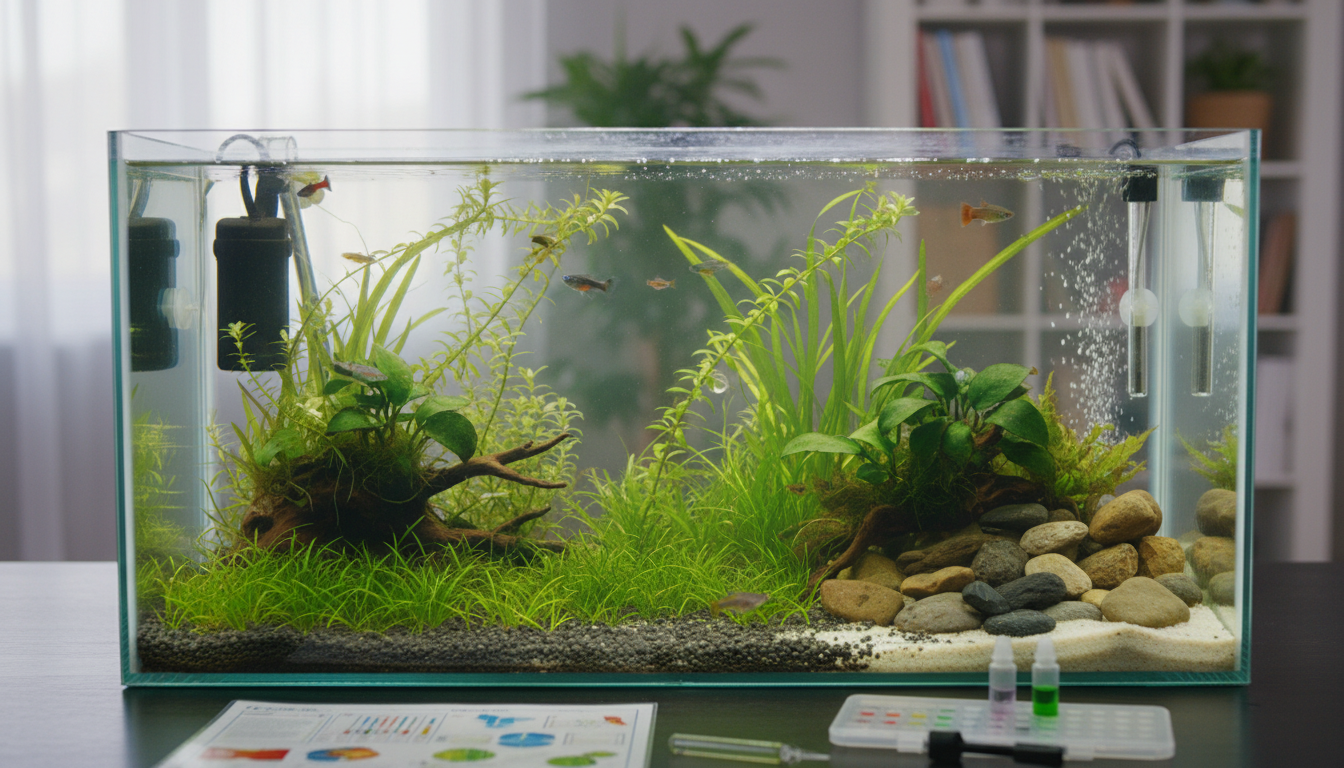
Standard rectangular tanks provide the maximum swimming space and surface area for oxygen exchange. This makes them ideal for most fish species and the best choice for beginners.
Here’s a fact many don’t consider: surface area matters more than depth for most freshwater fish. A tank that’s 90cm long, 30cm wide, and 40cm tall provides better conditions than one that’s 50cm long, 30cm wide, and 60cm tall, even if they hold the same volume.
Tall and Specialty Shapes
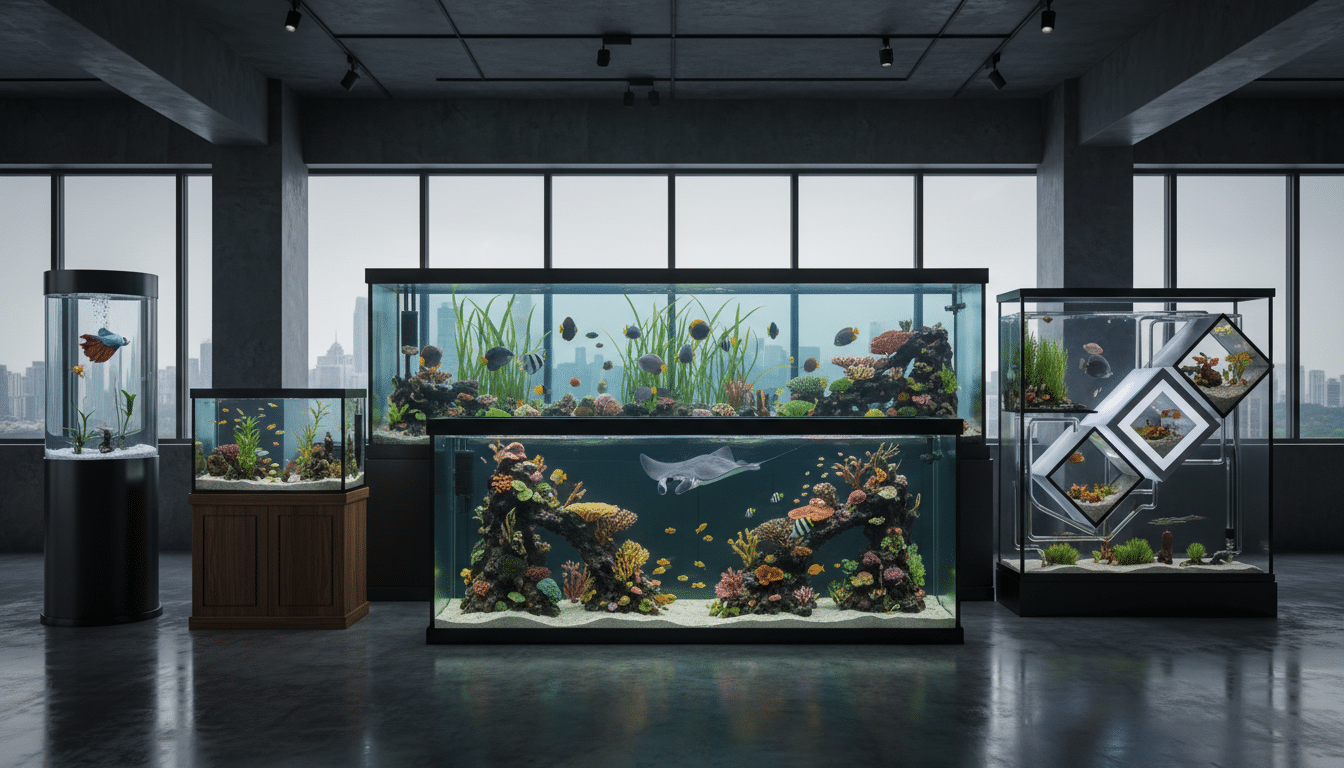
Tall, narrow tanks look impressive but limit your fish options. Most popular community fish are active swimmers that need horizontal space. Tall tanks work better for specific species like angelfish or for planted tanks focused on aquascaping rather than heavy fish stocking.
Bow-front and corner tanks can fit unique spaces but often distort viewing angles and reduce usable swimming space. They’re fine if they suit your space requirements, but don’t sacrifice functionality for aesthetics alone.
Essential Equipment: What’s Included vs What You’ll Need
When researching what fish tank should I get, pay attention to whether tanks come as complete kits or bare basics.
Starter Kits
Many manufacturers offer complete starter kits that include the tank, filter, heater, lighting, and sometimes even decorations. These kits provide good value for beginners and ensure all components are compatible.
However, experienced aquarists know this insider fact: filters included in budget starter kits often underperform for the tank size. You may need to upgrade the filtration within the first year, especially if you fully stock the tank.
Building Your Own Setup
Buying components separately costs more initially but gives you better quality equipment tailored to your specific needs. This approach works better if you already know which fish species you want to keep and their specific requirements.
Budget Considerations Beyond the Initial Purchase
The tank itself represents just the beginning of your investment. Monthly costs include electricity for filters, heaters, and lights, water conditioner, fish food, and periodic equipment replacement.
A 100-litre (26-gallon) tank typically costs between £8-15 monthly to maintain, including electricity. Larger tanks don’t proportionally increase costs since they require less frequent maintenance and achieve better economies of scale.
Here’s something financially savvy aquarists understand: investing in quality equipment upfront reduces long-term costs significantly. A reliable heater costing £30 that lasts five years beats replacing £15 heaters annually, plus you avoid the risk of malfunctions harming your fish.
Matching Your Tank to Your Fish
The most important consideration when deciding what fish tank should I get is which fish you actually want to keep. Research your preferred species first, then buy the appropriate tank, not the other way around.
Different fish have vastly different space requirements. A betta can thrive in 40 litres (10 gallons), while goldfish need at least 150 litres (40 gallons) for the first fish, plus 50 litres (12 gallons) for each additional goldfish. Many beginners don’t realize that common goldfish can grow to 25-30 centimetres long and live over 20 years in proper conditions.
Where to Buy Your Aquarium
Local fish stores often provide better advice and after-sales support than big-box retailers, though prices may be slightly higher. Building a relationship with a knowledgeable local shop proves invaluable for troubleshooting problems.
Online retailers offer competitive pricing and wider selection but lack personalized guidance. They work well if you’ve already researched thoroughly and know exactly what you need.
Consider buying second-hand tanks to save money, but inspect carefully for cracks, scratches, and leaks. Most used tanks can be thoroughly cleaned and resealed if necessary, offering excellent value.
Making Your Final Decision
So, what fish tank should I get? For most beginners, an 80-120 litre (20-30 gallon) rectangular glass tank represents the ideal starting point. This size provides enough space for an interesting community of fish while remaining manageable for maintenance and budget.
Choose a reputable brand known for quality construction. Look for tanks with reinforced edges, smooth silicon seals, and included warranties. Consider starter kits if you’re completely new, but be prepared to potentially upgrade the filter as you gain experience.
Remember that your first tank doesn’t have to be your only tank. Many successful aquarists start with a modest community tank and expand their hobby as their knowledge and passion grow. The key is starting with something manageable that sets you up for success rather than frustration.
Take your time making this decision. A well-chosen aquarium will provide years of enjoyment and become a stunning living centerpiece in your home. The fish you’ll eventually keep are counting on you to create the best possible environment from day one.