If you’ve ever wondered how those bubbles magically appear in your aquarium, you’re not alone. Understanding how a fish tank air pump works is essential for any aquarium owner who wants to keep their underwater friends healthy and thriving. Let’s dive into the mechanics behind this crucial piece of equipment and discover why it’s more than just a bubble maker.
How a Fish Tank Air Pump Works: The Complete Guide
What Is an Aquarium Air Pump?
An aquarium air pump is a device that sits outside your fish tank and pushes air into the water through tubing and air stones or decorations. Unlike filters that move water, air pumps specifically move air, creating those satisfying streams of bubbles that both look great and serve important purposes for your aquatic environment.
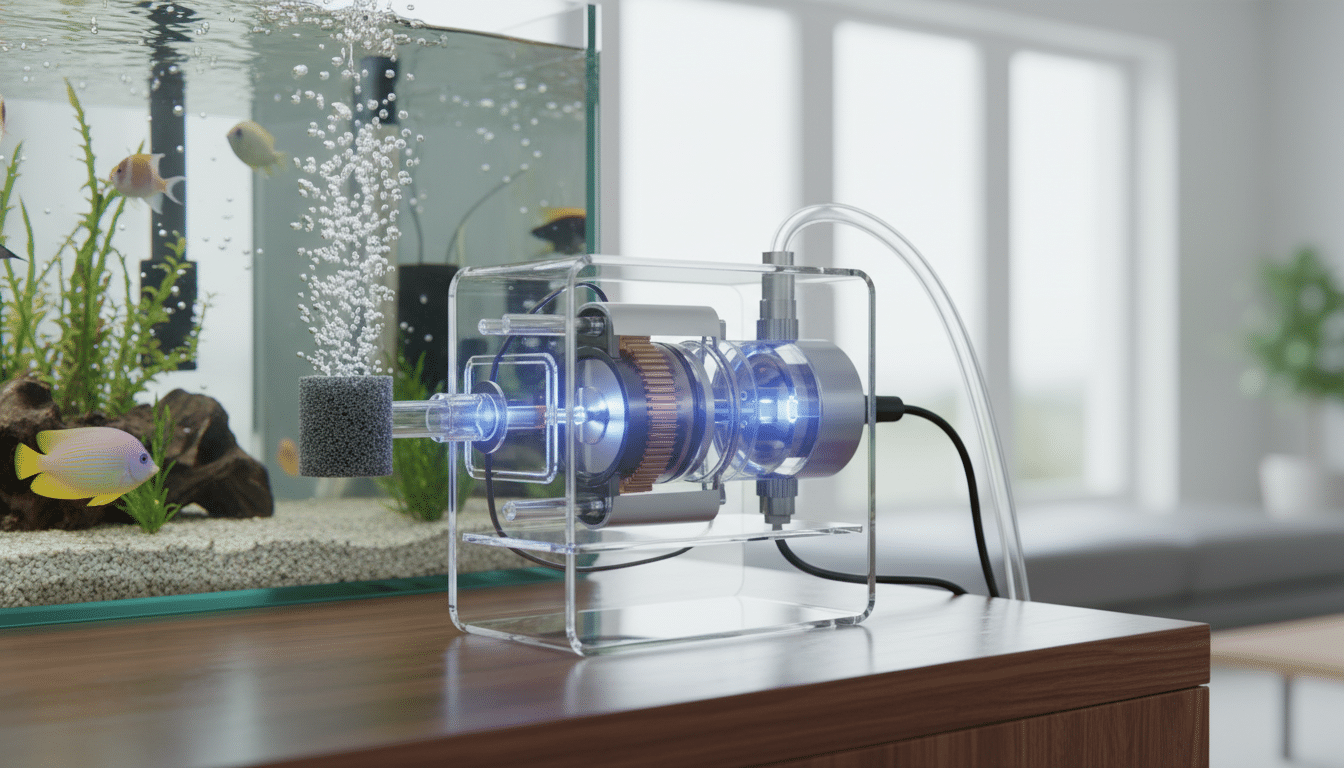
The pump itself contains a motor and a diaphragm or piston mechanism that compresses and releases air in rapid cycles, forcing it through airline tubing and into your tank. This simple yet effective design has remained largely unchanged for decades because it works so reliably.
The Inner Workings: How Does an Air Pump Actually Function?
The Diaphragm Mechanism
Most home aquarium air pumps use a diaphragm system. Here’s how it works: an electric motor creates a magnetic field that rapidly vibrates a rubber diaphragm back and forth, typically between 50 to 60 times per second depending on your electrical frequency. When the diaphragm moves in one direction, it creates a vacuum that draws air into a chamber. When it moves back, it compresses that air and forces it out through the outlet valve.
Interestingly, the vibrating diaphragm is what creates that distinctive humming sound you hear from air pumps. Higher quality pumps often include dampening materials to reduce this noise, making them much quieter for bedroom aquariums.
The Piston Alternative
Some larger or commercial grade pumps use a piston mechanism instead of a diaphragm. These work similarly to a car engine on a tiny scale. A motor drives a piston up and down inside a cylinder, creating pressure that pushes air out. Piston pumps are generally more powerful and durable but also more expensive and slightly noisier than diaphragm models.
Why Your Aquarium Needs Oxygenation
The bubbles from your air pump aren’t just decorative. They play several vital roles in maintaining a healthy aquarium environment:
Gas exchange happens primarily at the water’s surface. When bubbles rise and pop, they agitate the surface, increasing the contact area between water and air. This allows oxygen to dissolve into the water while carbon dioxide escapes. Contrary to popular belief, the oxygen doesn’t come from the bubbles themselves but from this increased surface agitation.
Water circulation is another key benefit. As bubbles rise, they create an upward current that moves water from the bottom of the tank to the surface. This circulation helps distribute heat evenly, prevents dead zones where waste can accumulate, and ensures that beneficial bacteria throughout your tank get the oxygen they need.
Supporting beneficial bacteria is crucial for the nitrogen cycle that keeps your fish safe. These bacteria need oxygen to break down harmful ammonia and nitrites. A fascinating fact is that an air pump can actually support more beneficial bacteria than some filters alone, particularly in the substrate where water circulation is limited.
Components That Work Together
Airline Tubing
The flexible plastic tubing that connects your pump to tank accessories carries the pressurized air. Standard tubing is about 4-6mm in diameter. One lesser known fact is that airline tubing can become brittle and crack after 12 to 18 months of use, especially when exposed to heat or direct sunlight, so regular replacement is important for maintaining consistent airflow.
Air Stones and Diffusers
These porous materials break large air bubbles into hundreds of tiny ones. Air stones are typically made from bonded sand, glass, or limewood. The smaller bubbles create more surface area for gas exchange and look more aesthetically pleasing. Interestingly, limewood air stones produce the finest bubbles but need replacing every 4 to 6 weeks as they clog more quickly than synthetic alternatives.
Check Valves
This often overlooked component is a one way valve that prevents water from flowing back through the airline tubing into your pump. If your pump sits below your tank’s water level and loses power, water can siphon back and damage the pump or flood your floor. A check valve prevents this disaster and costs just a couple of dollars, making it essential safety equipment.
Power Output and Tank Size Matching
Air pumps are rated by their output capacity, typically measured in litres per hour (gallons per hour). A general rule is you need approximately 0.5 to 1 litre per minute (0.13 to 0.26 gallons per minute) for every 190 litres (50 gallons) of water. However, this varies based on your tank’s stocking level, temperature, and whether you have live plants.
Warmer water holds less dissolved oxygen, so tanks maintained at 26°C (79°F) or higher need stronger aeration than cooler setups around 20°C (68°F). This is why goldfish, which prefer cooler temperatures, can sometimes survive in bowls without pumps, though this practice is never recommended.
When You Absolutely Need an Air Pump
Not every aquarium requires a separate air pump. Modern filters often provide sufficient oxygenation through water movement. However, certain situations make an air pump essential:
Heavily stocked tanks with many fish need extra oxygen beyond what standard filtration provides. Breeding tanks also benefit from gentle aeration that doesn’t create strong currents that could harm fry. Medication treatments often require increased aeration because many medications reduce oxygen levels in the water.
Tanks without live plants definitely need good aeration since plants produce oxygen during daylight but consume it at night. A surprising fact is that in heavily planted tanks without adequate water movement, fish can actually suffocate at night when plant photosynthesis stops and all organisms compete for oxygen.
Maintenance and Troubleshooting
Air pumps are remarkably low maintenance devices, but they do need occasional attention. The diaphragm and rubber valve flaps inside will eventually wear out after 12 to 24 months of continuous use. Many manufacturers sell rebuild kits with replacement parts that cost a fraction of a new pump.
If your pump becomes progressively louder, it usually indicates worn parts or the need for repositioning on a softer surface to absorb vibrations. Weakening airflow typically means either a clogged air stone that needs cleaning or replacement, or worn internal components.
Cleaning the intake filter is often forgotten but important. Most pumps have a small foam or sponge filter where air enters to prevent dust from entering the mechanism. This should be gently rinsed every few months to maintain optimal performance.
Energy Efficiency and Running Costs
One of the most appealing aspects of air pumps is their minimal energy consumption. Most small to medium aquarium air pumps use between 2 to 15 watts of electricity. Running continuously, even a larger pump costs less than a couple of dollars per month in electricity in most regions, making them incredibly economical for the benefits they provide.
Conclusion
Understanding how a fish tank air pump works reveals it’s more than just a bubble generator. It’s a carefully designed system that uses simple mechanical principles to provide essential oxygenation and water circulation for your aquatic environment. The vibrating diaphragm or pumping piston creates pressurized air that travels through tubing and diffusers, ultimately improving water quality and fish health through enhanced gas exchange at the surface.
Whether you’re setting up your first aquarium or optimizing an existing setup, knowing these mechanics helps you make informed decisions about equipment selection and maintenance. With proper care and occasional part replacement, a quality air pump will reliably serve your underwater ecosystem for years, ensuring your fish have the oxygen rich environment they need to thrive.