Keeping your aquarium clean and your fish healthy starts with understanding one crucial piece of equipment. Whether you’re a complete beginner or looking to upgrade your setup, knowing how filtration actually works will help you make better choices for your aquatic friends.
How a Fish Tank Filter Works: The Complete Guide to Aquarium Filtration
Fish tank filters are the unsung heroes of any aquarium, working tirelessly to keep water clean and safe for your fish. But what exactly happens inside that humming box attached to your tank? Let’s break down the filtration process in a way that makes sense, so you can maintain a thriving underwater ecosystem.
The Three Types of Filtration: How Fish Tanks Stay Clean
Every aquarium filter performs three distinct types of filtration, and understanding each one is key to grasping how the whole system works together. Think of it as a three-stage cleaning process that tackles different types of waste and contaminants.
Mechanical Filtration: The First Line of Defense
This is the most visible type of filtration and the easiest to understand. Mechanical filtration physically removes debris from your tank water, including uneaten food, fish waste, dead plant matter, and other particles floating around. The water passes through filter media like sponges, foam pads, or filter floss that trap these solid particles.
Here’s something many aquarium owners don’t realize: the majority of debris in your tank is actually too small to see with the naked eye. Those tiny particles that make your water look cloudy are often between 5 and 50 microns in size, which is why good mechanical filtration media needs to have pores small enough to capture them effectively.
Biological Filtration: The Chemical Cleanup Crew
This is where aquarium filtration gets really interesting. Biological filtration relies on beneficial bacteria that colonize your filter media and convert toxic fish waste into less harmful substances. These microscopic helpers are essential for a healthy aquarium.
The process works through something called the nitrogen cycle. Fish produce ammonia through their waste and respiration, which is highly toxic even in small amounts. Beneficial bacteria called Nitrosomonas consume this ammonia and convert it into nitrite, which is still toxic. Then another group of bacteria called Nitrobacter converts the nitrite into nitrate, which is much less harmful and can be removed through regular water changes.
What many people don’t know is that these beneficial bacteria need oxygen to survive and work efficiently. This is why your filter needs good water flow and why you should never clean all your filter media at once. Those bacteria colonies take weeks to establish, and losing them can crash your tank’s ecosystem.
Chemical Filtration: The Fine-Tuning Stage
Chemical filtration uses special media to remove dissolved substances that mechanical and biological filtration can’t handle. The most common type is activated carbon, which absorbs medications, discoloration, odors, and various dissolved organic compounds.
Other chemical media include zeolite for ammonia removal, peat for lowering pH, and specialized resins for removing phosphates or heavy metals. While not always necessary for every aquarium, chemical filtration can be invaluable for specific water quality issues.
How Water Actually Moves Through Your Filter
Understanding the water flow path helps you maintain your filter properly and troubleshoot problems. Most aquarium filters follow a similar pattern, though the specific design varies by filter type.
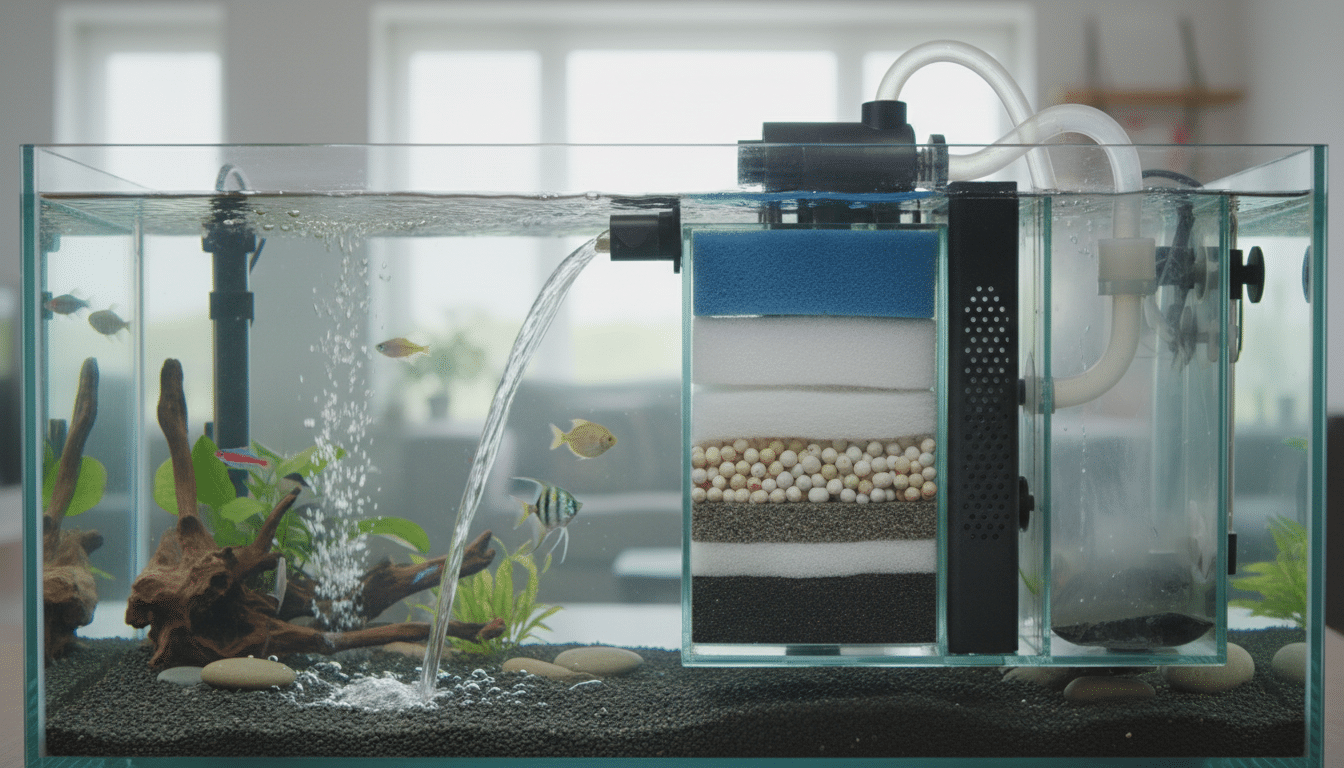
The process begins with an intake tube or strainer that draws water from your aquarium using a pump or motor. This intake is usually positioned to draw water from mid-tank level, where most suspended particles circulate. The water then passes through the mechanical filtration stage first, which prevents larger debris from clogging the biological and chemical media downstream.
After mechanical filtration, the water flows through the biological media, where beneficial bacteria have colonized. This stage often has the largest volume of media because these bacteria need surface area to thrive. Here’s an interesting fact: biological filter media can support approximately 1,000,000 bacteria per square centimeter when fully established, which is why surface area matters more than the volume of the media itself.
If your filter includes chemical filtration, the water passes through this stage last before being returned to the tank. The clean water is then pumped or poured back into the aquarium, often creating surface agitation that helps with oxygen exchange.
Different Filter Types and How They Work
Hang-On-Back Filters (HOB Filters)
These popular filters hang on the back rim of your aquarium and are perfect for beginners. Water is drawn up through an intake tube, passes through stacked filter cartridges containing all three filtration types, and cascades back into the tank. The waterfall effect provides excellent oxygenation.
Canister Filters
Canister filters sit below or beside your tank and use a sealed container filled with filter media. A pump pulls water through intake tubing, pushes it through multiple trays of media inside the canister, and returns it via output tubing. These filters excel at biological filtration because they can hold large amounts of media.
A lesser-known advantage of canister filters is that they maintain more stable bacteria colonies because the sealed environment protects beneficial bacteria from air exposure during the filtration process, leading to more efficient biological filtration.
Sponge Filters
These simple filters use an air pump to draw water through a sponge, which provides both mechanical and biological filtration. Air bubbles rise through a lift tube, creating suction that pulls water through the sponge. They’re gentle, inexpensive, and perfect for small tanks, fry tanks, or hospital tanks.
Internal Power Filters
Mounted inside your aquarium with suction cups, these filters combine a pump with filter media in a compact unit. Water enters through slits, passes through the media, and exits through an adjustable output nozzle.
Filter Flow Rate: Getting the Balance Right
Your filter’s flow rate, measured in litres per hour (gallons per hour), determines how efficiently it cleans your water. The general rule is that your filter should cycle your entire tank volume four to six times per hour. For a 100-litre (26-gallon) tank, you’d want a filter rated for 400 to 600 litres per hour (105 to 160 gallons per hour).
However, this isn’t a one-size-fits-all rule. Fish species have different preferences for water movement. Bettas and other fish from still waters prefer gentle flow, while species from rivers and streams thrive with stronger current. Here’s something crucial that many aquarists overlook: filter flow rate decreases by 30 to 50 percent as media becomes clogged with debris, which is why regular maintenance is essential for consistent filtration performance.
Maintaining Your Filter for Optimal Performance
Proper filter maintenance keeps your aquarium healthy and extends your equipment’s lifespan. The key is regular cleaning without destroying your beneficial bacteria colonies.
For mechanical media, rinse sponges and pads in old tank water during water changes, typically every two to four weeks depending on bioload. Never use tap water, as chlorine will kill beneficial bacteria. Replace disposable cartridges only when they’re falling apart, not on the manufacturer’s suggested schedule, which is often unnecessarily frequent and disrupts biological filtration.
Clean biological media sparingly, only when water flow becomes noticeably restricted. A gentle rinse in tank water every few months is usually sufficient. Never replace all biological media at once, as this removes your bacteria colony and can cause dangerous ammonia spikes.
Chemical media like activated carbon needs replacing every four to six weeks, as it becomes saturated and stops absorbing contaminants. However, carbon isn’t necessary for all tanks and should be removed when treating fish with medications.
Common Filter Problems and How to Spot Them
Reduced water flow is the most common issue, usually caused by clogged mechanical media or a dirty impeller. If your filter seems quieter or the output flow looks weak, it’s time for cleaning.
Unusual noises often indicate air trapped in the system or an impeller that needs cleaning. Power filters should run almost silently, so any grinding, rattling, or excessive humming deserves attention.
Cloudy water despite filtration might mean your filter is undersized for your bioload, your beneficial bacteria colony isn’t established yet, or you’re overfeeding. Green water indicates an algae bloom, which filters alone can’t resolve without addressing excess nutrients and light.
Conclusion: The Heart of Your Aquarium Ecosystem
Understanding how your fish tank filter works transforms it from a mysterious box into a logical system you can maintain confidently. The combination of mechanical, biological, and chemical filtration working together creates a clean, healthy environment where your fish can thrive.
Remember that filtration is just one part of aquarium care, working alongside regular water changes, appropriate stocking levels, and proper feeding. Your filter handles the continuous cleaning, but you’re still the most important part of your aquarium’s maintenance team.
By choosing the right filter type for your setup, maintaining proper flow rates, and performing regular maintenance without disrupting beneficial bacteria, you’ll create a stable aquatic environment that makes keeping fish more enjoyable and less stressful. The time you invest in understanding your filtration system pays dividends in healthier fish and a more beautiful aquarium.