How to Clean a Fish Tank: Your Complete Guide to Crystal Clear Water
Keeping your aquarium crystal clear doesn’t have to be complicated. Whether you’re a first-time fish keeper or looking to improve your maintenance routine, understanding the right cleaning techniques will help your aquatic friends thrive and make your tank look spectacular. Let’s dive into everything you need to know about maintaining a healthy, sparkling clean fish tank.
Why Regular Fish Tank Cleaning Matters
Before we get into the how-to, it’s important to understand why tank maintenance is crucial. Your fish tank is a closed ecosystem where waste products, uneaten food, and debris accumulate over time. Without proper cleaning, ammonia and nitrite levels can spike, creating toxic conditions for your fish. Regular aquarium maintenance keeps the water chemistry balanced and your fish healthy.
Here’s something many new fishkeepers don’t realize: beneficial bacteria living in your filter and substrate are actually your best cleaning allies. These microscopic helpers break down harmful waste products into less toxic compounds, which is why you never want to completely sterilize your tank or replace all the water at once.
Essential Supplies for Cleaning Your Aquarium
Having the right tools makes the job much easier. Here’s what you’ll need for effective fish tank cleaning:
- Algae scraper or magnetic cleaner
- Gravel vacuum or siphon
- Two clean buckets (dedicated to aquarium use only)
- Water conditioner or dechlorinator
- Filter media replacement (if needed)
- Aquarium-safe glass cleaner
- Trimming scissors for plants
Step-by-Step: How to Clean Your Fish Tank Properly
1. Prepare Your Equipment and New Water
Start by filling a clean bucket with tap water and treating it with a water conditioner. The water should be roughly the same temperature as your tank water, ideally between 23-27°C (73-80°F) for most tropical fish. Let it sit while you work on the tank. This seemingly simple step is critical because chlorine in untreated tap water can eliminate the beneficial bacteria colony you’ve worked hard to establish, setting your tank’s biological filtration back by weeks.
2. Clean the Interior Glass
Using your algae scraper or magnetic cleaner, work your way around the inside glass panels. Focus on areas with visible algae buildup. Don’t worry about getting it perfectly spotless; a thin layer of algae on back and side walls actually provides natural grazing areas for many fish species.
3. Vacuum the Substrate
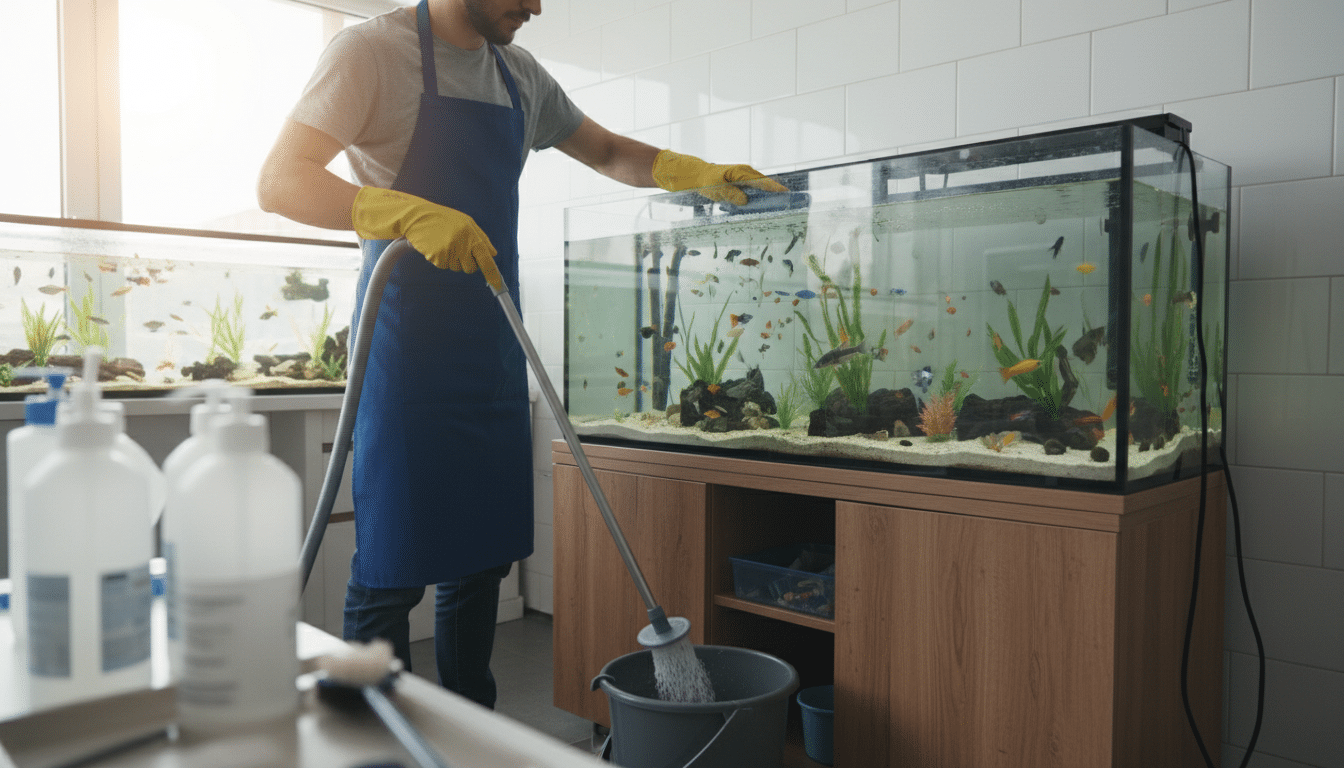
This is where the magic happens. Push your gravel vacuum gently into the substrate and let it siphon out debris and waste. Move systematically across the tank bottom, spending a few seconds in each spot. For a standard tank, remove about 25-30% of the water volume during this process.
Here’s an interesting fact: the top 2-5 cm of your substrate contains the highest concentration of beneficial bacteria, so you don’t need to dig deep when vacuuming. A gentle pass over the surface is usually sufficient for waste removal while preserving your bacterial colonies.
4. Clean Decorations and Artificial Plants
Remove any heavily soiled decorations and rinse them in the old tank water you’ve siphoned out (never use tap water, as this kills beneficial bacteria). For stubborn algae, a soft brush works well. Live plants should be trimmed of dead or dying leaves to prevent decay.
5. Check and Maintain Your Filter
Filter maintenance is crucial but often misunderstood. Most filters have multiple types of media: mechanical (sponges or floss), biological (ceramic rings or bio-balls), and chemical (activated carbon). Here’s what many people don’t know: you should never replace all filter media at once. This removes too much beneficial bacteria and can crash your cycle.
Instead, rinse mechanical media in old tank water every 2-3 weeks, replace chemical media monthly if used, and only replace biological media when it’s literally falling apart, which could be every 6-12 months or longer.
6. Refill with Conditioned Water
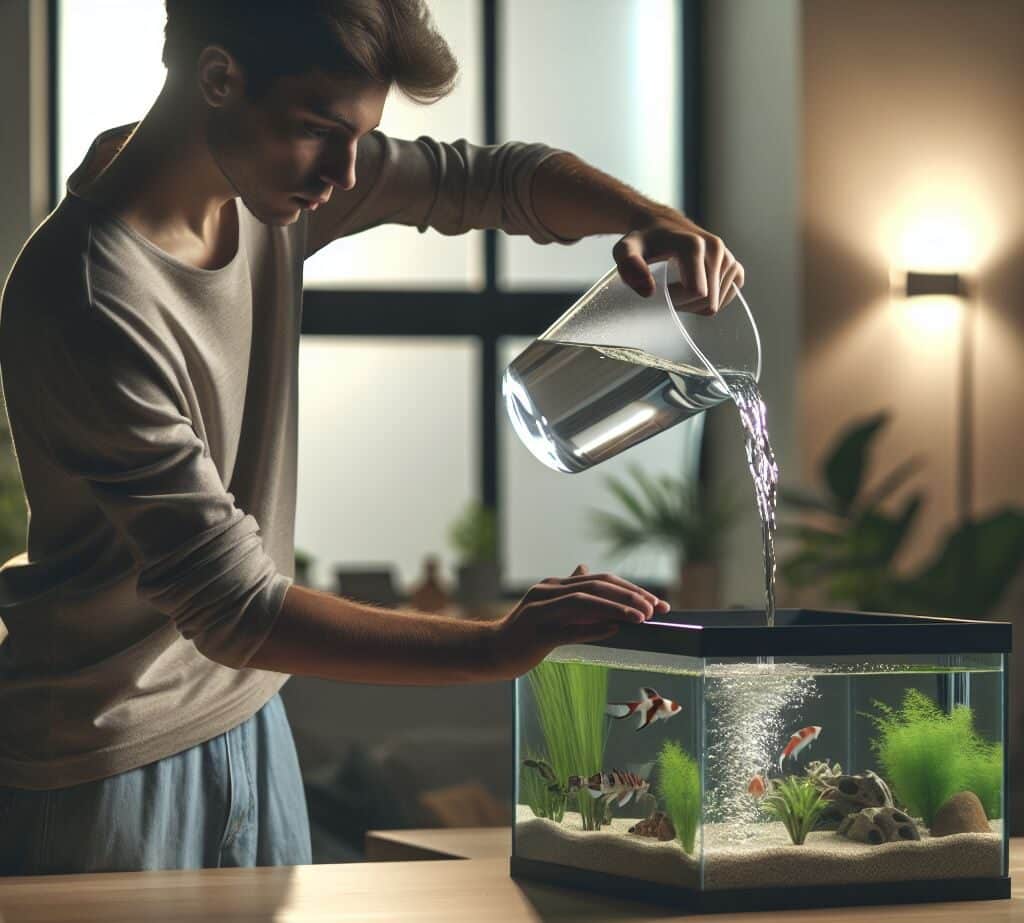
Slowly add your prepared, conditioned water back into the tank. Pour it gently over a decoration or your hand to avoid disturbing the substrate and stressing your fish. Match the temperature as closely as possible to prevent shock.
7. Wipe Down the Exterior
Finally, clean the outside glass with an aquarium-safe cleaner or white vinegar solution. Never spray directly onto the tank; spray onto a cloth instead to prevent chemicals from entering the water.
How Often Should You Clean Your Fish Tank?
The cleaning frequency depends on several factors: tank size, number of fish, filtration quality, and feeding habits. As a general guideline, most aquariums benefit from weekly 25-30% water changes with substrate vacuuming. Smaller tanks under 40 litres (10 gallons) may need twice-weekly attention, while larger, well-established tanks might stretch to fortnightly maintenance.
Here’s something that surprises many fishkeepers: heavily planted tanks often require less frequent water changes because plants absorb nitrates and other waste products, essentially acting as a natural filtration system. Some advanced planted tanks can go months between water changes with only top-ups for evaporation.
Common Fish Tank Cleaning Mistakes to Avoid
Even experienced aquarists can fall into bad habits. Avoid these common pitfalls:
Over-cleaning is actually more harmful than under-cleaning. Changing more than 50% of water at once or scrubbing everything spotless disrupts the biological balance. Your tank needs some “dirt” to maintain healthy bacterial populations.
Using soap or household cleaners on anything that touches tank water is a recipe for disaster. Even trace amounts can be toxic to fish. Stick to hot water and aquarium-safe products only.
Neglecting the filter until water flow slows to a trickle reduces efficiency and allows waste to accumulate. Regular gentle cleaning maintains optimal performance without destroying beneficial bacteria.
Removing fish during routine cleaning causes unnecessary stress. Fish can stay in the tank during normal maintenance. Only remove them for deep cleans or medical treatments.
Signs Your Tank Needs Immediate Attention
Between regular cleanings, watch for warning signs that indicate urgent maintenance needs. Cloudy water often signals a bacterial bloom or overfeeding. Green water indicates an algae bloom, usually from excess nutrients and light. A strong fishy odor suggests decomposing organic matter or inadequate filtration.
If you notice fish gasping at the surface, check ammonia and nitrite levels immediately. This behavior often indicates poor water quality requiring an emergency partial water change.
Maintaining Water Quality Between Cleanings
Good aquarium keeping isn’t just about cleaning; it’s about prevention. Feed your fish only what they can consume in 2-3 minutes to minimize waste. Remove any uneaten food after feeding time. Keep your aquarium out of direct sunlight to reduce algae growth.
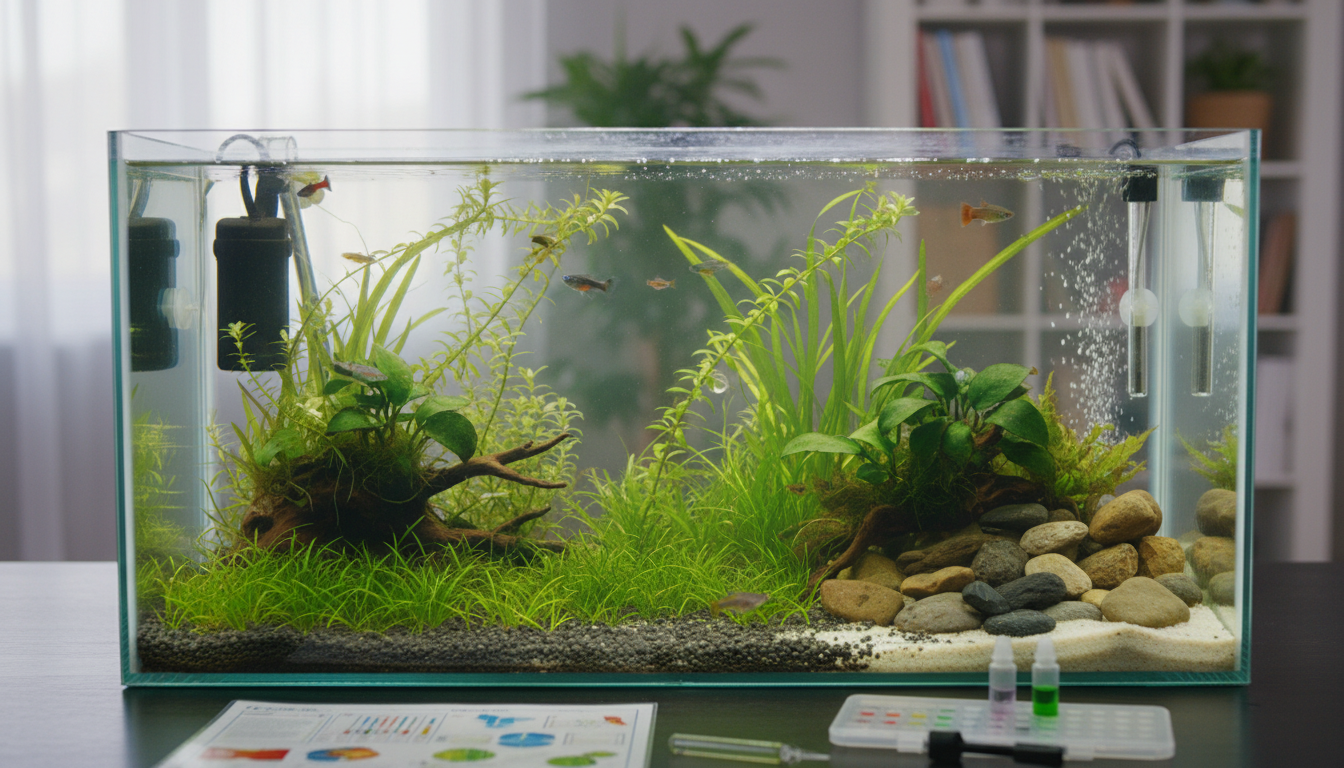
Test your water parameters weekly using a liquid test kit (strips are less accurate). This helps you catch problems before they become emergencies. Most freshwater aquariums should maintain ammonia and nitrite at 0 ppm, with nitrates below 40 ppm.
Special Considerations for Different Tank Types
Saltwater aquariums require more precise maintenance with specific gravity checks and specialized equipment. Planted tanks benefit from substrate fertilization and careful CO2 monitoring. Betta fish in smaller tanks need more frequent attention due to limited water volume.
Goldfish produce significantly more waste than tropical fish, requiring more robust filtration and more frequent water changes despite their cold-water hardiness.
Conclusion: Creating Your Cleaning Routine
Learning how to clean a fish tank properly is one of the most important skills in aquarium keeping. By following these steps and establishing a consistent maintenance schedule, you’ll create a healthy environment where your fish can thrive. Remember that every tank is unique; pay attention to your specific setup and adjust your routine based on what you observe.
Start with weekly 25-30% water changes and substrate vacuuming, and you’ll quickly develop a feel for what your aquarium needs. The effort you put into regular maintenance will reward you with crystal clear water and healthy fish.