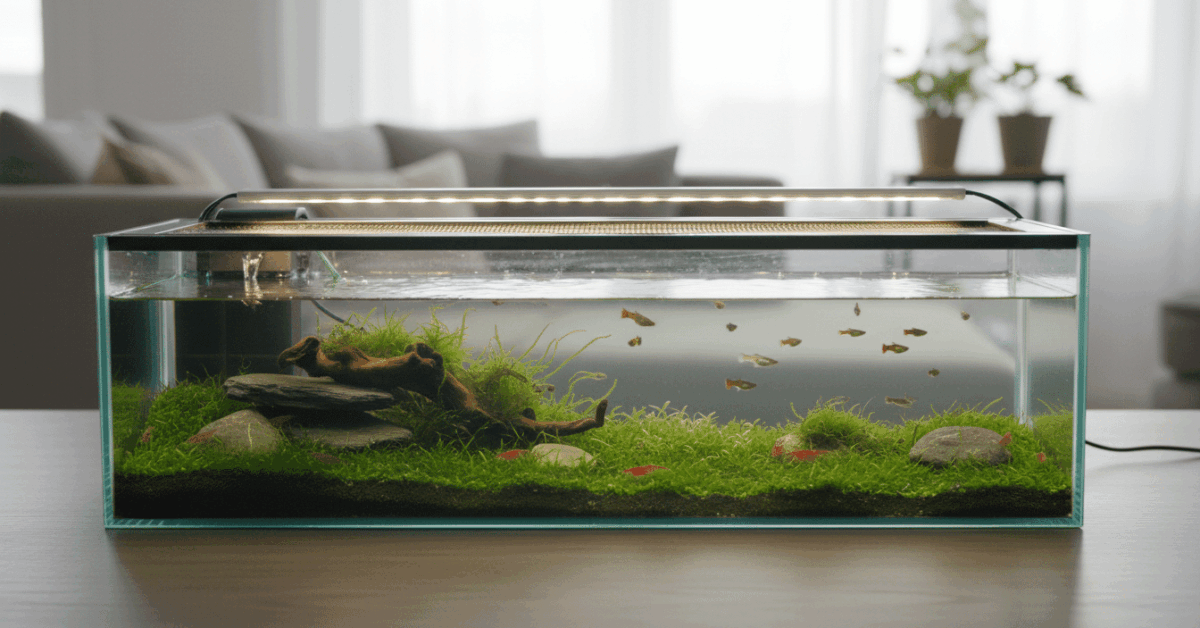
Starting your first aquarium should be exciting, not overwhelming. If you’re searching for the easiest fish tank to maintain, you’re asking the right question. The good news? With the right setup, keeping fish doesn’t have to consume your weekends or drain your wallet.
Why Tank Size Matters More Than You Think
Here’s something that surprises most beginners: larger tanks are actually easier to maintain than smaller ones. It sounds counterintuitive, but it’s true. A 75-litre (20-gallon) tank is far more forgiving than a tiny 19-litre (5-gallon) setup.
The reason comes down to water chemistry. In smaller volumes, fish waste, uneaten food, and other contaminants accumulate quickly, causing rapid swings in ammonia, nitrite, and pH levels. Larger water volumes dilute these toxins more effectively, giving you more time to react if something goes wrong. This means fewer emergency water changes and less stress for both you and your fish.
Most experienced aquarists recommend starting with a tank between 75-190 litres (20-50 gallons). This sweet spot offers stability without requiring an entire room or industrial-strength flooring.
The Low Maintenance Champion: Freshwater Community Tanks
When comparing freshwater versus saltwater aquariums, freshwater tanks win the easy maintenance contest hands down. Saltwater tanks require precise salinity monitoring, expensive equipment, and much more frequent testing. Freshwater setups need basic filtration, a heater, and occasional water changes.
Within the freshwater category, a planted community tank with hardy fish species offers the easiest maintenance routine. Here’s what makes them beginner-friendly:
Live Plants Are Your Secret Weapon
Many beginners avoid live plants, thinking they’ll add complexity. The opposite is true. Live aquatic plants actually reduce maintenance by consuming nitrates and other waste products that would otherwise require water changes to remove. Hardy species like java fern, anubias, and amazon sword thrive in low-tech setups without CO2 injection or special lighting.
Here’s a lesser-known fact: certain aquarium plants like pothos and philodendron can grow with their roots in the water and leaves above the tank, providing excellent natural filtration while looking beautiful. This method, called emergent growth, is incredibly effective at removing nitrates.
Choosing the Right Fish for Minimal Maintenance
Your fish selection makes or breaks your maintenance routine. Some species create more waste, require specific water parameters, or need frequent feeding schedules. The easiest fish to maintain share these characteristics: they’re peaceful, hardy, and adaptable to various water conditions.
Top Low Maintenance Fish Species
Zebra danios top many aquarists’ lists for ease of care. These active little fish tolerate temperatures from 18-24°C (64-75°F) and handle parameter fluctuations that would stress more delicate species.
White cloud mountain minnows are another excellent choice, particularly because they prefer cooler water temperatures of 16-22°C (60-72°F). This means in many climates, you won’t even need a heater, eliminating one piece of equipment that could fail.
Corydoras catfish serve as your cleanup crew, sifting through substrate for leftover food. Interestingly, these catfish have a modified intestine that allows them to gulp air from the surface, meaning they can survive in lower oxygen conditions than most fish.
Cherry shrimp and nerite snails deserve special mention. These invertebrates consume algae constantly, reducing the need for tank scrubbing. Nerite snails won’t reproduce in freshwater, preventing population explosions that plague other snail species.
Equipment That Reduces Your Workload
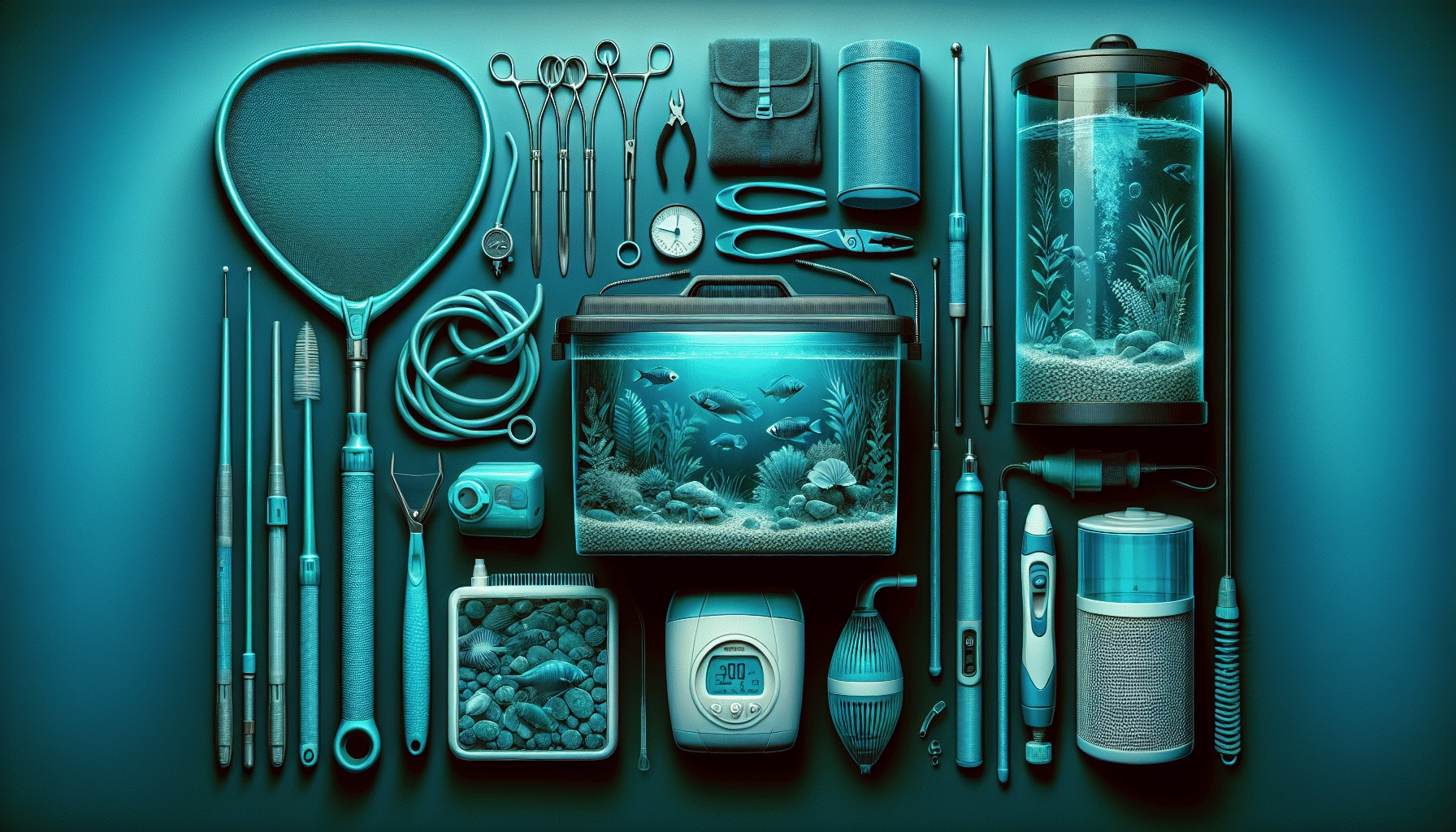
Smart equipment choices transform maintenance from a chore into a quick check-in. You don’t need expensive gadgets, but a few key items make life easier.
Filtration: Your Most Important Decision
A quality filter does most of your maintenance work automatically. Canister filters and hang-on-back (HOB) filters both work well, but canister filters typically require cleaning only every 4-6 weeks compared to HOB filters needing attention every 2-3 weeks.
Here’s something most beginners don’t know: over-filtering is actually beneficial. Using a filter rated for a tank larger than yours means it processes waste more efficiently and needs cleaning less frequently. A filter rated for 190 litres (50 gallons) on your 115-litre (30-gallon) tank gives you extra capacity and stability.
Heaters and Thermometers
Adjustable heaters with built-in thermostats maintain stable temperatures automatically. Set it once to around 24-26°C (75-78°F) for most tropical community fish, and you’re done. Always use a separate thermometer to verify your heater is working correctly.
Lighting on Timers
Inconsistent lighting causes algae blooms and stresses fish. Putting your aquarium light on an automatic timer ensures your fish receive consistent day/night cycles, which actually improves their immune systems and reduces disease. Aim for 8-10 hours of light daily.
The Maintenance Routine That Actually Works
With a properly set up low-maintenance tank, your routine becomes surprisingly simple. Here’s what ongoing care looks like:
Weekly Tasks (15 Minutes)
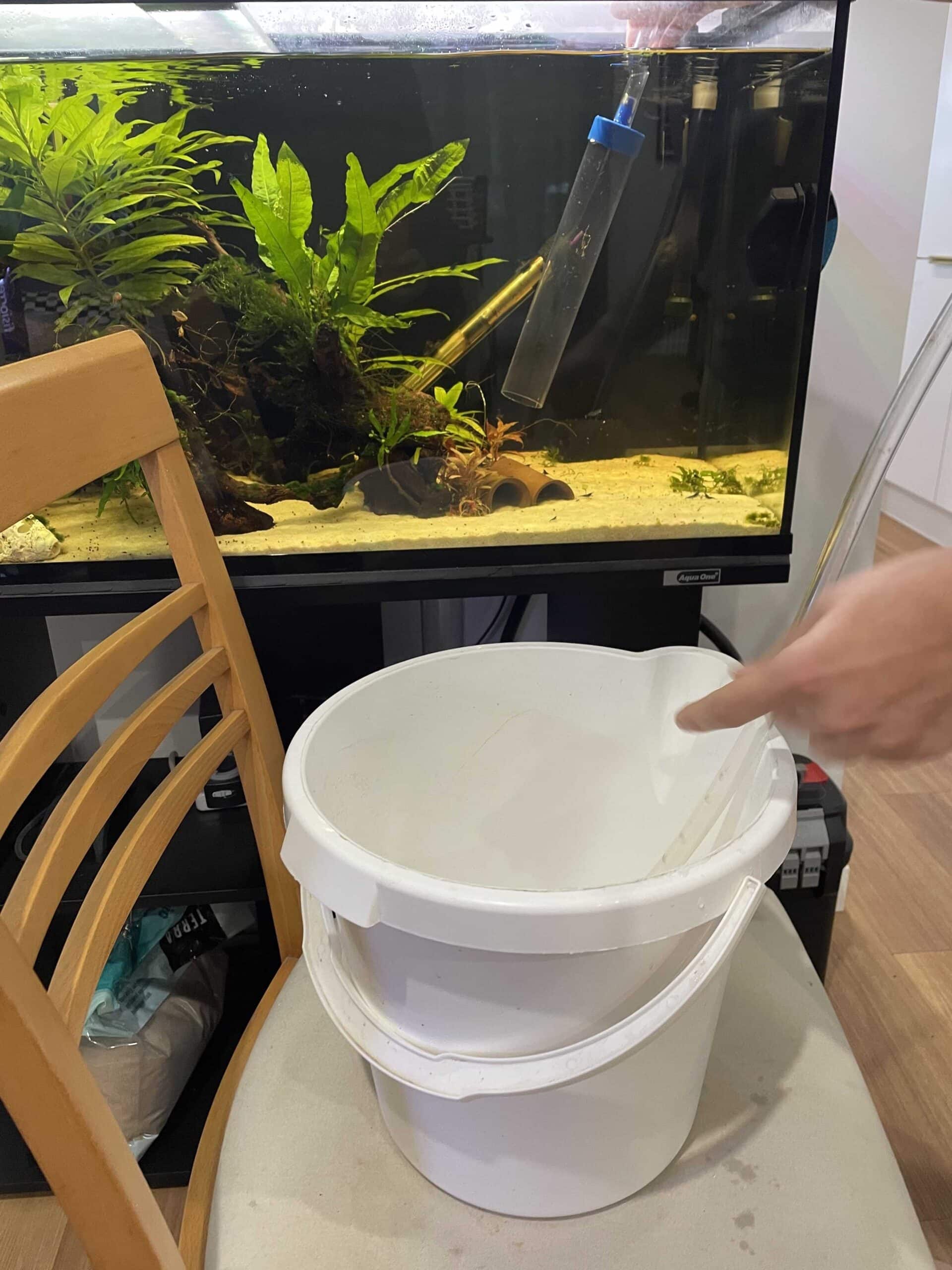
Change 25-30% of the water weekly. This single task keeps your tank healthy. Use a gravel vacuum to remove debris while draining water, then refill with dechlorinated water matched to your tank temperature. Feed your fish once daily, giving only what they consume in 2-3 minutes.
Monthly Tasks (30 Minutes)
Test your water parameters for ammonia, nitrite, nitrate, and pH. Clean your filter media by rinsing it in old tank water (never tap water, which kills beneficial bacteria). Trim any dead plant leaves. Scrape algae from the glass if needed.
That’s genuinely it. No weekly deep cleans, no daily water testing, no constant adjustments.
Avoid These “Easy” Tanks That Aren’t
Marketing makes some tanks sound beginner-friendly when they’re actually maintenance nightmares.
Betta bowls and tiny tanks under 19 litres (5 gallons) require near-daily water changes despite their cute appearance. The small volume means toxins concentrate rapidly, and temperature swings happen within hours.
Goldfish bowls present similar problems, compounded by the fact that goldfish produce enormous amounts of waste. A single fancy goldfish needs at least 75 litres (20 gallons), and common goldfish require 150 litres (40 gallons) minimum.
Here’s a surprising fact that contradicts common practice: goldfish are actually coldwater fish that don’t need heaters, preferring temperatures of 18-22°C (64-72°F). They’ve been mistakenly kept in tropical community tanks for decades, shortening their potential 20-30 year lifespan.
Setting Up for Success From Day One
The easiest tank to maintain is one that’s properly cycled before adding fish. The nitrogen cycle establishes beneficial bacteria that convert toxic ammonia into less harmful compounds. This process takes 4-6 weeks but makes all the difference.
Cycling involves adding an ammonia source (fish food or pure ammonia) and waiting for bacterial colonies to develop. Test daily until ammonia and nitrite read zero and nitrates are present. Only then is your tank truly ready for fish.
Rushing this step causes “new tank syndrome,” where fish die from ammonia poisoning, forcing daily water changes for weeks. Patience during cycling saves months of maintenance headaches later.
Conclusion: Your Low Maintenance Aquarium Awaits
The easiest fish tank to maintain is a freshwater planted community tank of 75-190 litres (20-50 gallons), stocked with hardy species like zebra danios, white cloud minnows, and corydoras catfish. With proper equipment including a quality filter, adjustable heater, and timer-controlled lighting, your maintenance drops to 15 minutes weekly and 30 minutes monthly.
The key isn’t finding shortcuts but setting up correctly from the start. Larger volumes, beneficial plants, appropriate fish selection, and proper cycling create a stable ecosystem that largely maintains itself. Your role becomes observer and occasional caretaker rather than constant problem-solver.
Starting an aquarium doesn’t require expert knowledge or endless free time. With these principles, you’ll spend more time enjoying your underwater world and less time maintaining it.