How to Lower Nitrates in Your Aquarium
Nitrate build-up sneaks up on most aquarium owners. You might not notice it at first, but then the algae starts creeping in, the water looks a bit off, or your fish seem less vibrant than usual. Whether you’re running a small community tank or a larger planted setup, keeping nitrates in check makes all the difference between smooth sailing and constantly troubleshooting problems.
Let’s look at straightforward, science-backed ways to reduce nitrate levels—with a few insider tips that really help you understand what’s happening beneath the surface.
Why Nitrates Build Up in Aquariums
Nitrates (NO₃) are what you get at the end of the nitrogen cycle. Fish waste, leftover food, and dying plant bits all turn into ammonia first, then nitrite, then finally nitrate. While nitrates aren’t immediately toxic like ammonia, they weaken your fish over time and feed algae growth like nothing else.
Most community fish thrive when nitrate stays below 20–40 ppm. Some species, like fancy goldfish, do even better with lower levels.
The Most Effective Ways to Reduce Nitrate Levels
Here’s what actually works, without needing complicated gear or a chemistry degree.
Regular Water Changes Make the Biggest Difference
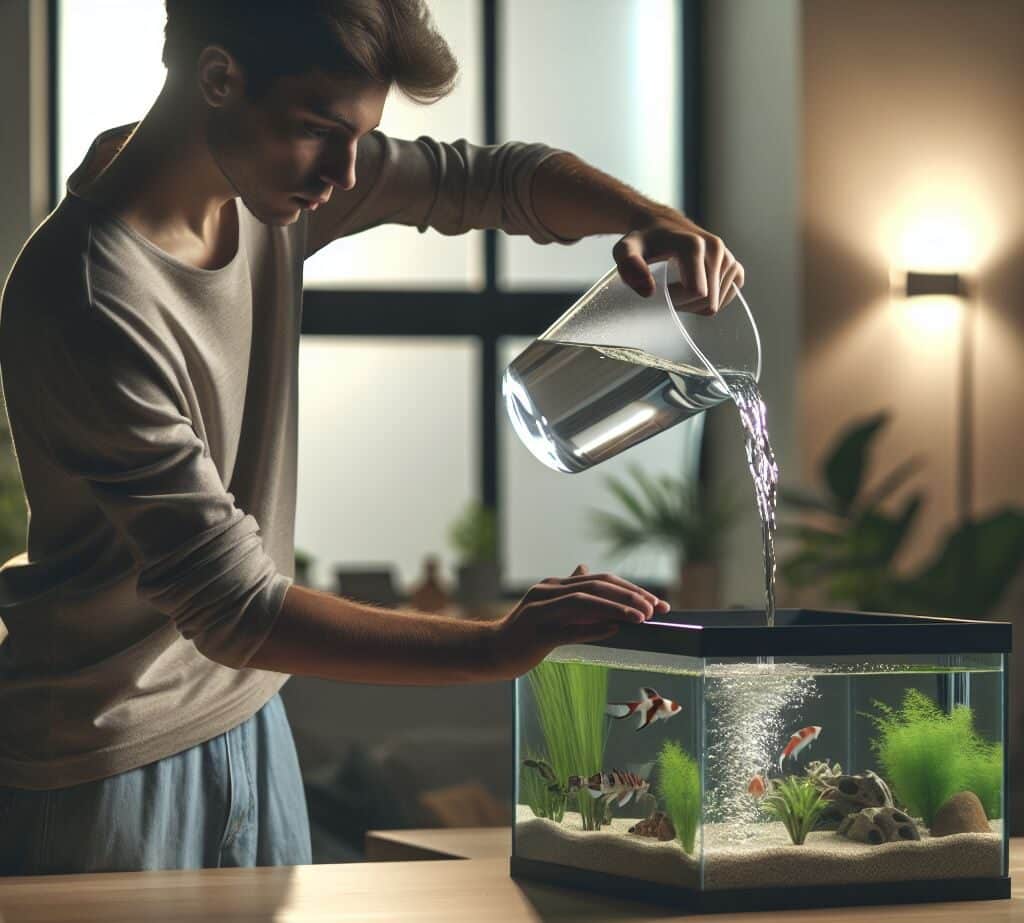
Water changes are still your best tool. Swap out 20–30% of your tank water weekly with dechlorinated water. If you’ve got a tank over 200 litres, smaller and more frequent changes work better and stress your fish less.
Here’s something most people don’t realize: your tap water might contain more nitrate than your aquarium, especially if you live near farmland. If your nitrate readings won’t budge after water changes, test your tap water—it could be part of the problem. Try testing your tap water with a reliable test kit. If it turns out this is your cause, then more live plants and considering use of some RO water may be worth considering.
Keep Your Substrate and Filter Clean (But Not Too Clean)
Detritus piles up fast in gravel, so running a gravel vacuum regularly removes organic waste before it breaks down into nitrate. When you clean your filter, rinse the media in old tank water instead of tap water—you’ll protect the beneficial bacteria that handle ammonia and nitrite. If you’re new to keeping fish, we have guides on how to start the siphons and also cleaning the gravel here.
And here’s a counterintuitive one: scrubbing your filter too thoroughly can temporarily spike nitrate levels because you’re washing away biofilm that helps process waste. Clean gently and only when water flow starts dropping.
Feed Less Than You Think You Should
Overfeeding causes more nitrate problems than almost anything else. Most fish only need what they can finish in about 30 seconds. Feed small amounts once or twice daily, remove anything uneaten after a few minutes, and consider skipping feeding one day a week.
Many popular fish foods contain plant-based fillers that fish can’t fully digest, which means more nitrate even when you’re feeding reasonable amounts. Worth keeping in mind when choosing your food.
Add Live Plants That Actually Work
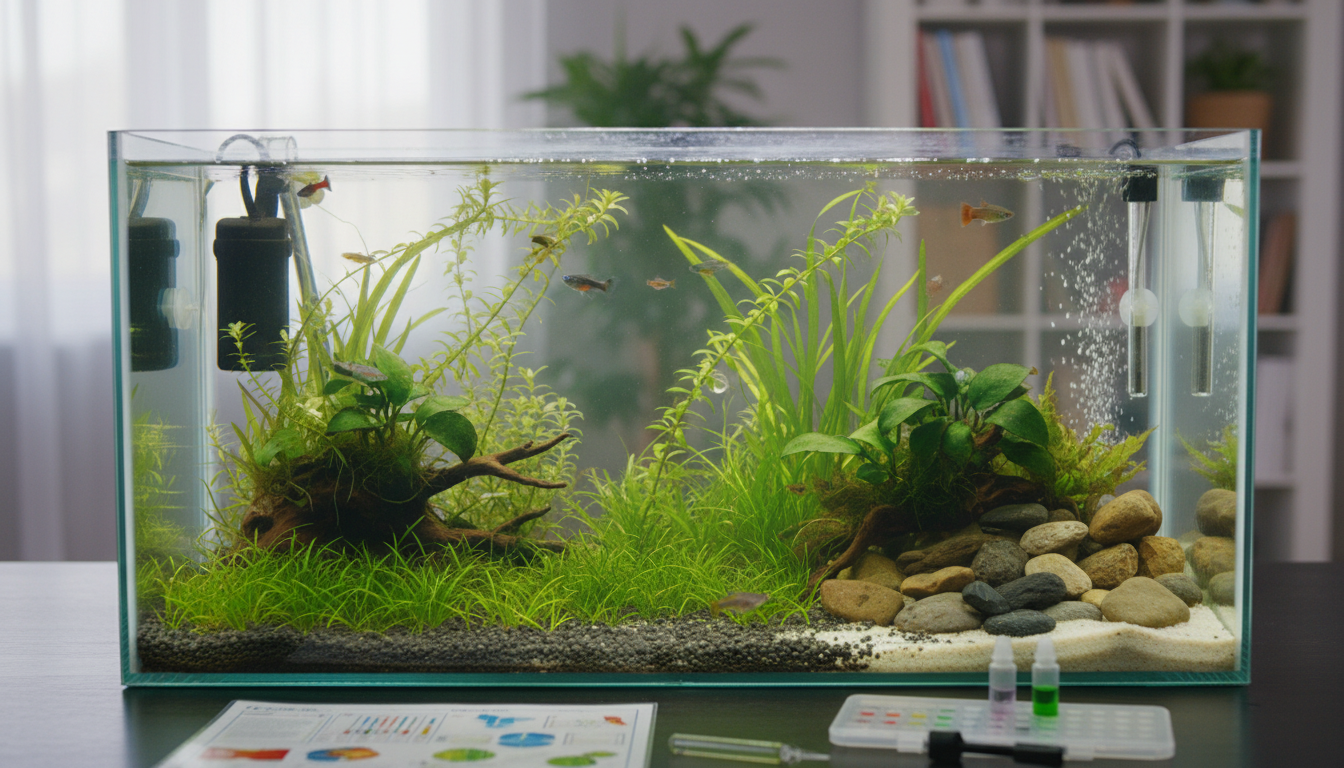
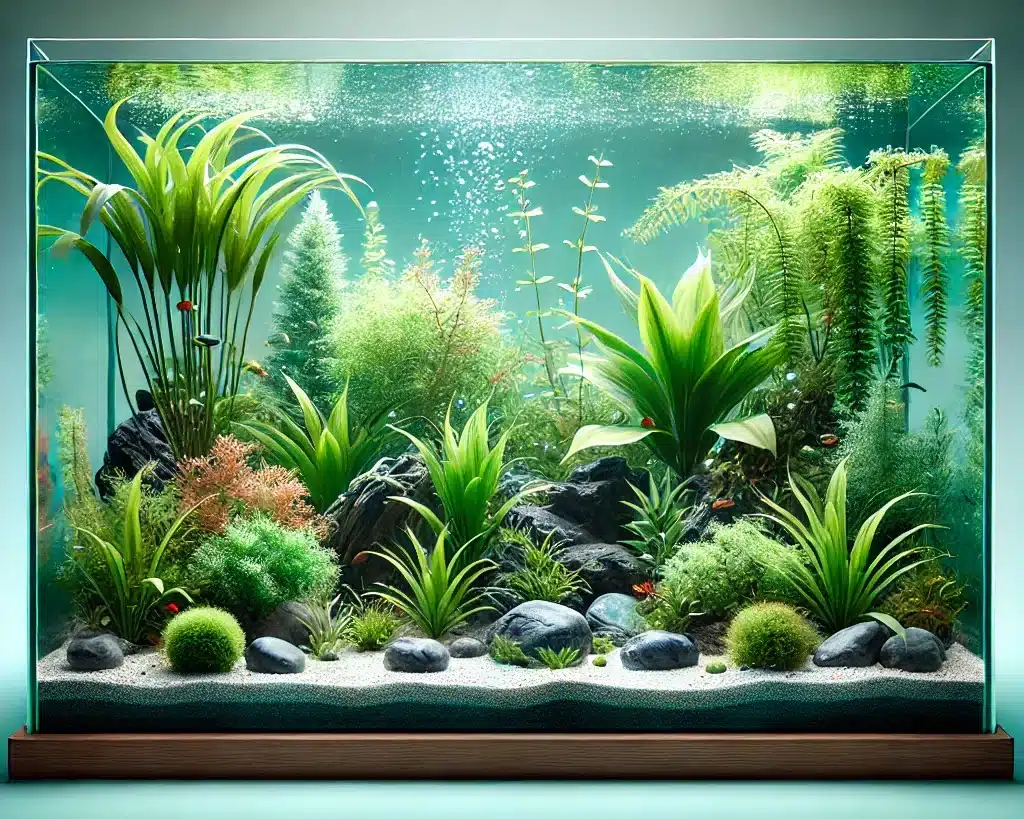
Live plants pull nitrates out of the water as they grow. Fast-growing species are especially good at this. Hornwort, Water Sprite, Amazon Frogbit, and Duckweed all work beautifully. Even Pothos—yes, the houseplant—absorbs nitrates when you let the roots dangle in your tank while keeping leaves above water.
Floating plants absorb nitrate almost twice as quickly as rooted plants because they get unlimited CO₂ from the air, which turbocharges their growth. They’re genuinely one of the most underrated filtration tools available.
Boost Your Biological Filtration Capacity
Adding more biomedia gives beneficial bacteria extra real estate to process waste more efficiently. Ceramic rings, lava rock, and sintered glass all work well.
If you want to get technical: true denitrifying bacteria (the ones that convert nitrate into harmless nitrogen gas) only survive in very low-oxygen zones. This is why some aquarists use deep substrate layers or specialized anaerobic bio blocks, though these need careful setup to work properly.
Consider Your Stocking Levels Honestly
Too many fish in too little water will always mean nitrate battles. Lightly stocked tanks stay stable longer and give you breathing room when life gets busy.
If you’re constantly fighting nitrate creep, rehoming a few fish or upgrading tank size might be the most sustainable solution. Aim for moderate stocking density rather than pushing your tank’s limits.
Improve Flow and Oxygen Levels
Good water movement helps bacteria work more effectively by distributing oxygen and waste evenly. Add an airstone for better gas exchange, position your filter to eliminate dead spots, or use a gentle powerhead in larger tanks. See here for our top air pump picks.
Well-oxygenated water supports stronger bacterial colonies that naturally keep nitrate under control.
Use Nitrate-Removing Products Sparingly
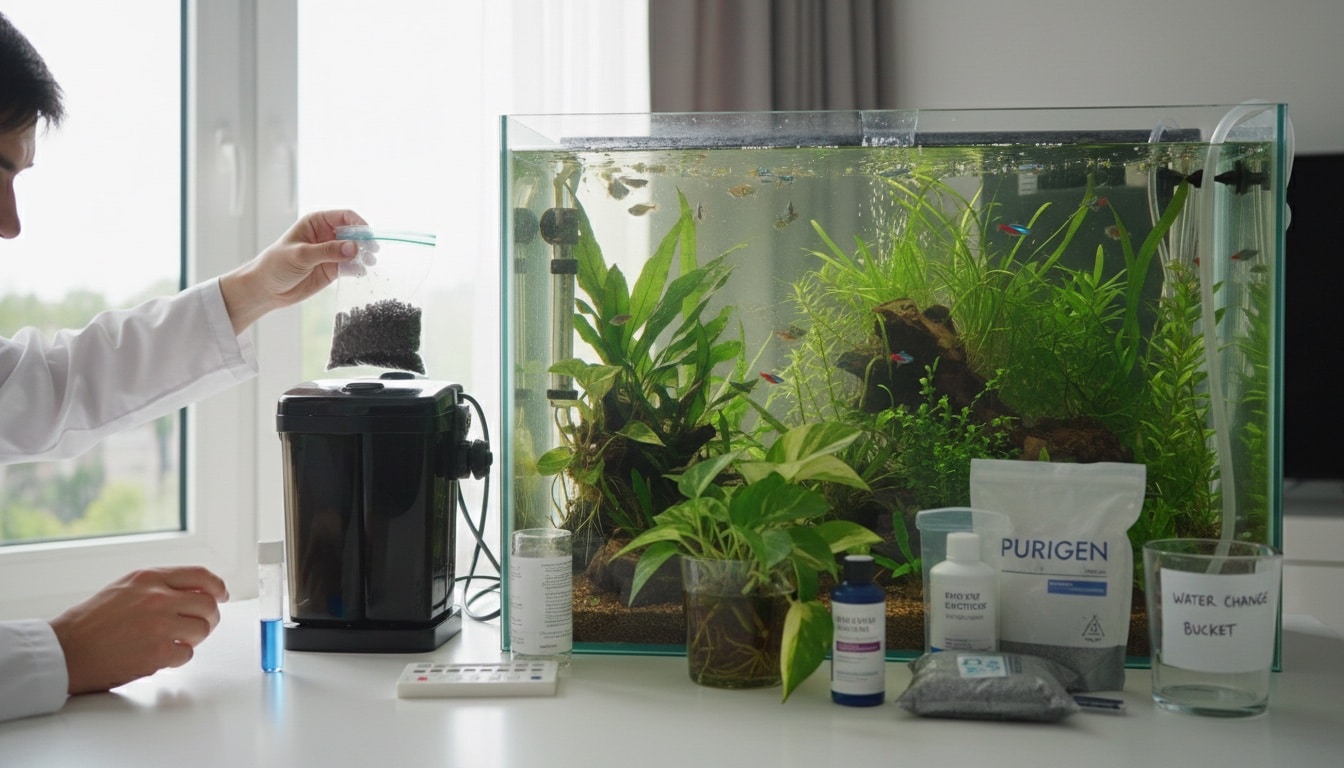
Ion-exchange resins, specialized nitrate pads, and liquid bacteria boosters can help in a pinch, but they’re not replacements for consistent maintenance. Use them for short-term corrections while you address the underlying cause.
How to Keep Nitrates Down Long-Term
Lowering nitrate once is easy. Keeping it down takes a simple routine. Weekly, do your 20–30% water change, vacuum the gravel in heavily fed areas, and wipe down any algae. Monthly, rinse your filter in tank water, trim back fast-growing plants, and check your water parameters.
Keeping temperatures steady—around 24–26°C for most tropical tanks—also helps, since warmer water speeds up decomposition and increases nitrate production.
Warning Signs Your Nitrate Is Too High
Your fish will tell you when something’s wrong. Watch for reduced appetite, faded colours, lethargy (especially hanging near the surface), or rapid algae growth on glass and decorations. Testing weekly with a liquid test kit gives you the full picture and helps you catch problems early.
Making It All Work Together
Lowering nitrates doesn’t need to be complicated. Focus on balanced feeding, regular maintenance, healthy plant growth, and proper filtration—your tank will practically run itself. The more stable your nitrate levels, the healthier your fish and the clearer your water.
With the right habits in place, your aquarium becomes something you enjoy rather than worry about. That’s the whole point, isn’t it?