How to Lower Nitrites in Your Aquarium
Seeing nitrite levels spike can be nerve-wracking. Your fish start acting stressed, their breathing looks labored, and you know something needs to change—quickly. The good news? Once you understand what’s happening and how to fix it, bringing those levels down is actually pretty straightforward.
This guide walks you through practical steps that work, plus some insights most fishkeepers never hear about. By the end, you’ll know exactly how to restore a safe, healthy environment for your fish.
Understanding Nitrites and Why They Spike
Nitrites (NO₂⁻) show up during the nitrogen cycle—that natural process where fish waste and uneaten food get broken down. Ammonia converts to nitrite, then nitrite becomes nitrate. When nitrites climb, it usually means your cycle hasn’t caught up yet or something’s thrown the system off balance.
The usual suspects? A brand new tank that hasn’t stabilized, overfeeding, too many fish in too small a space, or accidentally killing off your beneficial bacteria by rinsing filter media in tap water. Sometimes people replace all their bio-media at once, which can crash the cycle overnight.
Bringing Nitrite Levels Down: What Actually Works
Here’s what to do when you need results quickly while keeping your tank stable long-term.
Start with a Partial Water Change
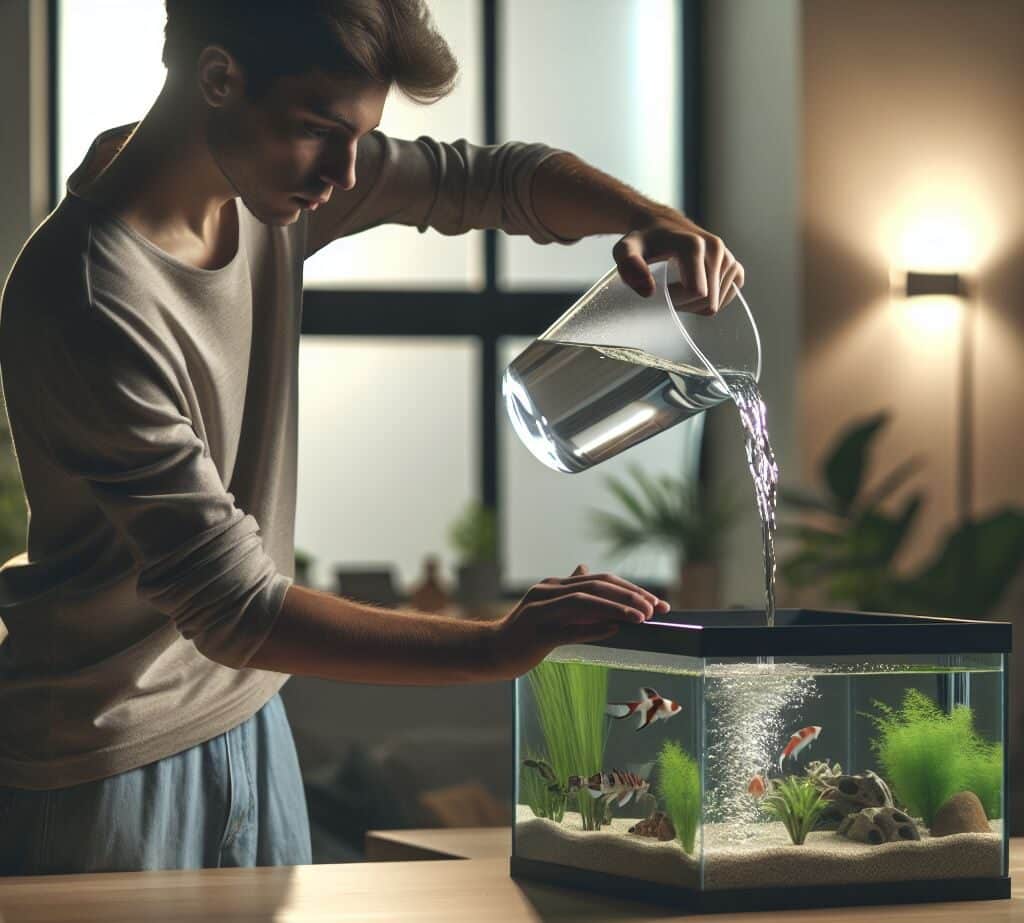
Swap out 25–50% of the water with dechlorinated, temperature-matched water. For most tanks, this immediately drops nitrites to safer levels. Sometimes doing smaller changes over several days works better than one massive swap. Interestingly, huge water changes—over 60%—can actually stall the cycle in smaller tanks under 60 liters because the beneficial bacteria temporarily lose access to the dissolved nutrients they need.
Use a Quality Water Conditioner
Grab a conditioner that neutralizes nitrites. These products temporarily convert nitrites into a less harmful form, giving your filter bacteria time to catch up. One thing many people don’t realize: some conditioners can slightly reduce dissolved oxygen when they bind to nitrites, so adding gentle aeration right afterward helps keep oxygen levels steady.
Strengthen Your Biological Filtration
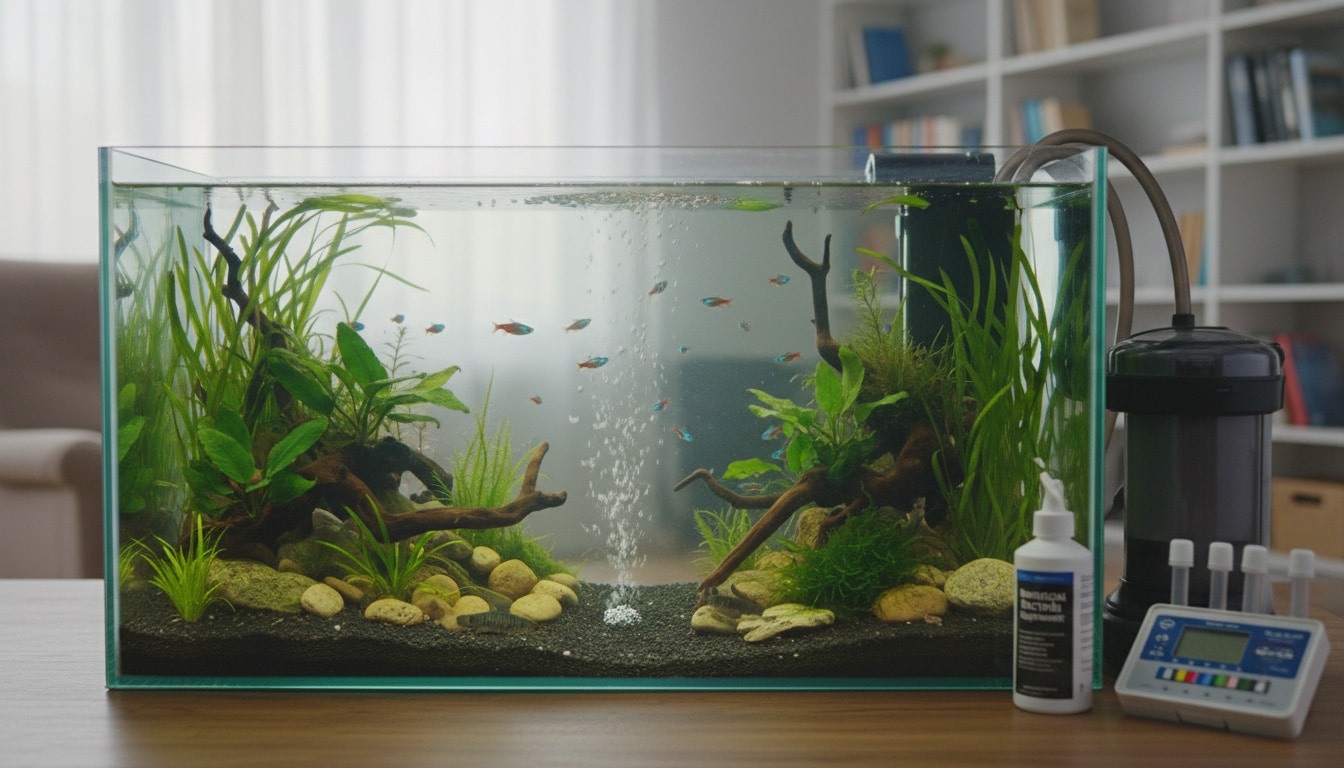
This is your best long-term solution. The beneficial bacteria that convert nitrites to nitrates need all the help they can get. Add extra bio-media to your filter if there’s room, use quality bottled bacteria from a trusted brand, and increase oxygenation—bacteria work faster when water movement is good. Here’s something not widely known: the bacteria that handle nitrites multiply more slowly than the ones that tackle ammonia, and they’re pickier about temperature too, preferring 24–28°C. They’re more sensitive to sudden cold snaps than many fish are.
Cut Back on Feeding Temporarily
Fish can easily go a day or two without food. Reducing feeding cuts down on waste, giving your filter time to stabilize. Once levels normalize, go back to smaller portions.
Vacuum the Substrate
Gunk sitting in your gravel keeps releasing ammonia, which turns into nitrite. Use a gravel vacuum during water changes to clear out decomposing material. Tanks with smooth sand actually tend to show slower nitrite spikes when feeding mistakes happen because waste sits on the surface instead of sinking into hidden layers where it breaks down out of sight.
Increase Aeration
High nitrite levels mess with your fish’s ability to absorb oxygen. An air stone or better surface agitation can make an instant difference. When nitrites are elevated, fish sometimes “pant” at the surface not just because oxygen is low, but because nitrites interfere with hemoglobin in their blood—kind of like carbon monoxide poisoning in humans.
Try Adding Floating Plants
Fast-growing floaters like water lettuce or frogbit are excellent at absorbing ammonia before it even becomes nitrite. They also pull out nitrates, helping stabilize the whole cycle. Floating plants actually work faster than many rooted plants because they sit right at the oxygen-rich surface where nutrient uptake happens quickly.
Keeping Nitrite Spikes from Coming Back
Once things are under control, staying on top of a few simple habits makes all the difference.
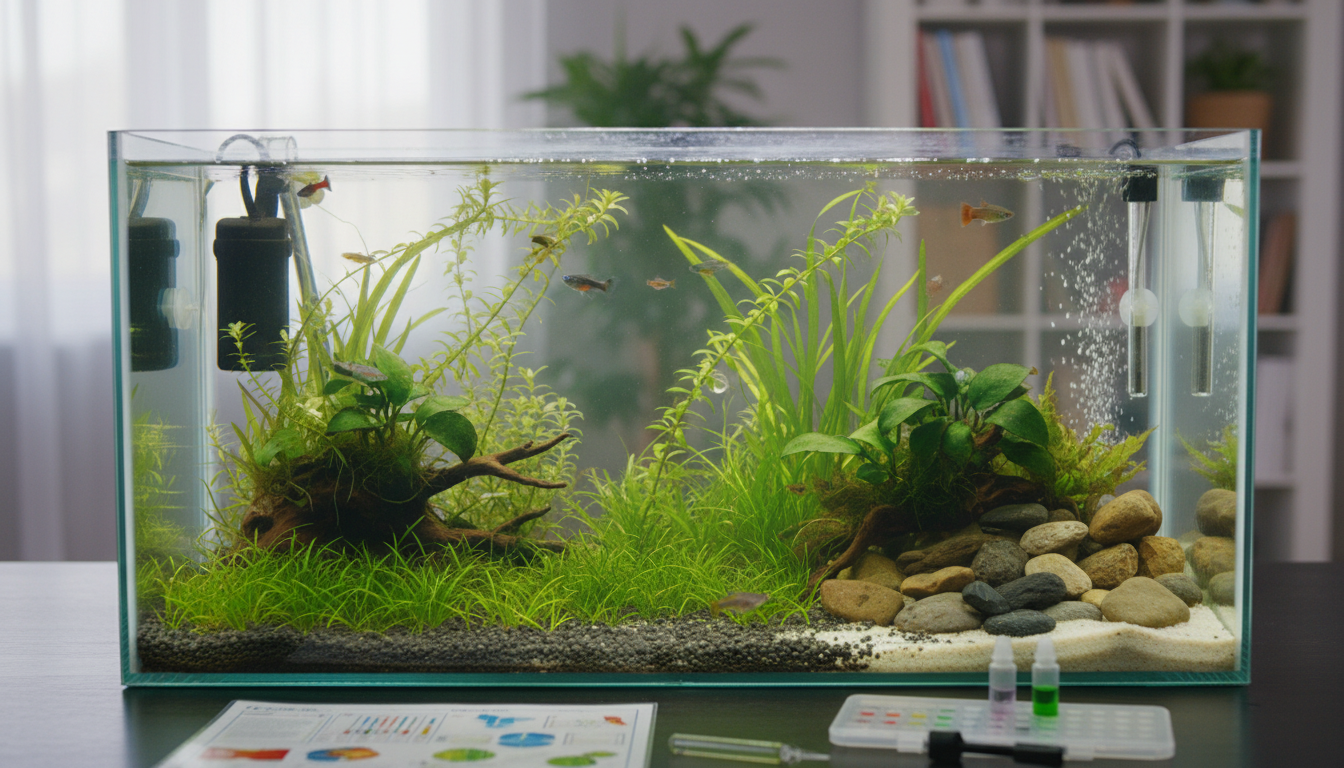
Test your water weekly with a liquid kit, especially in newer tanks. Catching rising nitrites early means you can fix things before they become emergencies. Feed only what your fish can finish in 30–40 seconds—more food just means more waste. Always rinse filter sponges and bio-media in old tank water, never tap water, since chlorine kills beneficial bacteria instantly and can trigger a sudden spike.
Stock your aquarium slowly. Add fish gradually and give the bacteria time to adjust to each increase in bioload, especially in tanks under 80 liters. Quarantining new fish helps too—new arrivals bring unexpected waste and can stress your system if added too quickly.
The Bigger Picture
Managing nitrites isn’t just about emergency fixes. It’s about creating a balanced environment where fish feel secure and water chemistry stays predictable. Understanding the nitrogen cycle and how bacteria work makes most problems easier to handle.
What surprises people is that nitrite spikes don’t always mean something’s “wrong.” Sometimes it’s just your biological filtration catching up with recent changes—new fish, different feeding amounts, or a deep clean. These systems are alive and they act like it.
With consistent care, healthy bacteria colonies, and smart maintenance, nitrites stay at zero and your aquarium becomes the stable, enjoyable space it should be.
Final Thoughts
Knowing how to handle nitrites gives you real control over one of the most stressful situations in fishkeeping. Water changes, stronger biological filtration, careful feeding, and good long-term habits get you through spikes safely and keep them from happening again.
Once your cycle settles, your fish start acting normal again, and the readings stabilize, you’ll feel way more confident handling whatever comes next. Your aquarium becomes calmer, steadier, and a lot more enjoyable—one small improvement at a time.